I hope you all had a happy Memorial Day! I think this book is one that showed up in the weekly email of Hot New Library Books. I had to wait for months and months to get it, though, because apparently everyone else in the town where I work had been in love with The Smitten Kitchen much longer than I.
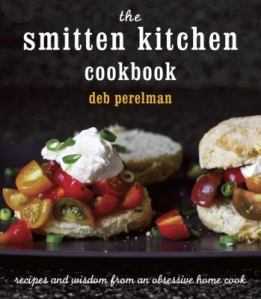 The Smitten Kitchen by Deb Perelman.
In case you, like me, dear reader, are among the uninitiated, the Smitten Kitchen is a very popular food blog. Deb Perelman, armed with a toddler and a tiny New York kitchen, thinks up recipes and posts them with dreamy photos. This book is kind of the same thing, except in book form – with glossy, full-page photos, recipes divided into logical sections, and lists of what kinds of staples and supplies your kitchen must have. It’s a whole book of things to make you drool, between the homey narratives explaining why she makes each recipe, the precise descriptions on how to cook it so it comes out exactly right, and of course, the gorgeous photographs. Even though she clearly really wants readers to run straight for the kitchen and start cooking, I’d put this cookbook on the “fun reading about cooking” shelf rather than my day-to-day cooking shelf. This is in large part because she doesn’t give an estimated time to recipe completion for any of the recipes, nor does she use symbols or have an index to separate out the regular weeknight dishes from the fancier fare. I also realized, not for the first time, that while I usually eat the same thing for breakfast six days a week and rarely eat dessert, I am really mostly only interested in recipes for breakfasts and desserts. I can’t explain this, though I’d be happy to hear your thoughts on the matter, and mention it so that you’ll know, when you read my list of personal favorite recipes, why there are no main dishes. There really are plenty of them in the book. Anyway, most of her dishes seem to be creative variations on standards, such as a fig-filled challah braid or apple cider caramels.
With that caveat, here are the recipes that stuck in my mind the most: In the breakfast category, gingerbread spice dutch baby, apricot breakfast crisp, big cluster maple granola, the fig, olive oil and sea salt challah (that my son wouldn’t touch, alas), cheddar swirl breakfast buns, breakfast latkes. In the dessert category: rhubarb hamantaschen (I must find a nut-free pastry recipe), salted brown butter crispy treats, whole lemon bars, peach dumplings with bourbon hard sauce, blueberry cornmeal butter cake, golden sheet cake with berry buttercream (I got to be a library goddess with this one, as a friend called asking for thoughts on how to make a berry buttercream, and I just happened to have this in the house), and apple cider caramels. My love made us the Cinnamon Toast French Toast for our weekly Special Breakfast, using an entire loaf of half whole-wheat bread that I’d baked a couple days previously. It took quite a bit of time, but was really wonderfully tasty, felt like it had more protein than typical French toast, and most of the time was unattended as the bread first soaked in custard for 15 minutes and then baked for longer yet. It might make it into our regular Special Breakfast rotation, and makes me long for overnight guests we can serve it. In short, if you enjoy looking at lovely cookbooks and new ideas of things to do with food, this is an excellent choice.
Here are some other beautiful cookbooks that I’ve enjoyed:
Campfire Cookery
Homemade Soda
Cooking in the Moment

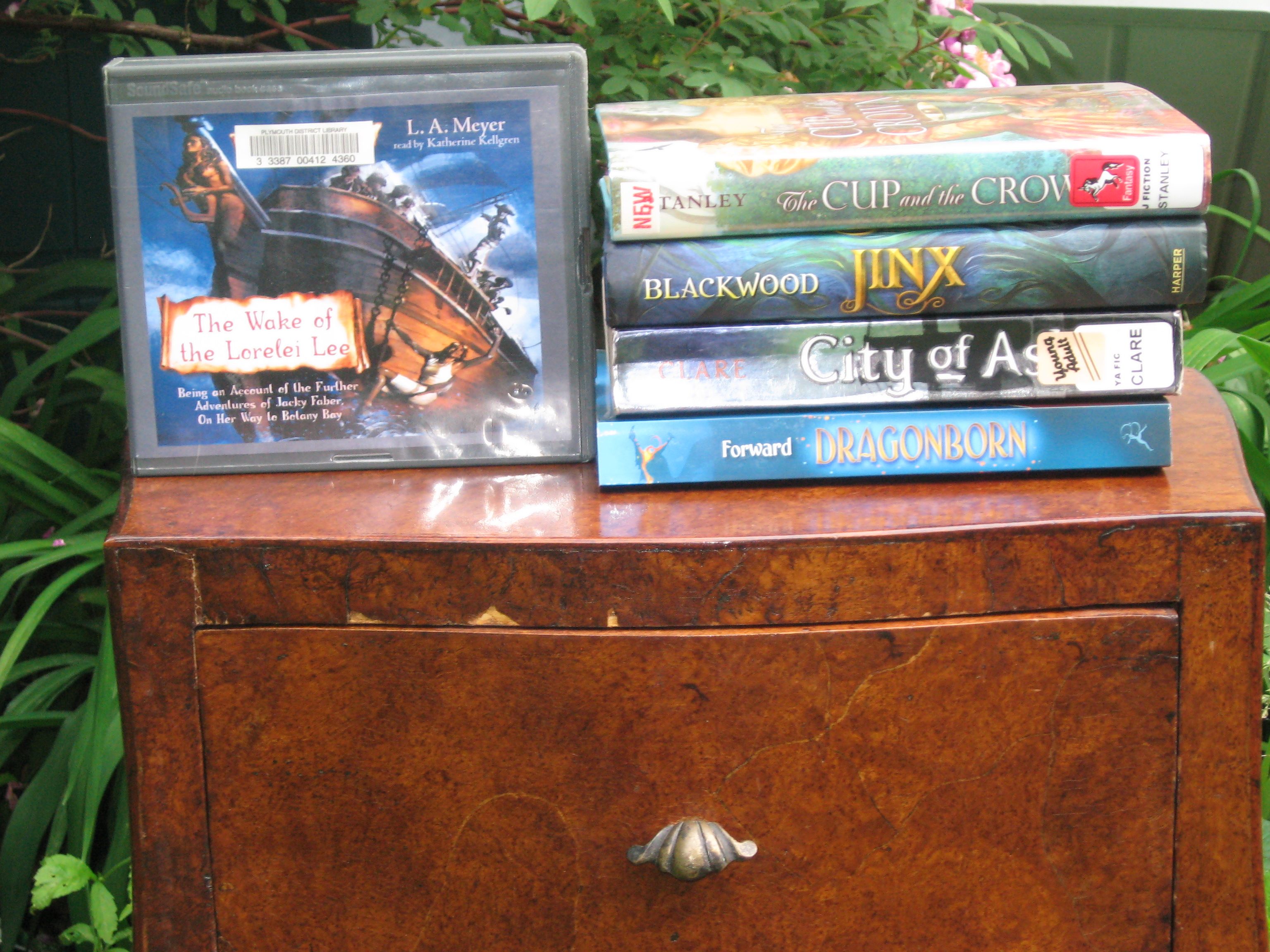
 I did it! I finished reading a little after 10 pm last night, and did not wake up this morning in time to count any more reading (really, that’s a happy thing). I read for 731 minutes, or 12 hours 11 minutes, of which 391 minutes or 53% was audio – actually a higher proportion of print reading than I’d expected. I finished two print books, The Cup and the Crown and Jinx. I made it halfway through Goliath and not even a full disc of the Jacky Faber book, alas.
 The Cup and the Crown by Diane Stanley



 In which, once again, I try to carry on a coherent conversation about a book, by myself and on hardly any sleep.
 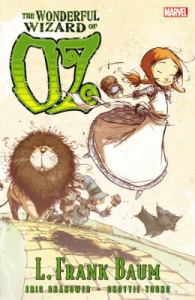 The Wonderful Wizard of Oz by L. Frank Baum and Eric Shanower. Art by Skottie Young. Colors by Jean-Francois Beaulieu.
 alibrarymama