
 Knits for Nerds by Joan of Dark, a.k.a. Toni Carr
As with so many knitting books, I heard about this one on the Knitpicks podcast. There I learned that “Joan of Dark” is Toni Carr’s roller derby name, and that she also has a book of roller derby patterns. Knits for Nerds is a fun little pattern book. It’s organized by obsession rather than by garment type – fantasy, science fiction, comics and manga, and general geekiness. The patterns are mostly intermediate and beginner level, while even the advanced projects seemed more on the intermediate side to me. The yarn called for also is universally less expensive yarn, either from Knitpicks or brands available at craft chains – good for both beginning knitters and for people who might not want to make a major yarn investment for something that would be more for costume than regular wear. That being said, there are both flaming and more subtle geek things here, and while the projects are mostly garments, there are also some bags and stuffies, including a tribble and a robot. Declaration of Geek projects include the Princess Leia hat featured on the cover (with three braid variations), the Next Gen sweater, hobbit feet slippers, and a tiny felted top hat called the Top This fascinator, which one of my knitting friends said her teen daughter would go nuts for. Projects that could blend in or not depending on yarn choice, or would be considered medium geek level include a Jayne Cobb scarf and sock set (hat patterns readily available free on Ravelry), a chess board laptop bag, Gryffindor ebook reader bag, and Mr. Nancy fedora and gloves. Those last would stand out a lot in the called-for bright green and yellow, but a) only a really dedicated fan would recognize them and b) there the yarn color really is everything. My favorite projects fall in the Secret Fan category, including the Dragonrider [fingerless] Gloves, Summer Queen Shawl, and the really gorgeous Aim to Misbehave Brown Jacket. This last is a trench coat length sweater, lace from about the waist down, knit in sport-weight yarn. I don’t think I’ll ever have enough time on my hands to knit such a thing, and brown is not really my color, but still… I can dream. The photography is outstanding, models posed with fun and appropriate backgrounds while still showing good detail of the actual project. I had some quibbles with her book-related trivia, but that really is a minor complaint in a knitting book. And while I’m not casting on for anything from this book right this minute, this was very fun to look through myself and with friends, leaving us feeling satisfied and happy with our geekiness.
 Puff Flies by Sally Grindley. Illustrated by Valentina Medicino.
 They’re both rated as Level 3, which seems to mean introducing vowel blends, a different one for each book. The back has a key of the phonemes used in the book, with spelling and pronunciation guide, and all non-phonetic words are bolded. Most of these are what my son’s school calls sight words, those most commonly used words like “was” or “where” that ought to be simple yet often aren’t. Both stories are funny, while working within the tight constraints of one or two short sentences a page, super-simple words, and featuring the same one and only one vowel blend on every page. In Puff Flies, a chubby baby dragon uses a kind witch’s spell for his first short flight, with lots of “spied” and “replied” before he gets it on his own. Dragons are always a hit, and cute baby ones are just as good as the deadly type. In Queen Ella’s Feet, poor Queen Ella’s feet are sticking out from under her blanket. King Alex asks for a sheet to cover them up, but the maid mishears, and goes seeking a sheep. In both of these, the story and bright art came together to make a book attractive enough that the two-year-old wanted them every day, too. As far as I can tell, Level 3 is as high as the My Phonics Readers goes, which is a pity.
  Hex Hall by Rachel Hawkins.
  way, with the felicitous combination of magic, almost-typical high school experiences and snappy dialogue, even if Sophie is on the other side of things. As an example, at one point Sophie is trying and failing to charm herself a ball gown, and describes one failed attempt as looking like “the really slutty bride of Cookie Monster.” Though it has spycraft instead of magic, the Gallagher Girl books have a similar combination of boarding school setting, danger and fun dialogue.
  Whatever After: Fairest of All by Sarah Mlynowski.
 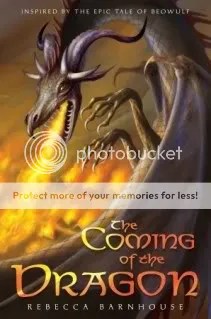 The Coming of the Dragon by Rebecca Barnhouse.
  How Eskimos Keep Their Babies Warm by Mei-Ling Hopgood.
  Roots of Empathy by Mary Gordon. The book describes the long-running school program of the same name (
 The Curse of Chalion by Lois McMaster Bujold. Read by Lloyd James. Lord Cazaril was once a castle-warder and a military captain. Now he is homeless and broken from brutal treatment on a Roknarri slave ship. He’s walked across Chalion on foot to get to the Provincara of the country estate where he was a page in his youth. He’s hoping for a place in the kitchens; instead, he is assigned to tutor the Royina Iselle, sister to the heir of Chalion, and her companion Betriz. Iselle is full of sixteen years of innocent passion and belief in justice, of the type that causes her to publicly expose a judge for suspected fraud. After a few months of trying to teach the girls diplomacy and caution along with the languages and geography of the surrounding countries, Iselle and her brother Tadez are both summoned to court. The king, their older half brother, is weak and ill and wants them to become familiar with courtly living. Unfortunately, returning to court for Cazaril also means facing the very men that Cazaril knows deliberately sentenced him to the galleys, now the king’s trusted advisers and the most powerful men in Chalion. Cazaril’s loyalty is tested to the utmost, as he becomes literally bound up with the curse that he learns is on all of the royal family of Chalion. He asks for the help of the Gods, and the Gods make it clear that they wish to work their will through him – if only he can figure out what their will is in time to save Iselle and Tadez. It was impossible not to hope for Cazaril not only that he would find his way through his dilemmas, but also that he could find a way to hope for a future for himself beyond his duty.
  Bigger than a Breadbox by Laurel Snyder. Our heroine Rebecca is about 14, I think, when her parents’ marriage starts really falling apart. Her father, an unemployed taxi driver and former teacher, has been absorbed in apathy, spending his time on the couch. Her mother, a hospital nurse, loses it in the middle of the week. She packs Rebecca and her little brother Lew, aged two, into the car and drives them from Baltimore to Atlanta to Gran’s house. She tells Rebecca that it’s just a temporary measure until she and Rebecca’s father get things sorted out, but she’s found a job and enrolled Rebecca in school. Rebecca, quite naturally, loves both her parents and would really like them to get back together again. She’s deeply betrayed both by the split and by her mother’s deciding to start a new life for all of them without so much as telling anyone ahead of time. She misses Baltimore and its seagulls as much as she misses her father and her best friend. While not speaking to her mother, she makes her way up to her grandmother’s attic, and it’s there that she finds, among a collection of old breadboxes, one that grants wishes. It takes a little bit to figure this out, of course, and to figure out the rules: she must wish for a tangible object that will fit in the breadbox. First it gives her an old Agatha Christie novel when she wishes for a book, which turns out to be perfect for taking her mind off the situation. But when she starts school and super-popular Hannah is assigned to show her around, it is perfect for giving her the cash and small gifts that will help her become the popular girl she never was at her old school. What Rebecca doesn’t realize at first is that even magic isn’t free. It takes her a while to realize the full truth about the breadbox magic, and even longer to figure out how to make things right again.
  The Books of Magic by Neil Gaiman. Illustrated by John Bolton, Scott Hampton, Charles Vess and Paul Johnson. This is an old Neil Gaiman, originally a 1993 miniseries, just brought back into print as a single graphic novel. Hooray for back in print Neil Gaiman! Twelve-year-old Timothy Hunter has magic potential, and a team of four mysterious (but probably familiar to DC fans) men in trenchcoats are watching him skateboard and deciding if they should offer him the chance to have a tour of the magic world. The men include John Contantine, Dr. Occult, and Mr. E. After Timothy’s yo-yo is turned into an owl, Timothy agrees to the demonstration/tour, following which he is to be offered a chance to start proper magical training or not. Each of the four mysterious men takes him to a different realm – past, present, Fairy and future. In each realm, he meets with famous people, some universally famous, like Merlin in the past and Baba Yaga and the Fairy Queen in Fairy, but also lots and lots of magic-using DC characters. I don’t read very many of the ongoing series type graphic novels, so most of these characters were familiar to me only from my work selecting graphic novels for my library, but while knowing them might have added to the story, I didn’t feel that I was missing anything not knowing them. (I’ve read only one short Zatanna comic book, but have seen lots of her on covers, and was quite tickled here to see that Timothy reacts with horror to the sight of her in her costume, when she changes out of her everyday clothes. Like most female superhero costumes, it’s ridiculously revealing and impractical.) In every realm, Timothy is in danger, both from the dangers inherent in traveling someplace one doesn’t really belong while wanting to get back to where one does belong, but also because Evil knows that Timothy is out there, and would like to either recruit or eliminate him. Timothy will witness things along the way that you probably wouldn’t want your twelve-year-old seeing – more along the lines of death than sexuality, probably fine for older teens and less sensitive younger ones, but still put in our adult rather than teen collection. This is a basic magical journey story, something that in the hands of a lesser person might be stereotypical. However, it’s Gaiman. It works beautifully, despite having a very limited amount of space to tell the story. All of the artists are top-notch as well, a different one for each of the original four comic books. It’s beautiful to look at just as art even while it’s art with a job to do: telling the story, maintaining continuity and the ability to recognize the characters from one volume to the next, at the same time as showcasing the artists’ distinctive styles. Any Gaiman fan will of course want to read this, as will those who enjoy a good fantasy yarn.

 alibrarymama