-
Join 888 other subscribers
- Follow alibrarymama on WordPress.com
-
Recent Posts
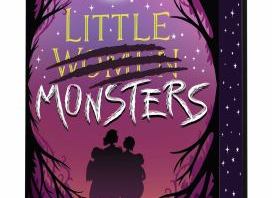
- Little Monsters by Máire Roche for MMGM
- Continuing Gaslamp Adventures: A Waltz of Sinister Import, Stormsong, and Soulstar
- Fantasy Romance for Tough Times – Agnes Aubert’s Mystical Cat Shelter, The Book Witch, How to Lose a Goblin in 10 Days, and When the Tides Held the Moon
- Reflections on History: Charity and Sylvia and Deprived of Sense and Intellect
- Seasonal Reads for Elementary Readers: Greta Grimsdark and the Normal New Neighbor and Holidays at the Castle
Archives

Tags
- #OwnVoices
- Adult Nonfiction
- adventure
- African-American
- Armchair Cybils
- Asian-American
- audiobooks
- award winners
- bibliography
- book-review
- book reviews
- books
- contemporary fantasy
- cooking
- Cybils
- diversity
- dragons
- fairy tales
- Fantasy
- fiction
- ghosts
- graphic novels
- historical fantasy
- historical fiction
- humor
- knitting
- Latino/a
- Latinx
- LGBTQ
- Middle Grade
- mr. fp
- multiculturalism
- Mystery
- mythology
- parenting
- picture books
- pirates
- reading
- Romance
- science fiction
- steampunk
- teen
- teen fantasy
- teen fiction
- teen science fiction
- Top Ten Tuesday
- youth fantasy
- youth fiction
- youth graphic novels
- youth science fiction
-
Top Posts
-
© Katy Kramp and alibrarymama.com, 2004-2024. Unauthorized use and/or duplication of this material without express and written permission from this site’s author and/or owner is strictly prohibited. Excerpts and links may be used, provided that full and clear credit is given to Katy Kramp and alibrarymama.com with appropriate and specific direction to the original content.
Igraine the Brave
 Igraine the Brave by Cornelia Funke This novel from German favorite Funke seems closer to her light-hearted feminist picture books than the deep and complex Inkheart series. Igraine is the youngest child of powerful magicians, the Fair Melisande and Sir Lamorak the Wily. They live in the small, dilapidated but cozy Pimpernel Castle. Her older brother Albert is studying to be a magician, too, but Igraine has always wanted to be a knight. It’s just days away from her twelfth birthday when they receive news that their neighbor the Duchess has been taken over by her greedy nephew. He wants the Singing Spellbooks that have always belonged to Igraine’s family at Pimpernel Castle. Just as the castle is besieged, Igraine’s parents accidentally turn themselves into pigs. And they’re out of the red giant hairs that they’ll need to turn themselves back again. It’s up to Igraine to save the day, with the help of a gentle giant and the Sorrowful Knight, who teaches her the rules of chivalry. It’s a quirky and exciting book perfect for nine- to twelve-year-olds, and possibly younger for reading aloud.
Mister Monday
 Mister Monday by Garth Nix. Read by Allan Corduner. This is the first in the latest of Garth Nix’s dark and detailed fantasy series. Our hero is Arthur Penhaligon*, aged 11 or 12, a middle school student in our own world. He survived the flu epidemic that killed his parents when he was first born, but was left severely asthmatic. He was adopted by his parents’ lab partner, a flu researcher, and her former rock star husband. This lengthy back story introduced here feels ponderous; in the book, the action takes off right away. It’s Arthur’s first day at a new school. He collapses with an asthma attack, and has what he thinks is a vision. A scraggly butler persuades a man in a wheelchair, Mister Monday, that giving Arthur the Key will fulfill the terms of the Will. Arthur will die any minute, he says, and when he does, Mister Monday will be able to take the Key back. And so Arthur is given a Key that looks rather like the minute hand of a clock. But when he wakes in the hospital, he still has the key and the book that later dropped on his head. Soon, there are strange dog-like men chasing him everywhere, asking for the key. A plague comes, affecting people connected with him and his school. A huge house that no one else can see is suddenly taking up several blocks near his house. The First Section of the Will leads Arthur to the House, having decided that Arthur is just the person to take possession of the Lower House back from the unfaithful trustee, Mister Monday. The Will is at the moment in the form of a jade frog, hiding in the throat of young Suzy Blue, who was once, centuries ago, a mortal child led to the House by the Piper. But there’s not much time for chatting. Monday’s Noon and a whole troupe of Fetches are after them.
Didja get all that? The setting of this book seems as intricately detailed as the gears of the clock whose hand the First Key resembles. There’s a whole lot of seven – the seven days of the week, as well as the seven sins (though this aspect has been less obvious in the following two books.) It’s a textbook Deist world, as the House and the Secondary Worlds, of which Earth is but one, were created by the Architect, who left millennia ago. She left the Will and appointed trustees to carry it out the purpose of the House: to observe and record only the events in the Secondary Realms. In her absence, the trustees divided the Will and imprisoned all the separate pieces so they could ignore it. In outward appearance, the House is run like a failing 19th century bureaucracy, with everyone wearing the clothes of that era. It’s a fascinating world, hitting amazingly well the fine line between giving enough details to make it feel like a real world without bogging the reader down. The brave but confused Arthur, the irrepressible Suzy Blue and the Will, determined but short on plan details, are characters to root for. And the plot won’t let you get off. Corduner (who also narrated The Book Thief) does an amazing job with unique and believable voices for each character. These books are keeping me sane through a broken toe, and I’m finding myself longing for more time to just listen.
*I was very curious about this name, sounding rather closely related to Arthur Pendragon. Apparently it’s an old Cornish name, Pen meaning top or hill and haligon meaning willow. If you can believe a sloppy search on Unca Google. http://www.surnamedb.com/surname.aspx?name=Penhaligon
The Rabbi’s Cat
 The Rabbi’s Cat by Joann Sfar The rabbi, his daughter and their cat live in Algeria. In the first story, the cat, previously able to communicate only in the usual way of cats, eats the rabbi’s parrot and is magically able to talk. Now he wants his own bar mitzvah, and argues strongly in his own defense both to the rabbi and the rabbi’s rabbi. Doesn’t being a rabbi’s cat mean he’s Jewish? Doesn’t he know the Torah well from helping the rabbi study? Indeed he does. He offers sarcastic but pithy comments on Judaism and humans in general. The sharpness of his critique is offset by his absolute adoration of the rabbi’s beautiful daughter. The saturated, squiggly drawings are perfect for this story of cats, people, and religion that is both funny and slyly serious. And while the thinky-thoughts are there, the characters and exotic setting are also worth paying attention to. This is one that I’d been meaning to read since it first came out, and I am so glad I finally did.
The Republic of Pirates
Only three more days to Talk Like a Pirate Day!
 The Republic of Pirates by Colin WoodardThe pirates of legend live free from the laws of kingdoms of the world. Theirs is a life of adventure as they travel where they will, taking what they need and making their victims walk the plank.
The legend is complete fiction, of course. But the fascinating part is that the Golden Age of Piracy followed the legend, brought about by frustrated pirates who thought it already reality. They created an early democracy where people of all colors and nationalities were equal members, though it was stamped out quickly. This is the story of the creation of the Republic of Pirates, the pirates who founded it and the former privateer who brought them down. The good news is that there is a lot in this book. Unfortunately, the facts are packed a little thick for all but the most die-hard of pirate fans. Happily, for those in between, there’s a lot to be had just in the intro.
Fruits Basket
“Didn’t that Librarymama used to read?” you ask. We first started watching the dvds of this from the library. When there were no more dvds at the library (tragically soon), I turned to the books. I haven’t been sure if I could do an adequate job of describing their appeal. But now that I am turning down three other legitimate already started books to check out more Fruits Basket, I thought I should probably try.
 Fruits Basket by Natsuki Takaya This is the most popular series of shojo or girls manga so far. Tohru Honda is a Japanese high school girl. Recently orphaned, she finds herself unofficially adopted by an isolated household of the large and wealthy Sohma clan. While everyone knows of the Sohmas, only a very few know of their curse: every generation, one person will represent each of the 12 animals of the Chinese zodiac, plus the cat, who was tricked out of attending the banquet. When they are hugged by a person of the opposite sex, these cursed people transform into their animal selves for a while. Tohru, despite the many misfortunes that have befallen her, is relentlessly optimistic and always believes the best of everyone. (How does she sound too good to be true and yet remain absolutely appealing? Her struggles to pass class must be part of it.) Now she’s living with the older Shigure, the dog, as well fellow high school students Yuki the rat and Kyo the cat. Naturally this situation gives ample opportunity for suggestive but chaste humorous interludes as people bump into Tohru and transform. But the character drama is what makes this really addictive. The otherwise quiet and polite Yuki and the rude but soft-hearted Kyo are constantly getting into fights – but find themselves spending more time together to spend it with their adored Tohru. Tohru just wants to get to know them better, and meet the other members of the Zodiac. The fan letters published in the book are always asking if Tohru will choose Yuki or Kyo. It’s not going to happen. The beauty is in the attraction, where a slight and otherwise innocent gesture carries more tension than your average explicit scene. Somewhere in the volumes I haven’t read yet – I think it’s up to 20 or so now – they might try to break the curse. For right now, it’s mostly personal drama, with the occasional drops of information about the curse slowly accumulating in the background. I could say more, but I have two more books to read tonight.