The Amazing Thing About the Way it Goes

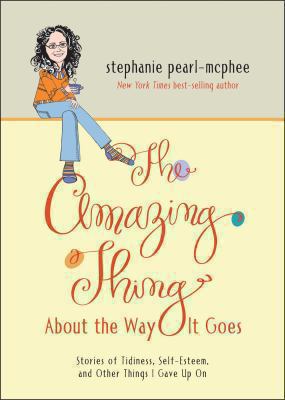
This is the latest book by one of my very favorite bloggers, Stephanie Pearl-McPhee, aka the Yarn Harlot.

The Amazing Thing About the Way It Goest The Amazing Thing About the Way It Goes by Stephanie Pearl-McPhee. Andrews McMeel, 2014.
I think I’ve been reading the Yarn Harlot for almost ten years, just about as long as she’s run the blog. I’ve even managed to see her a time or two when she’s come to the Ann Arbor District Library. So I was deeply thrilled when I found out that her new book, rather than being just about knitting like her previous books, is a book of general essays. Of course I love knitting – that’s why I started following the blog in the first place – but a book of essays about life means that my non-knitting friends now have something to read to understand why all the knitters are so crazy about her. Also, it meant that for the first time ever, I could buy the book for the library myself instead of requesting that a colleague buy it, since essays are in the Dewey 800s, which is one of my collection areas. I bought two copies, because I knew we would need them.

Pearl-McPhee writes with a whole lot of humor and even more heart. There are stories about her trying to learn to ride a clip-in bike and her many, many falls, in her efforts to participate in PWA’s Rally for Life in support of AIDS research. (She’s doing the ride from Toronto to Montreal for the third time this year, and I can’t express the depths of my respect for this kind of effort. ) She writes about parenting teens – her husband’s secrets (threatening to take off his pants works better than direct commands!) and hers, including how her high school physics lessons are essential with teens, and not in the way you’d think. There’s an essay about the power of snapshots and how she learned to let people include her in the pictures, one about why she can watch asteroid apocalypse movies with pleasure but can’t get over the impossibility of zombies, and fearful drop in self-esteem that comes just before she gets sick. I come out of reading her books laughing out loud and feeling like a better person – not like I’ve been preached to, but like I’ve just sat down with a spell with someone who’s been through it before and come out of it with at least her sense of humor intact. If you’re a fan of the Yarn Harlot, you won’t want to miss this one (even if it has somewhat less yarn in it than usual). If you haven’t met her before, The Amazing Thing About the Way It Goes is a great starting point.

Posted in books | Tagged , , , | 1 Comment

A Tale of Time City

The late and much lamented Diana Wynne Jones is popular enough in fantasy lit circles that she’s often referred to only by her initials as DWJ, much as my scifi geek friends talk about JMS. She’s written so much that I’m chipping slowly away at her library of books at the rate of one or two a year. This one I picked up because Stephanie at Views from the Tesseract recommended it, and because it’s not part of a series.

A Tale of Time CityA Tale of Time City by Diana Wynne Jones. Greenwillow Books, 1987.
It’s 1939, and young Vivian Smith is on a train filled with other London evacuees, headed for her unknown aunt’s house. Then, at the train station, she’s kidnapped by two boys, clever and pigtailed Jonathan and butter pie-obsessed Sam, and taken to Time City. Time City (if I understand it correctly) is built outside of regular time on its own unmoving bit, but oversees all the various Eras and tries to keep them from going unstable. Jonathan and Sam are convinced that Vivian will one day become the famous Time Lady, and that by catching her at a critical younger moment, they’ll be able to stop Time City itself from becoming unstable.

Vivian of course doesn’t believe she is, but now she’s stuck in Time City, pretending to be their cousin Vivian, who should already know how Time City works. There are elaborate ceremonies, the funny pajamas that everyone wears, robots, school, and the complicated stretch of history centuries before and after anything she’s learned of before. Everything is bewildering, but it looks like Time City is really in danger and none of the adults will believe it. Vivian, Jonathan and Sam need to figure out what’s going on and who’s behind it before Time City falls apart and all of history is altered forever, stranding Vivian apart from her parents.

As usual, DWJ writes vivid characters in a detailed world, with a plot that started fast and got faster. I liked that the major family in Time City, to which both Jonathan and his cousin Sam belong, are Lees of Asian extraction, now diluted with much mixing to indeterminate coloring with vaguely Asian eyes. However, the structure of Time City and the eras that so confuses Vivian was pretty confusing for me, too – maybe it’s just my chronic lack of sleep, but I’d need to reread this and try harder to get a grasp on everything. It’s not really necessary to understand it all the way to enjoy it, though, and I’m guessing that kids would be a little more flexible in their thinking than me. I’d say this is good for middle grade through middle school, and especially good for those who’ve outgrown the Magic Tree House books and want something more sophisticated with the same element of travel to lots of different periods in history.

Posted in books | Tagged , , , | 2 Comments

Scarlet

This is one I’d been wanting to read since it first came out, and just now got around to.

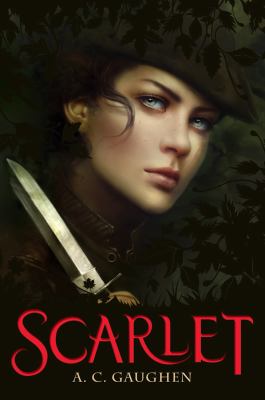
ScarletScarlet by A.C. Gaughen. Walker and Co., 2012.
This extra-dark Robin Hood retelling features a cross-dressing Will Scarlet with a haunted past. Robin’s band is very small, consisting of just Robin, Little John, Much and Scarlet, while Tuck is a helpful barkeep rather than a friar. They are the only ones who know that Scarlet really is just Scarlet, not Will Scarlet – but not even Robin just calls her Scarlet for the scarlet ribbons she ties on her throwing knives. As always, trouble comes Robin Hood’s merry band increases their efforts to cover the costs of the sheriff’s raised taxes. In retaliation, the Sheriff brings in the famed thief hunter Guy of Gisborne, someone who will recognize Scar’s distinctive moonstone eyes. The sheriff in this version is evil enough that he’s ready to kill children to protest not being loved enough, and Gisborne is of course even worse.

Gaugen tells the story in Scarlet’s own decidedly lower-class voice, and adds a love triangle to the traditional story. Robin, of course, has his own piles of demons, and both he and Scarlet are unwilling to share their own pasts yet frustrated with the other for not trusting the other enough to tell the truth. They torture each other in many ways, both deliberately with words and accidentally, by valuing the other’s life more than their own. Meanwhile, Little John offers an uncomplicated affection that’s hard for the emotionally battered Scarlet to ignore. I noticed a few anachronisms – a poor couple bottle-feeding their infant was the one that stuck out most painfully (where would they get a bottle? what would they put in it? how would they pay?)– and I wasn’t sure that even their mutual scars excused the verbal abuse between Robin and Scarlet. On the whole, though, this is a darkly seductive version of the story, with lots of passion and violence but no sex, good for teens and up who like Robin Hood stories but want more active female characters. And now I want to go back and reread Robin McKinley’s Outlaws of Sherwood.

Posted in books | Tagged , , | Leave a comment

The Read-Aloud Handbook (7th edition)

This is the latest edition of the classic book, first published in 1982, and regularly updated since then. I thought I’d try the new edition because Jen at Jen Robinson’s Book Pages was so enthusiastic about it, which led to my own thoughts on reading aloud.

The Read Aloud HandbookThe Read-Aloud Handbook (7th edition) by Jim Trelease. Penguin, 2013.
Trelease is a huge cheerleader for reading aloud, with much of the information in his book available on his website and in printable brochures as well as in his invaluable book. In the first half of the book, he talks about why reading aloud is important and how to do it, backed up with all the latest research. To sum up, read aloud starting ideally at birth, and don’t stop, especially not abruptly when children are first able to read on their own. (With teens, he says to play it by ear – some will still want to read aloud together, while others will prefer silent side-by-side reading.) Everyone involved in a child’s life should be reading aloud to them – mothers, fathers, and teachers. Reading separately to kids of widely different ages is a good idea (here I feel validated in spending such a large proportion of each evening reading first to the younger and then to the five years older child.) One of the very most important things that every child needs to succeed in life is a love of reading. Reading aloud is key, but Trelease also talks about other ways to encourage a love of reading: making sure the child know the adults love reading, that there is always plenty to read in every room, that there is time in the schedule and freedom from distractions to do it. (I think I need to move my son’s bookcase close enough that he can reach it from his bed, since his loft is too high for a bedside table.) Setting limits on screen time is essential, and Trelease has several field-tested suggestions on how to make this happen, especially discussing it as a change for families used to unlimited screen time. There are some cool ideas of little things that have been proven to help children love reading. Finland, for example, broadcasts mostly English-language TV shows, even the kids’ shows, so children have to learn to read quickly to understand their favorite shows. In the US, we can just remember to turn on the closed captioning. However, since our boy is already a fan of Japanese monster films, our plan is to show him more of these subtitled instead of dubbed. Trelease is also a fan of comic books and audiobooks, both on CD in the car and on iPods for individual listening.

The second half of the book (actually slightly more than half) is bibliography, with recommended fiction, nonfiction, and poetry books for kids from infants through teens. Most of the books have a short summary, though there are some shorter themed lists that are just titles and authors. I’d say the book is slightly slanted towards books with high boy appeal, a fine thing given that boys are more likely to be reluctant readers. I found the lists interesting enough that I went in planning to skim and ended up reading straight through. They were a quite respectable mix of classic and more recent titles, with a nice selection of diverse books included throughout. I brought a stack of his recommended nonfiction picture books, a great success. My son read the whole stack through right away, and brought some to school for his teacher to read to the class, which I hear also went over well. This is an inspiring book, jam-packed full of things both useful and interesting, and a great thing for every parent or teacher to read.

My own experience leads me to believe that many people want to start reading to children after they start talking a little, which is definitely too late. Not no-recovery too late, but it’s just easier to start reading before they want to get away. I confess that I waited until about six months to really get reading to my own, though, which seems to have worked out OK. Early infancy, if you have the inclination, though, is the time to read your favorite adult texts aloud, whether it’s Shakespeare or Stephen King. On the other end of things, I wrote a paper in library school on when and why people stop reading aloud. I found that most parents stop reading aloud once their kids are reading confidently – and that this corresponds to a huge drop in children reading for pleasure. Reading aloud isn’t the only factor, of course, but reading aloud to older kids does a lot of important things. It’s wonderful bonding time, first off, especially precious as kids are increasingly independent the older they get. Trelease points out that stopping reading aloud is like stopping advertising reading – and you don’t see any successful companies stopping their marketing campaigns just because people have already bought their products. And, because listening comprehension is always higher than reading comprehension, reading aloud lets kids listen to books above their reading level, gaining familiarity with the concepts and vocabulary ahead of time. I have fond memories of reading Robin McKinley to my twelve-year-old brother when I was home from college, and plan to read aloud to my kids as long as they’ll let me. Right now my nine-year-old’s consistent answer is that he’ll listen as long as I’m willing to read to him.

Posted in books | Tagged , | Leave a comment

Eddie Red Undercover: Mystery on Museum Mile

I checked this one out even though mystery isn’t my usual genre these days, because Charlotte got it as her diverse book for #WeNeedDiverseBooks day. Her son enjoyed it, and I was hoping that it might be fun for my son, too.

And on a randomish side note – exciting news for Michigan fantasy fans: Stephanie Burgis, author of the Kat, Incorrigible books, will be at the East Lansing Public Library on July 30!!! I am trying to figure out a way to get over there myself!

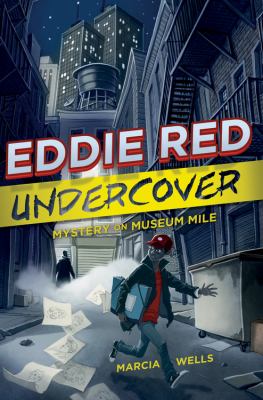
Eddie Red Undercover: Mystery on Museum MileEddie Red Undercover: Mystery on Museum Mile by Marcia Wells. Illustrated by Marcos Calo. Houghton Mifflin Harcourt, 2014.
Edmund Lanrott has a photographic memory and is very good at drawing, but other than that, he’s just another middle class African-American kid. Then, two things happen: his father, a librarian (yay!), is laid off (boo!), making his private school tuition suddenly out of reach. Then, he sees some people from a scuffle in the street goes by, and manages to see their faces. When the police see his drawing – recognizable as a wanted art thief – he’s hired as an undercover agent, code name Eddie Red. His job: hang out at New York art museums, publicly sketching the art and secretly keeping an eye out for any of the known members of an art thieving ring, just to draw pictures of them in whatever their current disguises might be. It’s supposed to be very low risk, though neither Edmund’s mother nor the detective he’s assigned to work for, Detective Bonavo, want him involved. Of course it’s all top secret, but Edmund feels pretty sure that he will explode if he doesn’t share some of the details with his genius best friend, Jonah. But when they put together the clues and the adults won’t believe their conclusions, proving themselves right may be more dangerous than they were counting on.

What a great book! Eddie’s gradual change from scared and nerdy to risk-taking, while nothing that an adult would want a kid doing, seemed utterly believable from a kid perspective. His ethnic background is certainly a part of who he is – most obvious in his parents using “icky” endearments based on their African origins as revealed in a genetic test – but it’s done in a way that feels natural and isn’t what the story is about. The illustrations throughout are Eddie’s own sketches of the characters he meets, including one of himself in a cool spy outfit. I don’t gravitate towards mystery as much as I used to, but this is the kind of thing I remember loving as a kid, the almost average kid getting involved in exciting adventures just this side of too dangerous. Unfortunately, it’s a little too advanced yet for my son – he was very intrigued when I read the opening to him, but bogged down a couple weeks into it. 9 is probably the bottom edge of the interest range anyway – it feels perfect for 10-13. I’ve already sold it to more kids at the library.

Posted in books | Tagged , , , | 6 Comments

Spirit Animals

Even before I tried Scholastic’s earlier hit multi-author series, the 39 Clues, with my boy, I’d been wanting to read this one. It’s a fantasy with a very diverse cast, and all so far written by authors that like. I’d though to read them to myself, but instead, the boy and I have listened to all the ones out so far together.

Wild Born

Wild Born. Spirit Animals Book 1. by Brandon Mull. Read by Nicola Barber. Scholastic, 2013.

Hunted. Spirit Animals Book 2 by Maggie Stiefvater. Read by Nicola Barber. Scholastic, 2014.

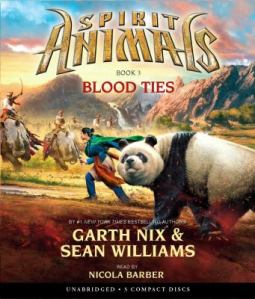
Blood Ties. Spirit Animals Book 3. by Garth Nix & Sean Williams. Read by Nicola Barber. Scholastic, 2014.

The world of Erdas is watched by powerful animal spirits. Working on their behalf, people who have magical relationships with “spirit animals” act as the guardians of Erdas – the Green Cloaks. All children take part of the Nectar Ceremony at age 11, when they are given a special drink. If they are going to have spirit animals, this ceremony is the time when the spirit animal comes to them. There’s no predicting which people will call spirit animals, or what animal will be called – anything from mice to bears. But all animals give their human partners special powers, and can take the form of a tattoo on their human as needed. As our story opens, we meet four kids from different backgrounds and corners of the earth, all about to have their nectar ceremonies. All but one of them have no expectations of calling a spirit animal – but they call not just regular spirit animals, but the spirits of the Four Fallen, Great Beasts who died protecting Erdas. The ancient Devourer whom they died defeating has risen again, and it’s up to these four children – who haven’t even met each other yet – to stop it by finding the talismans of the still-living Great Beasts before the evil Conquerors.

Hunted

Well… this was an unmitigated success with my son, who is already planning to have a nectar ceremony for his birthday party when he turns 11 in late 2015. (He’s hoping for a cheetah spirit animal.) My feelings were a bit more mixed. On the one hand, I really appreciate that the kids are from all over and have varied skin colors and economic backgrounds, and that the girls are good at the fighting side of things – Meilin at martial arts and Abeke at bow and arrow. The concept is nifty. I like that the authors are trying to develop them as characters, and that the relationship with the spirit animal is something that all the children have to work on. Unfortunately, though, they seem to be going through the same character development arc every book so far – hopefully that will change soon. Three books in, I’m already a little bit bored with just looking for a new talisman every book, especially when it’s not really clear to me why taking the talismans away from the Great Beasts is really going to be helpful.

I have mixed feelings about Nicola Barber as a narrator, too. She’s clearly a talented narrator, but she voices pretty much everyone with some variation on a British accent. On the one hand, this works well at highlighting the class differences between the kids – I’m pretty sure I couldn’t tell a lower class Latin American accent from an upper class one. On the other hand, the geographical differences aren’t addressed at all. Since the continents are clearly modeled after Earth continents, it would have been cool if Abeke and Meilin sounded African and Chinese instead of upper class British. And when they start travelling across the world, the British accents seem even more inappropriate, as the dwellers of a remote jungle tribe in something like South Asia speak with a thick Scottish burr. Also, this is an adventure series, so I expect action scenes to be treated as exciting. But Barber’s voice, instead of getting louder and faster at these moments, gets hushed and slow. It’s successful in conveying the gravity of the situation, but it makes the kids sound timid instead of brave.
bloodties

In the first book, Wild Born, the four kids meet their spirit animals and are met by people waiting for them – some by Green Cloaks, some by servants of the Devourer. Will they all come around to the right side in time? Also, looking for the first talisman on Rollan’s home continent of Amaia, but in the wild mountains rather than his familiar city streets.

In the second book, Conor’s conceited former master returns as a villain serving the Devourer, willing to do anything to get back at Conor for having a spirit animal when Devon didn’t get one. All four of the kids work harder to bond with their spirit animals, and are having difficulty working as a team. The talisman this time is in Eura, and the adult help they’ve come to rely on is not able to help as much as before. It’s also very close to Conor’s home town, and he of course does not know of the danger awaiting him.

In the third book, Meilin and her spirit animal, the great panda Jhi, are lost in the bamboo maze trying to reach her father in Jhong, where she meets Shu, a delightful retired Green Cloak with a jumping mouse for a spirit animal. The others are trying to catch up by boat from a different direction, and have shifted which person on their team they don’t trust. They are searching for the slate elephant talisman of the Great Animal Dinesh in something like southeast Asia.

Writing about this is bringing up more positive feelings than I had while listening to it – and maybe I would enjoy them more reading them over listening to them. Maybe it’s just tough to write a really solid series like this, projected to be really, really long, with a different author for each. In any case, I would say that I enjoyed these but didn’t love them as much as I wanted to, but my son is a huge fan. I would definitely recommend this to kids ages 9 or so and up looking for an exciting fantasy series.

Posted in books | Tagged , , | Leave a comment

Top Ten Classics for Kids

Top Ten Classics (for kids)

Top Ten Tuesday
Here’s another list idea from the good folks over at the Broke and Bookish. Making the classics for kids is my own spin, as is posting about Tuesday on Wednesday (though that part wasn’t really planned.)

anneofgreengablesAnne of Green Gables by L.M. Montgomery
Do I really need to say more? I read Anne and the Emily of New Moon series over and over again. Is it an introvert/extrovert thing? As a child, extremely introverted, I liked Emily better, but as an adult, I’ve come back to Anne more often. Like many on this list, it’s usually cited as a classic for girls, but I have imposed it on most of the boys in my life with good results as well. Imagination is for everyone, after all.

balletshoesBallet Shoes by Noel Streatfield
Orphan girls making a family and following their dreams in WWII London, including ballet, acting, and automotive engineering. Another classic with more boy appeal than you’d think on first glance – I think my son went for this on the wartime experience angle.

borrowersThe Borrowers by Mary Norton
Really, what child doesn’t find the idea of tiny people living secretly inside our houses intriguing? Did you leave small useful objects out in your house for the Borrowers, too?

hobbitThe Hobbit by J.R.R. Tolkien
This is one that I loved as a child and my son also loves, even though there are neither children nor sympathetic girls in it at all.

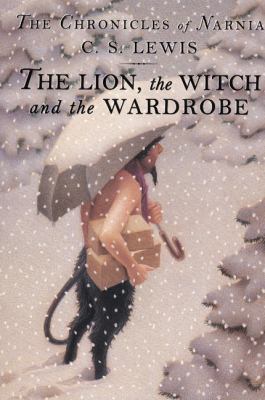
lionThe Lion, the Witch, and the Wardrobe by C.S. Lewis
The portal fantasy where kids from our world find out they are the foretold by prophecy storyline feels overdone these days, but this one still holds up amazingly well, especially as a read-aloud or audiobook.

LittleWomen7Little Women by Louisa May Alcott
Is it the way that Alcott captured the realities of life with siblings and their various personalities that has helped this stay beloved for so long?

mistressmashamsMistress Masham’s Repose by T.H. White
This isn’t as well-known as White’s The Once and Future King, but it’s the one I went back to over and over again. Ill-treated orphan Maria finds a small population of Lilliputians, and must figure out a way to deal with them ethically. This looks like one I’ll have to read aloud to the boy, as it doesn’t look like it’s available on audiobook.

momoMomo by Michael Ende
I still need to read the most recent English translation of this yet – I first read it for a children’s literature class in Germany, where it quickly gained the special place in my heart that friends informed me it’s long held in Germany. It’s the story of an orphan girl who rescues a time-obsessed city from the truly frightening Gray Gentlemen, who smoke people’s saved time.

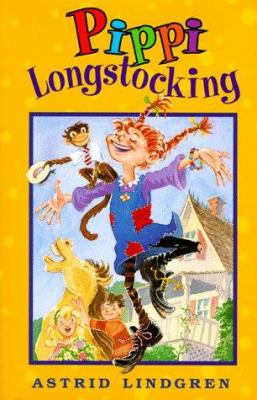
pippiPippi Longstocking by Astrid Lindgren
Generations later, rule-breaking but kind-hearted Pippi is just as charming and revolutionary as she was when she was first published.

secretgardenThe Secret Garden by Frances Hodgson Burnett
The magical story of the healing power of friendship and nature, with at least two of the three child characters starting out quite unlikeable before their redemption. Another one my son loved on audiobook.

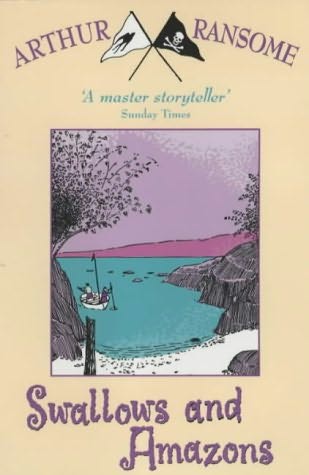
swallowsandamazonsSwallows and Amazons by Arthur Ransome
England’s Lake District in the 1930s, populated by self-reliant children in sailboats having all kinds of adventures.

wrinkle50thA Wrinkle in Time by Madeline L’Engle
Smart, geeky kids risk everything to save their parents in this modern classic, one I was willing to bet my best friend was better than both the other books in the series (at the time) put together.

Even stretching my ten to a dozen, I haven’t had room for all the books I consider classic enough to impose on my children – but this will do for a start. What are your favorite classics from childhood and for children?

Posted in books | Tagged , | 14 Comments

June State of the Book Basket and Summer Reading

youarebeautifultoteIt’s Summer Reading time. a time to encourage my son to expand his reading horizons and to make more time to sit down and read to my daughter. We have lots of books checked out for both of them! Continue reading

Posted in books | Tagged | 1 Comment

Mastiff

MastiffMastiff. Beka Cooper: Book 3. by Tamora Pierce. Read by Susan Denaker. Listening Library, 2011.
Pierce ups the stakes for Beka on all levels in the last book of the Beka Cooper trilogy, following Terrier and Bloodhound. As the book opens, Beka is trying to deal with the death of her betrothed, a fellow Dog who turns out to have been abusive to her and whom she was planning on breaking up with anyway. As everyone else seems to think she should be heartbroken, things are very awkward and uncomfortable all around. It’s a distinct relief when the Lord Provost himself knocks on her door in the middle of the night, summoning her to a top secret hunt. It’s so secret that she and her team (her partner, along with Lady Sabine and a country mage named Farmer) aren’t told what the mission is until they are at their destination. Someone has kidnapped the young crown prince, and it’s up to Beka and her friends to find him, dodging all the traps set for them while keeping the kidnapping a secret from the rest of the kingdom. The journey ranges across Tortall, and puts them in contact with all kinds of new people.

This book again has sensitive-parent triggers, including the kidnapped prince being the same age as my youngest, child slaves, and a murdered child, just to warn any similarly sensitive readers. Oddly enough for me, these did not bother me nearly as much as the big twist in the book, which I’m not going to spoil here, but which I couldn’t really buy and which left a bitter taste in my mouth. I felt like Pierce was making everyone suffer too much to balance out the big happy moments at the end, and maybe I’m soft, but I wish she hadn’t. However, the hunt was very well done up until the end, with the biggest highs and lows, and close collaboration with all the members of the team. While I’m not sure it was my favorite book of the series, it still has all the great elements of the other books, and fans of the series will want to read it. If you’ve read it already, I’d love to hear your thoughts, too!

Posted in books | Tagged , , , | Leave a comment

The Return of Zita the Spacegirl

We’ve been fans of Zita since the first one came out – I hopped right in line for this one as soon as I saw it in the library catalog.

The Return of Zita the SpacegirlThe Return of Zita the Spacegirl by Ben Hatke. First Second, 2014.
This is the last Zita book, at least for now, following Zita the Spacegirl and Legends of Zita the Spacegirl. Zita is imprisoned on trumped-up charges – every good deed from her past adventures held up as a crime. Still, she’s got the charm and determination that have served her well in the past. She starts befriending her cell mates and trying to escape (again and again) right away. There’s a mysterious cloaked figure who might be trying to help her, and a whole mine full of prisoners for her to help as well. All her friends from previous adventures make an appearance, which was a little confusing as it had been a while since I read them, but cool all the same. The adventures are a little darker and more personal this time, what with the prisoners forced to work in mines and a bad guy who’s got it in for Zita especially. But Hatke’s illustrations, with Zita both adorable and determined, keep things feeling lighter. It has a great ending that makes it clear that Zita’s adventures aren’t over, even if the books may be.

This book was read through very quickly and with much enjoyment by all three independent readers in my house. I’m disappointed that despite all the diversity of species in Zita’s friends, all four of the humans have the same skin tone. That being said, this is a series that I recommend to library patrons on a regular basis, and that’s often not on the shelf when I try. It is a great one to give to boys who maybe think they don’t want books starring girls – I’ve yet to find a kid who doesn’t like Zita. It was also fun to get a little more of the history of the Zita stories, including Hatke’s wife in college in her own Zita costume. I was (again) sad that we didn’t get autographed copies of the first two books when Hatke was at Kids Read Comics last year, but these are definitely on our family wishlist. If you haven’t read Zita yet yourself, now is a perfect time to start! It also pairs wonderfully with Dave Roman’s Astronaut Academy.

Posted in books | Tagged , , | 2 Comments