Every year since 2014, I’ve tried to do an audit of my reading, as well as a list of my favorite books of the year. It’s my way of keeping myself accountable to my goals of reading about 50% books by authors of color and including good LGBTQ representation as well. I was disappointed with the diversity of my reading in 2024, so I set myself specific goals to read at least 20 books by Black authors and 8 by Indigenous authors. This year also marks the first year in a decade that I wasn’t reading for the Cybils Awards, with a noticeable affect on my reading.
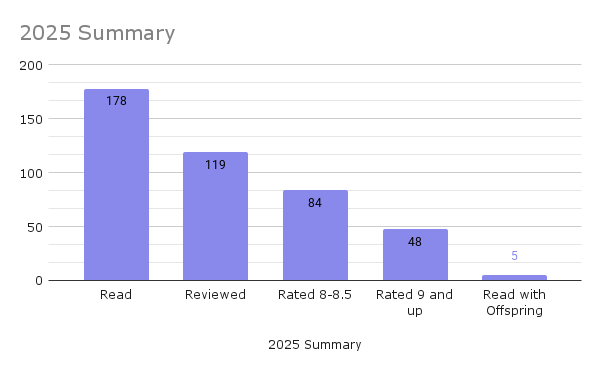
2025 Overview
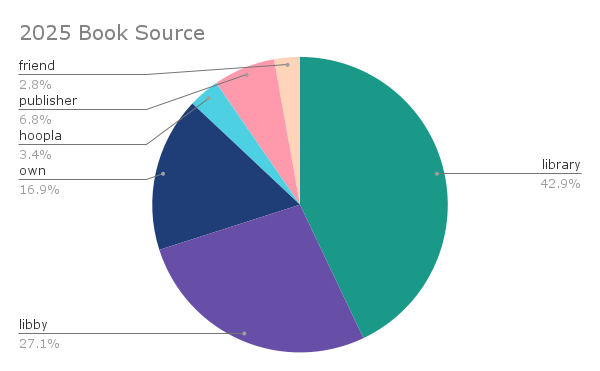
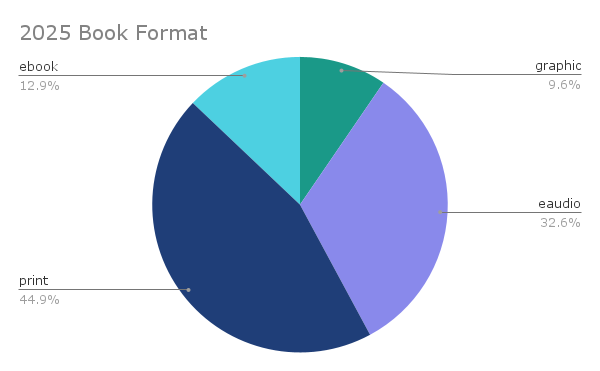
This is my fifth year splitting out the digital library loans (Libby and hoopla) from the physical books. My total library reading including those was 73.4%. My joining Stephanie Burgis’s Discord channel has resulted in me buying a lot of books from the other authors on the channel, so that my level of books read that I own has doubled since last year. A slight downturn in audiobook reading – probably partly because I’ve been doing an audio course in Welsh that takes up some of my former audiobook time. Ebook reading is down – I did much less reading on Netgalley this year than last.
What I Read
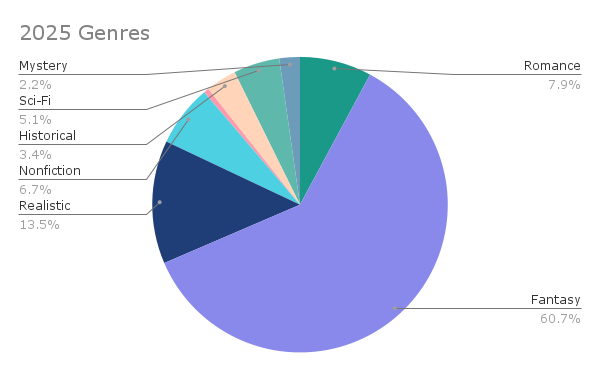
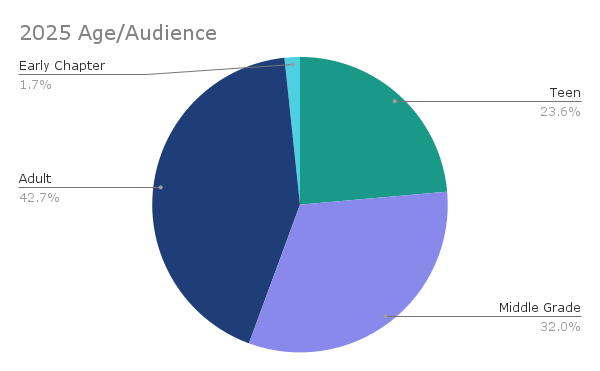
Fantasy is in the lead as always, but all the other genres except Verse had gains from last year, pushing Fantasy down from 73% of my 2024 reading.My adult reading nearly doubled and overtook Middle Grade for the first time probably since I started tracking. I want to read some more middle grade in 2026, but it’s also been refreshing to read some more adult and teen books as well.
The Authors
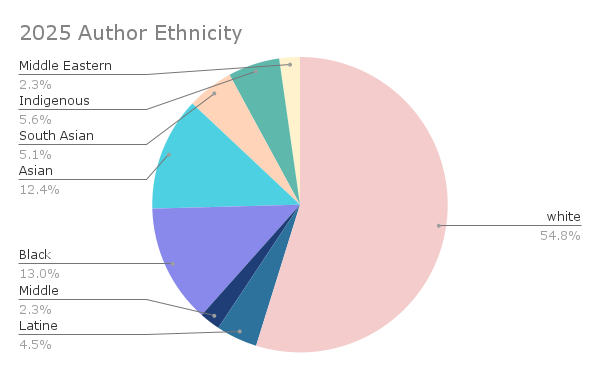
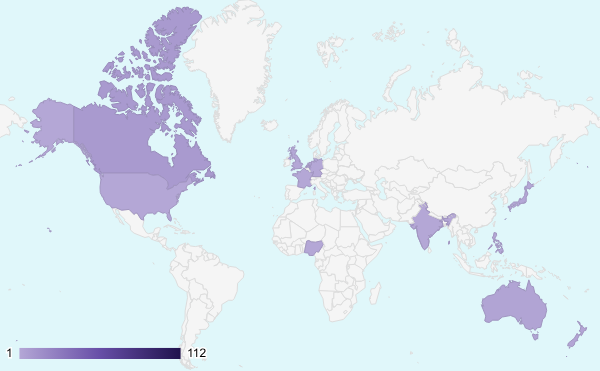
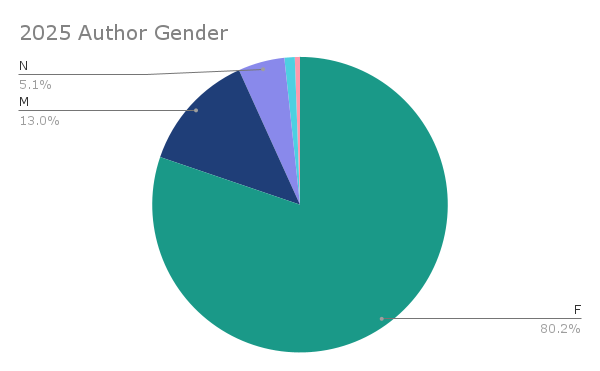
Hurrah! I set some goals for myself with reading more books specifically by Black and Indigenous authors, where I felt I was especially short last year. I met the goals and it also accomplished my goal of increasing my overall percentage of books read by authors of color. Just for fun, a map of where the authors are from. Google Sheets is oddly looking mostly at authors from multiple countries, which is why the US and the UK are so pale. My reading of books by men has gone back down 13%, more similar to my 2023 reading levels. The two unlabeled slices are partnerships between women and men on the same book.
The Characters
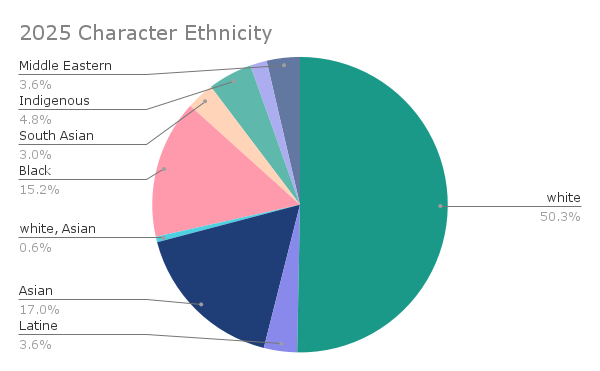
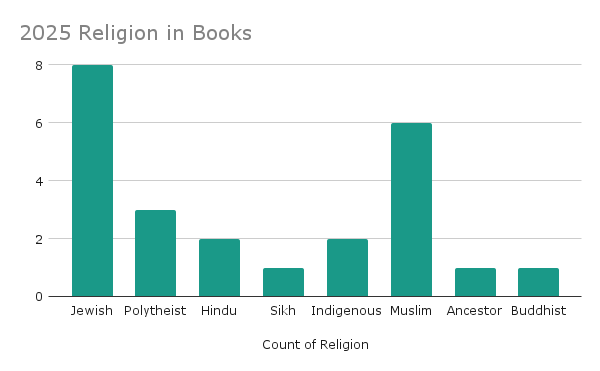
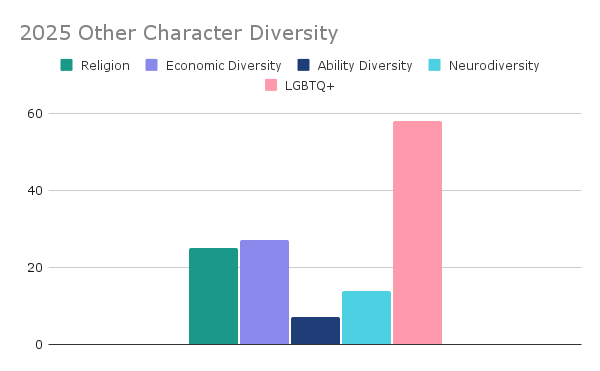
Well, I read more books by authors of color, but my percentage of white characters is nearly the same as in 2024. Still, I won’t feel too bad about a near 50-50 split. I count religions if they are mentioned and are not Christian. Unless it’s a work of nonfiction, this is looking at the religion of the main character, not the author. The vast majority of my reading features characters who aren’t openly religious, though. This graph looks at counts of books with diversity besides racial. I counted religion if the MCs practiced any religion besides Christianity, Economic if they were low income, Ability for physical disabilities. Neurodiversity includes main characters with ADHD, autism, anxiety, etc. Economic diversity is so common in fantasy books that this is the first year it hasn’t been the highest of all the counts..
I’ve been doing these graphs over ten years now – here they are from 2024, 2023, 2022, 2021, 2020, 2019, 2018, 2017, 2016, 2015, and 2014. As always, if you know of any speculative fiction books that would help me round out the diversity of my reading, please let me know! And if you have thoughts on these stats or other things you’d like to see, let me know in the comments.



 alibrarymama