
I’m sharing four new series starters here, posting as part of Marvelous Middle Grade Monday hosted by Greg at Always in the Middle.
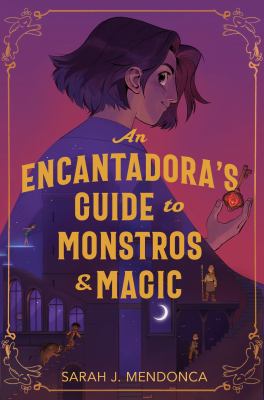
An Encantadora’s Guide to Monstros & Magic by Sarah J. Mendonca. Quill Tree Books, 2025. ISBN 978-1335012883. Read from a library copy.
In this Portuguese-inspired historical fantasy, tween Rosa lives with her grandmother in the crowded and poor part of the city. They both work as Trappers, the lowest regarded and yet most dangerous of the approved encantadora types. In their city, things that would just be pests in our world are dangerous monsters – things like fire slugs that cause literal fires as they crawl over things, or bookworms that will attack people as well as books. Rosa’s long-disappeared father and uncle, though, were Keepers, skilled in working magical locks – a career worth more money and status, with many fewer threats to life and limb. So when her grandmother’s shop is threatened by debt collectors and a mysterious stranger offers Rosa a chance to audition for a place as a keeper on an exclusive, unknown, but definitely lucrative team, Rosa is all in. The string of trials are full of adventure, but also force Rosa to keep secrets from her grandmother and cause a rift in her relationship with her best friend, Tiago. It might have started out as an exciting dream, but now everything Rosa cares about is on the line.
The basic plot is a heist filled with highly skilled tweens pushing their talents to the limits, complicated plans, narrow escapes, and so many secrets – but along with that, Mendonca looks at issues of class, systems of oppression and what makes people buy into them, all while Rosa is trying to figure out what she owes to her grandmother and how she can be a better friend, as she is floored when Tiago says she isn’t one. The ending sets us up for book two, An Encantadora’s Guide to Legends and Lies, which is due out in September. I didn’t absolutely love this, and I’m not quite sure why, but it is solid and I enjoyed it enough to keep an eye out for the sequel.
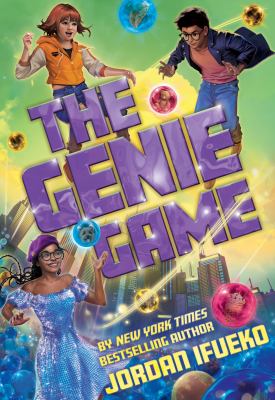
The Genie Game by Jordan Ifueko. Harry N. Abrams, 2026. ISBN 9781419764370. Read from a library copy.
In a futuristic world run by the three big corporation who own everything, collectively called the Trio Trust, thriteen-year-old Valentine is the only person in Gloss Angeles who remembers that her big sister, whom she calls Mango, exists. The aspiring “feared and fabulous film director'”s search for her big sister – told through both first-person narrative and her imagined movie scripts of how things will go – leads her to a shop called Boba Bubble. There, she’s ensnared and coerced into signed a contract to become a GENIE – a non-magical but immortal person whose job it is to fulfill wishes for the general public and deliver the fulfilled wishes back to the corporation whose team she’s on, Bumblebell Foods. Valentine is immediately suspicious – especially when her first job, in front of a crowd, is to grant a clearly staged wish. As the new player, she’s immediately courted by teams and both popular and unpopular single players. These include the young influencer star DumDumDerek, beloved by many of Valentine’s classmates, and Merced, a Filipino-American boy her age who’s constantly getting in trouble for trying to steal the wish-filled Styluses from the Genie’s enforcers. But which team will help her find her sister? And as she’s celebrated in the Genie Game, it’s harder and harder to remember why she wants to get back to the parents who always found her disappointing anyway.
The Genie Game manages to be both delightfully campy and sincere, with oversized apathy monsters attacking the city and corporations who own cities and people outright. Valentine’s affection for her sister and her struggles to make and keep real friendships ring true. The overall struggles, while dialed up for drama, echo current real-world struggles, as the afterward explains in a call to action for young readers. I prefer the more historical African mythology of Ifueko’s Raybearer world, but I recognize that as my personal bias. This futuristic tale has a lot to offer adventurous kids.
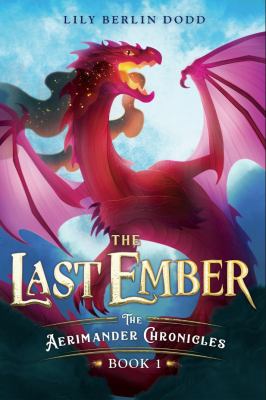
The Last Ember: the Aerimander Chronicles Book 1 by Lily Berlin Dodd. Read by Sid Sagar. Farrar, Straus and Giroux, 2025. ISBN 978-0374393120. Listened to audiobook on Libby.
In the capital city of Glaucus, Porttown, our story follows two children – wealthy, plump and brown-skinned Eva Alexader, a student at the Young Ladies’ Royal Academy for Science and Mathematics; and Dusty St. Ichabod, a too-thin and pale-skinned orphan who lives and works at St. Ichabod’s Dairy Production and Home for Delinquent Boys. When Eva buys a strange silvery egg-shaped thing from the best department store in town with her birthday certificate, suddenly thieves are all around her, trying to steal the strange object. Could it be the egg of a creature either mytical or extinct? (This feels like a spoiler, though of course the creature is on the cover.) Eva, her roommate Myrnie, and eventually Dusty and his best friend are all caught up in a dangerous adventure with the power to affect not just their own lives but those of everyone on the continent and the Northern Colonies, where the kingdom has been fighting against the colonists’ independence for years.
This is the kind of fantasy adventure that makes me sigh and remember why I love middle grade fantasy so much, with big adventures, kids questioning the world and what they’ve been told is their place in it. There’s a dastardly villain, unexpected twists, beautiful scenery, and hilariously-named people like the headmistress of Lily’s school, Lady Godfellow-Sneet. Though we mostly know about Eva’s appearance because she looks at herself in the mirror early on and is pleased, I still appreciate that characters of many skin tones appeared throughout the book. Narrator Sid Sagar’s reading was expressive and his British accents worked well to convey the class differences between the characters. I thoroughly enjoyed this book and am very much looking forward to seeing what happens in book 2, due out in November. This would work well for readers who enjoyed Katherine Rundell’s Impossible Creatures or An Encantadora’s Guide to Monstros & MagicND Stevenson’s Scarlet Morning.
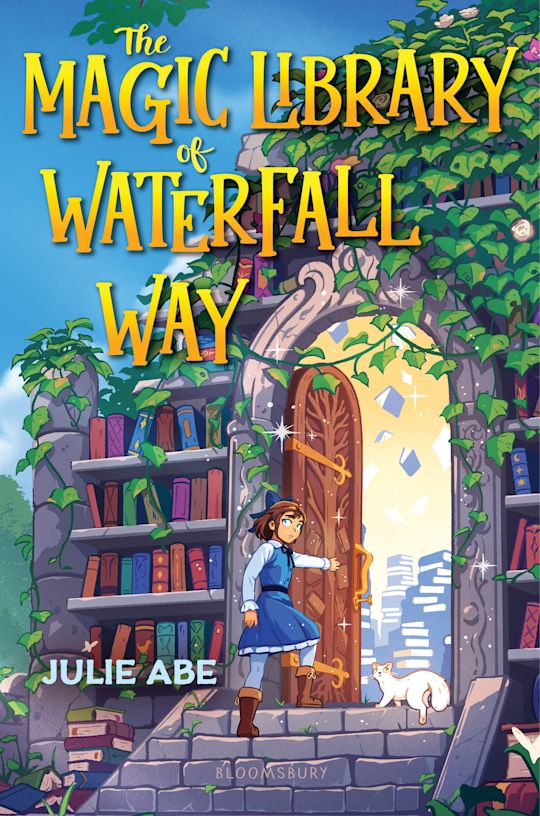
The Magic Library of Waterfall Way by Julie Abe. Bloomsbury, August 2026. ISBN 9781547618293. Read from an ARC kindly provided by the publisher.
In a world where prophecies in babyhood predict how special or “remarkable” children will be and thus what level of guild they can be apprenticed to, orphaned Lyra Hunt is an Unremarkable – doomed to be exiled to the Mists beyond the edges of the empire unless some guild will take her on as an apprentice. With only six months left to go before she’s too old to find a guild, even her official guild matcher is giving up hope. But when a remarkably intelligent-looking sable leads Lyra to a hidden village, the leader of the Guild of Scholars, Gemini, welcomes her. Now Lyra just has to fulfill the Quest they give her before the six months are up so that she can officially become a member of the Guild of Scholars. But the great library of the Guild is partially burned and entirely inaccessible, the telephone no longers transmits requests for quests from other Guilds, and not very many people are comfortable with an unlucky Unremarkable hanging around. In a library that spits visitors back out of its corridors, how will she ever find its missing crystal? Lyra, though, is willing to do just about anything for the chance of a place to belong.
As with Eva Evergreen, Semi-Magical Witch, Julie Abe tells a story about a kid who isn’t gifted with strong magical abilities or prophecied success, but one with heart and fortitude who’s nevertheless determined to do the right thing. Lyra has to deal with friendly and unfriendly adults and kids her age, learning to figure out who she can trust and how far to push the boundaries to do what needs to be done. Aside from the initial leeriness from some of the villagers, the tiny village where Lyra finds herself is almost utopian as people split up the enormous work of making a living on their own between each other. She’s also befriended early on by an intelligent and adorable white sable. These keep the story on the side of cozy rather than dark even as Lyra discovers that all is not as it seems in the empire. She’s always known that only books that show the Empire in a favorable light are allowed, but it’s not until she reads other books does she realize just how much the propaganda is hiding. This is a theme with a lot of relevance to our current political climate, even as Lyra’s adventures have the feel of a timeless middle grade fantasy adventure. And as a side note, the finished version of this book is something to look out for, with edges sprayed with flying books in addition to the lovely cover illustration.




Pingback: Marvelous Middle Grade Monday (7/27/2026) | Always in the Middle…
I’m so glad you joined MMGM this week. I’m a fan of Julie Abe and really enjoyed Eva Evergreen. I’ll definitely check this one out of the library based on your review. Thanks so much! And I hope you keep on joining us.
Thank you so much, Natalie! I’ve been reading more adult fiction this year, but I’ll definitely try to join when I have middle grade reviews to share.
I’ve been reading more adult this year, too. But anytime you can, join us.
I’ve read the last two but will be adding the first ones now thanks to your insights. Hope you have a Happy MMGM! Hope to see you on a future Monday!
Thank you so much, Greg! I hope you enjoy the books!
I’m not a huge fantasy reader, but each of these sounds really unique, and I like the unique worldbuilding, especially with Encantadora and the snails! Thanks for featuring these!
Of course! Thanks for stopping by!
That’s a lot of fantasy books–it’s obvious you love this genre! Going to share this with a young reader who was looking for more fantasy books.
Well, yes – fantasy has always been my favorite. I’m glad you have a young reader to share them with!
Welcome to MMGM. The fantasy lovers out there should be happy to find all these available. Thanks for all these reviews.
Pingback: Author Interview with Julie Abe on the Magic Library of Waterfall Way | alibrarymama