
 This is me, resolving to read more books by authors I like, rather than trying to explore the maximum number of authors. Here, I continue my love affair with Maggie Stiefvater with a book that I didn’t quite get around to when it came out in 2011.
The Scorpio Races by Maggie Stiefvater. Read by Steve West and Fiona Hardingham.
In this standalone book, we travel to the remote British island of Thisby. There, every November, people train and race the deadly water horses called capaill uisce (pronounced “kapull ishka”) on the beaches. The narration alternates between Sean Kendrick and Kate “Puck” Connolly. Sean Kendrick, 19, effectively an orphan since his mother left for the mainland when he was tiny and his father was killed in the races when he was 10. Now he’s a four-time winner of the Scorpio Races, working for the breeding stables of rich Benjamin Malvern, and longing more than anything for a chance to own the red capaill uisce, Corr, that he’s ridden since his father fell off during the race. Puck, a couple of years younger, lives with her two brothers since they were orphaned when a capaill uisce took both of their parents from their fishing boat a year ago. Now they are barely making ends meet, as older brother Gabe has the only real job among them, working at the hotel, while Puck paints pottery for tourists and Finn bakes cookies for local stores. When their situation suddenly gets worse, Puck decides that the only solution is for her to race as well. It doesn’t even occur to her that she is the first girl ever to attempt it, or that the men who manage the races will do whatever they can to stop her.
It’s a dark and bloody story, filled with the crash of black water on cold, rocky beaches, the desperation of people determined to survive on the inhospitable island, the love of horses both natural and supernatural, the thrill of the race, and a wee bit of romance. Stiefvater has built a whole island culture around the sketchy existing myths, with rituals, charms, costumes, music, and food (there’s a recipe for the tantalizing November Cakes that appear in the books on her website. And while there, I found that the German version of the book is titled Rot Wie das Meer or Red Like the Sea – poetic but quite different.) Once again, I was drawn in by the audio version, featuring her original music and two narrators, just as she had for Shiver. She says in her author’s interview that she has music for every scene in her head, but she only writes down one tune for each book – surely I’m not the only one who wants them all. I think that when I get around to reflecting soberly on the matter, I might find that I prefer Raven Boys to this – but while caught up in this one, there’s no room for comparisons. Just go read it.

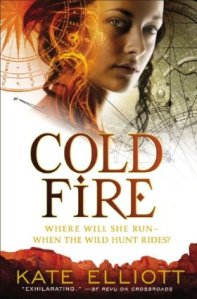 Cold Fire by Kate Elliott.
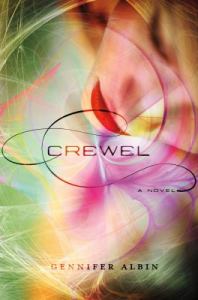 Crewel. Crewel World Book 1. by Gennifer Albin.
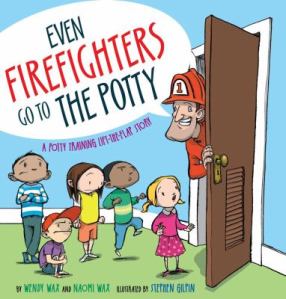 My most recent request along those lines has been from my sister-of-the-heart, M. She was looking for toilet learning books for her two-year-old. As it happens, I have some potty training experience under my belt. Those of you happily past that time, feel free to move along or share your favorites.
  The Last Dragonslayer by
 Will Sparrow’s Road by Karen Cushman. Read by Katherine Kellgren.
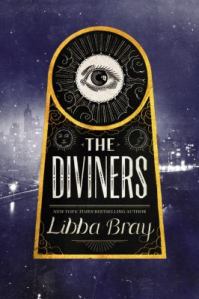 The Diviners by Libba Bray.
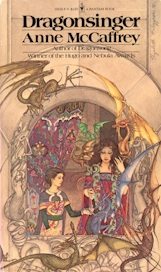 Dragonsinger by Anne McCaffrey. Read by Sally Darling.
 3 Dead Princes by Danbert Nobacon. With Illustrations by Alex Cox.


 alibrarymama