-
Join 888 other subscribers
- Follow alibrarymama on WordPress.com
-
Recent Posts
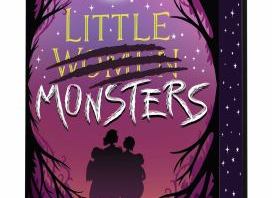
- Little Monsters by Máire Roche for MMGM
- Continuing Gaslamp Adventures: A Waltz of Sinister Import, Stormsong, and Soulstar
- Fantasy Romance for Tough Times – Agnes Aubert’s Mystical Cat Shelter, The Book Witch, How to Lose a Goblin in 10 Days, and When the Tides Held the Moon
- Reflections on History: Charity and Sylvia and Deprived of Sense and Intellect
- Seasonal Reads for Elementary Readers: Greta Grimsdark and the Normal New Neighbor and Holidays at the Castle
Archives

Tags
- #OwnVoices
- Adult Nonfiction
- adventure
- African-American
- Armchair Cybils
- Asian-American
- audiobooks
- award winners
- bibliography
- book-review
- book reviews
- books
- contemporary fantasy
- cooking
- Cybils
- diversity
- dragons
- fairy tales
- Fantasy
- fiction
- ghosts
- graphic novels
- historical fantasy
- historical fiction
- humor
- knitting
- Latino/a
- Latinx
- LGBTQ
- Middle Grade
- mr. fp
- multiculturalism
- Mystery
- mythology
- parenting
- picture books
- pirates
- reading
- Romance
- science fiction
- steampunk
- teen
- teen fantasy
- teen fiction
- teen science fiction
- Top Ten Tuesday
- youth fantasy
- youth fiction
- youth graphic novels
- youth science fiction
-
Top Posts
-
© Katy Kramp and alibrarymama.com, 2004-2024. Unauthorized use and/or duplication of this material without express and written permission from this site’s author and/or owner is strictly prohibited. Excerpts and links may be used, provided that full and clear credit is given to Katy Kramp and alibrarymama.com with appropriate and specific direction to the original content.
Three for fun
This book I picked off the teen librarian’s pirate display, because I needed to read a teen book and was feeling lazy about choosing one. It is a fine book, though!
Bloody Jack: Being an Account of the Curious Adventures of Mary “Jacky” Faber, Ship’s Boy by L.A. Meyer
On the Dark Day, the body collector took away Mary’s mother and sister just days after he’d taken her father. For a time, she finds a home on the streets with a gang of orphans, but she dreams of adventure and seeing the legendary Kangaroo. Finding a place as a ship’s boy could be the perfect way out. Only hopefully, it won’t be too bloody. Jack finds herself caught up in the middle of conflict on board ship – with good friends among the other ship’s boys, but hated by the midshipmen. Can she save her friends from the pirates, avoid starting a war on ship, and keep up The Deception? Jacky tells her story herself in language that brings the age of pirates to life, while she stays a real and ordinary girl caught up in extraordinary adventures. You won’t be able to put the book down.
This book was given to me by . It’s a Book Crossings book, so I passed it on to when we saw her lately. It is an awfully fun concept, Book Crossings.
Carpe Demon: Confessions of a Demon-Hunting Soccer Mom by Julie Kenner Kate Connor was raised to be a demon hunter. She left the job after marrying her second husband (her first, Eric*, had been a demon hunter as well, but died of Causes Unknown). Now she’s got a teenage daughter, a two-year-old and a husband who don’t know anything about her past – and demons crashing through her kitchen window. It’s Buffy trying to keep up with carpools, find a place to stash the toddler, and host cocktail parties for her husband on top of the demon hunting. I never quite bought her not telling her husband about it, especially after she winds up telling her best friend. I have been spoiled by Buffy, which usually had resonances of deeper issues under the fun vampire-slaying. This story, which is really a perfectly fine adventure story, felt like it was trying to be Buffy but missed the point. It may not be Joss, but it’s a fun story, particularly for people like, well, me, a Buffy fan and a mother.
*Good names, don’cha think?
Spinners by Donna Jo Napoli and Richard Tchen I have loved Donna Jo Napoli, and in general, love retold fairy tales. This one is a retelling of Rumplestiltskin, and started off with a love of yarn, making it extra seductive for me. The retelling is good insofar as I really cared about all the characters and had a hard time putting it down. As told here, Rumplestiltskin is about greed and love gone wrong. But Saskia, our heroine, seems to be caught in the middle and never finds a way out. Her mother died at birth and the man she thinks is her father never really loved her – though we know from the beginning that Rumplestiltskin is actually her father. She’s making a fine living for herself spinning when her father decides to take her to the king. Everything goes downhill from there and comes to a screeching halt at the end of the story, without resolving (for me) any of the messy issues that got brought up.
Subversive Parenting Part II
This book was recommended to me by a colleague – fortuitious, I thought, since I’d been thinking it was about time for me to start reading discipline books, which this kind of is. I got a nudge in the right direction – and a book that is rocking my little parenting world, challenging just about everything I had thought about discipline in such a way that I can’t really disagree with him.
Unconditional Parenting by Alfie Kohn Many discipline books start with the question, “How can I get my kids to do what I say?”. Wrong question, says Kohn. Instead, we should start with, “What values and qualities do I want my children to possess? What can I do now to foster their development?” It turns out that teaching children unquestioning obedience is not helpful for long-term moral development – teaching empathy, independence, the ability to make good choices. So far, so good. Next: discipline is not really effective. Spankings (no surprise) and time-outs both encourage children to think first of the likelihood that they might get caught and punished and second (if at all) of the effects of their actions on other people. Time-outs come under special fire for sending the message to children – not meant by parents, but taken to heart by the children – that they are getting a time out from being loved. Well, I confess that I often want someone who’s done something wrong to suffer, including my own child. But maybe I could see that this is juvenile, and I certainly remember feeling rebellious more than repentant when I was punished as a child. But now comes the real kicker: rewards are equally bad methods for teaching good moral behavior, and for pretty much the same reasons: if the methods work at all, they work by making kids focus on the rewards and on the loss of love if they fail to perform. Kohn calls punishment and rewards two side of the same bad coin. Not only does he consider using rewards to be manipulative, but he cites studies that show that rewards decrease incidences of the target behavior – and verbal praise has the same effect as such rewards as money, candy, or grades.
At this point in the book, the questions are burning in my mind (and perhaps yours): If you’re not supposed to use punishments or rewards, what are you supposed to do? How are we supposed to keep our kids from running wild? Kohn does actually have some suggestions that sound useful. The basic principles involve things like keeping in mind what your child is actually capable of doing, making sure you make your child feel loved at all times (including not using treats as a reward for good behavior and going with your child if you feel that he or she needs to be removed from the situation), and treating things as problems to be solved rather than bad behavior to be punished. He doesn’t like to do absolute rules, because he really believes that the right thing to do depends on the child and the situation.
A lot of this is a long way off from what I was raised with, what I’ve read, and conventional wisdom. But his case is convincing, and backed up with decades of well-documented research. It will take some practice and rethinking, but I am going to try. I would put this on my most highly recommended parenting list. Even if you don’t want to follow him the whole way, this book is sure to make you look at children and parenting in a new light.
Sorry for the length, and congratulations to any who made it through this!
Subversive Parenting – part one
I recently read a most excellent parenting book, Unconditional Parenting by Alfie Kohn. I have a full review started at work, but the book is here, and I wanted to post some of the quotes he included.
“Author Barbara Coloroso remarks that she’s often heard parents of teenagers complain, “He was such a good kid, so well behaved, so well mannered, so well dressed. Now look at him!” To this, she replies:
From the time he was young, he dressed the way you told him to dress; he acted the way you told him to act; he said the things you told him to say. He’s been listening to somebody else tell him what to do….He hasn’t changed. He is still listening to somebody else tell him what to do. The problem is, it isn’t you anymore; it’s his peers.”
This one from Alice Miller:
“Many people continue to pass on the cruel deeds and attitudes to which they were subjected as children, so that they can continue to idealize their parents.”
My comment: no kidding, because facing up to what your parents did to you hurts. Lucky me, to have so many friends willing to work through the suckiness to try to be better parents themselves.
Hopefully more on Friday…
Thank God my sister is safe.
The Mallee and Newford
Though His Majesty’s Dragon and the following book both have historical settings, going from one to the other was a rather jarring transition. Kinda like jumping off the dragon and landing in the Australian desert.
Everyman’s Rules for Scientific Living by Carrie Tiffany This is a novel of Depression-era Australia. Our narrator, Jean, works on the Better Living Train, traveling among the remote settlements of Australia giving lectures on sewing techniques. Her colleagues teach farming, animal husbandry, cooking and baby care. Soon Jean marries Robert and leaves her friends on the better living train for life on a farm, where Robert tries to prove that SuperPhosphate and following his own published Rules for Scientific Living can make farming in the Mallee a success. The plot sounds spare, and it is. The first-person present-tense narrative makes the book feel like one of those liquid movies shot with a blue or sepia filter, like The Piano. Setting and language take center stage as Tiffany explores the limits of love and of progress. This is Tiffany’s first novel, short-listed for the Commonwealth Literary Prize, and got starred reviews in lots of review journals.
My experience as a teen librarian will be branching out soon. No, I’m still an adult librarian, but I’ll be leading the teen book club while the teen librarian is at ALA. Lucky me, getting to read a book by a favorite author. This book makes me want to find DeLint’s other Newford books – I don’t think I’ve read any of them.
The Blue Girl by Charles DeLint Imogene ran with a gang and got in cauldrons of boiling hot water at her old school. Now that she’s moved to Newford, she wants to start over. She picks Maxine, sitting alone at lunch, as a likely friend candidate and tries unsuccessfully to avoid the attention of the bullies. The book starts out kind of slowly as a teen friendship novel, and is going along on that level when things slowly start getting creepier. The resident school ghost develops a crush on Imogene and starts following her around everywhere. Every night, Imogene’s abandoned imaginary friend, somehow not as friendly-looking as she remembered him, shows up in her dreams and warns her not to open the door. As things accelerate down the hill, it looks like the bullies are the least of Imogene’s worries. I may have said it before, but no one can weave the truly creepy supernatural into ordinary urban life like DeLint. And Imogene and Maxine are characters well worth rooting for.
I also read It’s the Thought That Counts by Lynn Johnston, the For Better or for Worse 15-year collection. Yep, one of my favorite comics, from a cartoonist with brains, guts and heart. And a sense of humor, of course.