The Search for WondLa and A Hero for Wondla

I had this series vaguely in the back of my mind from maybe hearing other bloggers mention it when I was hunting for a new series for my son and me to listen to.

Search for WondlaThe Search for WondLa by Tony DiTerlizzi. Read by Teri Hatcher. Recorded Books/Simon & Schuster, 2010.

Eva Nine has been raised by a MUTHR robot in an underground sanctuary, training with holo simulations for the day when she’ll be old enough to go to the surface.  She feels stifled living underground, and dreams especially of a future that mirrors the old picture she found on a scrap of cardboard in an abandoned tunnel: a child, a woman and a robot holding hands.  But when her Sanctuary is attacked, Eva Nine is forced to flee into the wild on her own, and the wild is nothing at all like what her training prepared her for.  There are walking trees, carnivorous birds, giant multi-legged creatures that her “omnipod” identifies as closest to microscopic waterbears – and intelligent alien species.  Eva Nine bonds with a lanky blue alien named Rovender Kitt as they are both captured multiple times by Basteel, the Queen’s huntsman who’s determined to capture Eva Nine in particular for the Queen’s collection.  Together they escape, try to rescue other creatures and MUTHR, explore the world, and are captured again.

I had really mixed feelings about this book.  On the one hand, the basic premise – humans as a species being kept alive by robots and coming back to find Earth no longer Earth at all, but a planet with its own new civilization, flora, and fauna.  The new species and the old Earth technology that Eva Nine uses are all fun to explore.  On the other hand, Eva Nine was horribly whiny, especially as narrated by Teri Hatcher.  I might have liked the whole series better if it had been narrated by someone else – Hatcher did a great job at MUTHR’s synthesized old-movie mother voice, and indeed at creating distinct voices, but the narration as a whole felt like she never got out of robot mode.  The whole thing was read as if it were nonfiction, with lots of careful pauses for comprehension that interrupted the flow and lulled the adult listeners (driving the car) dangerously close to sleep.  However, my son still really enjoyed it.  The print book, while long, is full of pictures that would make the world building and diverse characters even more fun.
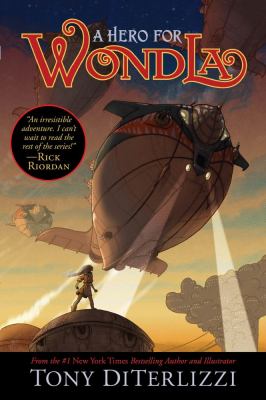
Hero for WondlaA Hero for Wondla by Tony DiTerlizzi. Read by Teri Hatcher. Recorded Books/Simon & Schuster, 2012.

Despite my reservations with the narration, my son was excited enough about the series that we went on to book two.  At the end of the first book (spoiler alert), Eva Nine finds a ship ready to take her to an actual human settlement.  She is thrilled! Her dreams of meeting other humans are finally coming true! But her belief in a utopia doesn’t even last out her first day there, as she finds that the humans live in a bubble world, tightly controlled by a patriarch who keeps even the knowledge of the new sentient species on the planet a secret.  She also meets Eva Eight, the previous resident of her destroyed Sanctuary, who wants only to go back to her life as it was and live as a family with MUTHR and Eva Eight.  When Eva Nine realizes that the patriarch is in fact an Evil Dictator, out to enslave the rest of Orbuna, she must take action!!!

My mixed feelings continue with this book.  The world building is still fun, and Eva Nine does grow as a character.  Eva Eight seemed unbelievably immature to me, especially considering that she’s supposed to be decades older than Eva Nine.  The characters and dialogue felt hackneyed at times.  Worst of all, even though our protagonist is a girl, all the other characters were male unless there was a specific reason for them to be female.  Here’s my count: Female: the queen, one of five Mystical Alien Siblings, one alien mother, a trio of extremely shallow girls in the human city, Eva Eight, one of the nine elders in Rovender Kitt’s village, for a total of 8. Male: Rovender Kitt, the hunter Basteel, the sweet big alien water bear, alien father and son, the two members of the Queen’s staff, the pilot who rescues Eva Nine, his grandfather, the patriarch, two or three advisors to the patriarch, three prisoners, eight other advisors in Rovender’s village, for a total of 24.  Once I started counting, I couldn’t stop thinking about it.  Do we really still need to be sending the message that only exceptional girls can be leaders?  On the other hand, the message of humans getting along with other species is a good one, and addressed in a very interesting way.

We’ve stopped reading the series at this point, mostly because of the narrator.  It’s on my list of 11 recent sci-fi books for fourth and fifth graders, and we’ll see if we continue with the series in print sometime later.  I’d be really interested to hear your thoughts on this if you’ve read it.
Posted in books | Tagged | Leave a comment

The Darkest Part of the Forest

This is one I’d wanted to read since I first heard it was coming out.

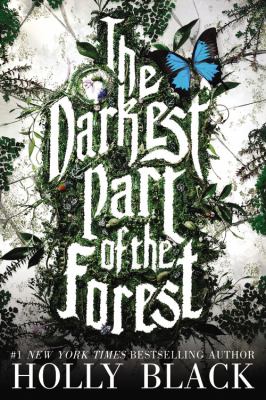
The Darkest Part of the ForestThe Darkest Part of the Forest by Holly Black. Little, Brown and Co, 2015.
Hazel and Ben are teen twins living in Fairfold, a modern-day town with close ties to Faerie. Close as in Ben’s best friend, Jack, is a changeling, still living with his human brother Carter, since Carter’s mother fought to get her own baby back and decided that the fairy mother wasn’t fit to have her son back if she was willing to give him back in the first place. Close as in there’s a glass coffin in the woods with a sleeping horned boy in it.

Outsiders come from all over to see the horned boy, but they don’t seem to be able to remember or remark on the darker things that happen in Fairfold, things like tourists regularly going missing. And while all the teens regularly party on and around the coffin, Hazel and Ben have been coming there on their own since they were kids, pretending that Hazel was a knight fighting monsters and Ben her bard, both of them hoping for the regard of the prince in the coffin.

Now it’s clear that the fragile balance that has held in Fairfold is cracking. Darker things are on the way, and Hazel and Ben’s secret pretendings will come out into the open and turn out not to be pretend.

Hazel and Ben are both scarred from growing up with their neglectful parents and in such close proximity to magic, as even the kindest of the Fae do not really have human interests in the fore. So it is that they have twisted their own lives to protect each other, making the relationship between the two of them both loyal and full of lies. The book is full of curses as blessings, lies and truths that are not what they seem on the surface.

Black works her usual magic to make the old  stories of untrustworthy faeries into something surprising. I loved how the gender roles were reversed, with Hazel being the warrior and Ben the openly gay musician. (The partying and dating behavior of the teens in this book pegs it solidly as one for high school and up.) Black is drawing mostly on British folklore, but modern-day Fairfold isn’t lily-white: Carter and his family have Yoruba ancestors, and some of that folklore is woven in as well. This is Holly Black in top form, mingling modern-day concerns seamlessly with the old legends into something compelling and darkly beautiful.

You could pair this with any of Black’s previous works, such as Good Neighbors: Kin and White Cat. Maggie Stiefvater’s books (Ballad, Shiver, The Scorpio Races, The Raven Boys) also have a similar real modern day and real magic feel, while Alex Bledsoe’s The Hum and the Shiver takes an adult (in the library sense) spin on encounters with the fae.

Posted in books | Tagged , | 1 Comment

This One Summer

I’m reviewing this one separately from the other Caldecott winners (see Caldecotts Part 1 and Part 2) because it’s neither a picture book nor appropriate for younger teens. I had been looking forward to reading it for a very long time, and featured it on the Asian-American Graphic Novels list I posted last year.

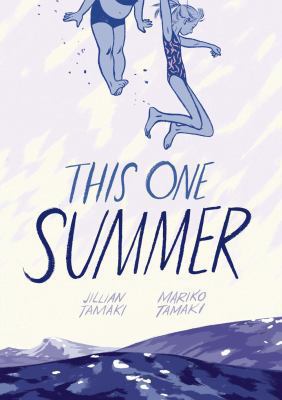
This One SummerThis One Summer by Mariko and Jillian Tamaki.  First Second, 2014.
Rose has been going to the same cabin on a lake every summer for as long as she remembers.  Windy, a year and a half younger, has been her summer friend that whole time, too.  This year, Windy in particular is looking forward to puberty.  Rose is less interested in how her body might change than in the cute convenience store clerk, a much older teen.  Her mother is depressed and her parents struggling to get along as they have tried and failed to have another baby, something that Rose isn’t really sympathetic towards.  In between swimming in the lake, starlight hot dog roasts, and late-night horror movie sessions with Windy, Rose and Windy piece together the story of the rocky relationship between the aforementioned cute clerk and his girlfriend.

This book got a lot of buzz when it first came out last summer, and I’ll just be kind to myself and say that I waited for the demand at the library to die down before reading it myself.  I was really excited to see it winning so many awards, including Caldecott and Prinz honors and lots and lots of best graphic novel and books for teens list. There’s diversity from the authors, and from Windy being adopted, though it’s unclear if she’s meant to be explicitly Asian.

Now that I’ve read the book, my feelings are mixed.  There are lots of good things about it – the casual friendships, the painful secrets, and the depiction of lazy summer days.  The art is absolutely breathtaking, from scenes of Rose swimming underwater to energetic panels of Windy krunking, to the girls swinging.  Everything is colored in peaceful shades of blue-gray.

On the other hand, I really didn’t like Rose. Even though I knew Rose was going through a hard time with her family’s stress and was clearly ignorant about a lot of things, it was really hard to sympathize with her when she did said yet another condescending thing to Windy and got verbally angry with her mother for being depressed.  Worst of all was the slut shaming – Rose frequently calls the convenience store clerk’s girlfriend a slut many times, and believes that it’s the girl’s responsibility to “protect herself” and keep things from going too far.  While an adult calls her on using the word “slut”, they don’t discuss it past that with her.  The clerk himself treats his girlfriend horribly.  We see Rose thinking about things, but the format doesn’t let us see into her head.  It’s never clear if she or the clerk ever revise their attitudes, ones that I considered horribly sexist even as a very conservative teenager myself.  I got the impression that the authors meant for her to be changing her mind on this, but if it was confusing to me as an adult, it would be even more confusing to a younger teen reading it. The older teens plot line was a huge part of the book, so this rather spoiled the story for me.

I could hope that being confronted with these ideas will make teens think about them, even if Rose doesn’t change her mind.  In any case, the peaceful summer cycles are just what they should be, and the art is breathtaking.

Posted in books | Tagged , , | 2 Comments

Caldecott Winners 2015 Part 2

This year’s Caldecott winner, with two honor books – many of these I had to wait for at the library because everyone wanted to read them.

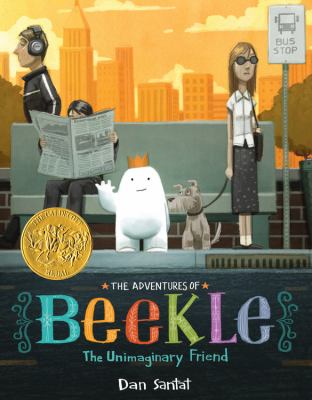
adventuresofbeekleAdventures of Beekle, the Unimaginary Friend by Dan Santat. Little, Brown & Co., 2014.
This is the title that won the Caldecott, and which I’d somehow missed hearing of, though I’ve enjoyed Dan Santat in the past – we own and love The Three Ninja Pigs. This one is even more charming. On an island far away, outside of reality, imaginary friends are born, and hang around waiting for a person to imagine them. Our hero, Beekle, has been waiting and waiting, watching his friends leave. Finally he decides to take matters into his own hands, journeying to the real world to find his friend himself. Things in the real world aren’t quite what he expects – but sometimes things are better that way anyway. Santat’s style has a unique quality of looking blocky and rounded at the same time. The colors are gorgeous, and Beekle and his friend as cute as can be. I wasn’t at all surprised to find this a hit with my daughter and her K/1 class.

nanainthecityNana in the City by Lauren Castillo. Clarion Books, 2014.
A preschool-aged boy is quite upset at spending a night at his grandmother’s in the city for the first time. The city is big and scary! Grandmothers belong in safe and cozy places! But with the help of a red cape that she sews for him, he’s able to share her joy in the exuberant life of the city. As Lindsey at A is for Aging, B is for Books http://www.lindseymcdivitt.com/, points out, positive images of aging are rare and important in children’s books. Not only is our young friend reassured about the safety of life in the city for his Nana and him, but readers get to see a grandmother who’s full of creativity and zest for life. The bright ink and watercolor illustrations bring the city beautifully to life and manage to be comforting at the same time. The text seems aimed at the toddler to younger preschool crowd and didn’t grab my five-year-old as much, but it should be a hit with the target audience.

samanddavedigSam and Dave Dig a Hole by Mac Barnett. Illustrated by Jon Klassen. Candlewick, 2014.
It seems like everyone but me had read this book before it won the Caldecott honor. It’s simultaneously funny and frustrating: two boys dig a hole looking for treasure. Every so often, they give up and start digging in a different direction. The illustrations show a cross-section of the earth, so that readers will see that the kids are missing bigger and bigger gems each time they turn. The dog keeps sniffing at where the gems are, but the boys never find them. The story goes on, becoming stranger and more ambiguous. I was just researching his art methods –he uses lots of traditional painting and drawing techniques, sometimes cutting out painted bits and photographing them, then mixing things together digitally. It all comes together into his very recognizable style, with muted colors and crisp outlines. I didn’t quite love it, but I can see the appeal. This one feels like kids may or may not fall in love with it, but there’s enough depth and information presented only in the pictures that it bears repeated reading.

Posted in books | Tagged , , | 1 Comment

When We Wake

This is the last of the Cybils Speculative Fiction for Young Adults 2014 Finalists, and another one that I would probably not have picked up otherwise.  It’s the sequel to When We Wake, which I have not read.  Though I was able to follow the action just fine anyway, if this premise sounds good, you’d probably want to star with that one.

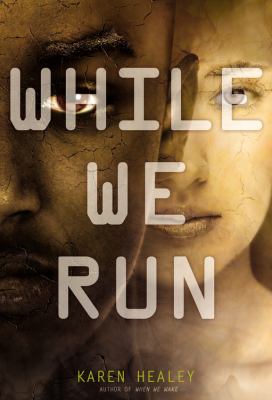
While We RunWhile We Run by Karen Healey. Little, Brown, 2014.
The year is 2127.  Abdi Taalib, originally from Somalia, came to Australia with the promise of a full scholarship for his singing.  Things went horribly wrong with that in the previous book, and now he and his girlfriend Tegan (who was killed and frozen in 2027 and revived in the first book) both have implants in their heads that allow their sadistic controllers to cause them horrible, invisible pain any time they resist.  They’re forced to put on cheerful public concerts to raise money for a cryogenic space ship program. This plans to deal with the growing environmental and refugee crisis by cryogenically freezing a few rich people who can pay for their own passage and lots of refugees who will work for the rich people in exchange for free passage and a chance for life on a new planet.  The problems with this plan are legion – Abdi and Tegan are most concerned about the slave conditions of the refugees, as well as the complete lack of concern for anyone who might be stuck back on Earth.

Unknown to Abdi, there are lots of factions who see through Tegan’s brilliant smiles and are trying to rescue her in a movement called Save Tegan.  But escape will not be easy, and even if they can escape, those factions have aims of their own which will probably not align with Abdi and Tegan’s. What will they owe their rescuers?

Once again, I was impressed with the Cybils team’s choice in this book.  There’s a lot of action and excitement, but also introspection as Abdi examines his own goals and motivations.  That definitely added to my enjoyment as I really dislike it when the action moves so quickly that we never get to know the characters.  The cast is wonderfully diverse, with characters from several different continents, religious persuasions, and gender orientations, including a trans woman.

The dystopian future setting isn’t one of my favorites, but I’m in the minority on that, especially among teen readers.  I especially appreciated that the evil future government is a believable progression from issues that face Australia (and many other countries) today.  The cryogenics/space travel adds a welcome hard s/f aspect (Noggin had a softer take on the cryogenics topic.) I genuinely enjoyed getting to know Abdi and Tegan and cared about their cause.  There’s quite a bit of violence and some almost-intimate situations that would make me feel more comfortable giving this to high schoolers and up, but middle schoolers who are already reading the popular teen dystopias won’t really find any content more objectionable than what’s in those books.  This is highly recommended.

I was unable to tell if there will be a sequel to this book or not – right now, it looks like it’s a finished duology, though the story could certainly be continued.

Posted in books | Tagged , , , , | Leave a comment

The Winner’s Curse and the Winner’s Crime

Dear readers, I have so many thoughts in my head right now that even though I’m reading wonderful books that I want to share with you, the words to talk about them keep getting trapped behind all the other thoughts: running a used book sale at my kids’ school, starting to lead a Girl Scout troop, training to be an adult literacy tutor for work, and health insurance wrangling.  Even though all of it is good except for the insurance, the not finding time or head space to write reviews is leaving me feeling somewhat thwarted.

So today I have a book that was on my want-to-read list for nearly a year – from the time it was first published – before I got around to reading it, helped along by its being a Cybils Young Adult Speculative Fiction Finalist.

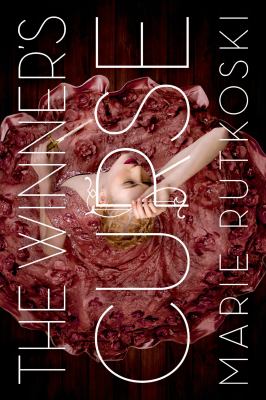
winnerscurseThe Winner’s Curse by Marie Rutkoski. Farrar Strauss Giroux, 2014.
As the daughter of the general in charge of a peninsula captured only 10 years earlier, Kestrel enjoys a high position in Valorian society, even if she doesn’t agree with it all the time.  She’s mostly against slavery – but as the story opens, she surprises herself by bidding an outrageous amount on a handsome slave her own age.  It’s not, as everyone supposes, because she wants him as a lover, but because of the fierce wildness she sees in him.  As she gets to know him, attraction does develop, made extremely difficult by their disparate positions in society. She will always be one of his oppressors, no matter how much they bond over a love of music and horse-riding.  Though I normally look for diversity in my reading, here I really appreciated that Rutkoski explores a clearly unequal relationship while leaving our cultural race baggage out of it.

I’m starting with the romance, and the romance part of the thread is strong and definitely swoon-worthy.  Often in teen romances where the characters are mooning about over each other, I want to tell them to cut the melodrama – just go and talk to the other person and it will all work itself out.  In this situation, with all of society set up between the two of them, it’s clear that it will take a lot more for Kestrel and Arin to work things out.  In Kestrel’s empire-driven society, young people must either marry or join the army by 18.  She’s never been interested in either, and her déclassé love for playing the piano makes her especially uninterested in risking injury to her hands by joining the army.  Now her father sets her an ultimatum: choose one of the two by the end of the year.

However, the romance is part of a much larger political story.  The cultures are roughly analogous to the Roman takeover of Greece, with the highly cultured Herrani shocked at their takeover by the barbarian Valorian, though the fashion and the presence of books and pianos makes this feel more Victorian than ancient.  The Valorian simply killed and enslaved the Herrani and moved into their houses, leaving a high level of resentment. As Kestrel is the general’s daughter, Arin once held a high position in Herrani society. Revolution is afoot, and Arin will be at the center of it.  Even though the romance is passionate, the kiss count is low and the body count high.

As I was reading this, I thought that Romeo and Juliet had it easy.  Here we have the same doomed passion, but where Romeo and Juliet both put their love for each other above family and eventually life itself, Kestrel and Arin fight to stay loyal to all sides at the same time and refuse to take the easy route of death.

I had to have more after reading this book.  I went right on hold for the next book:

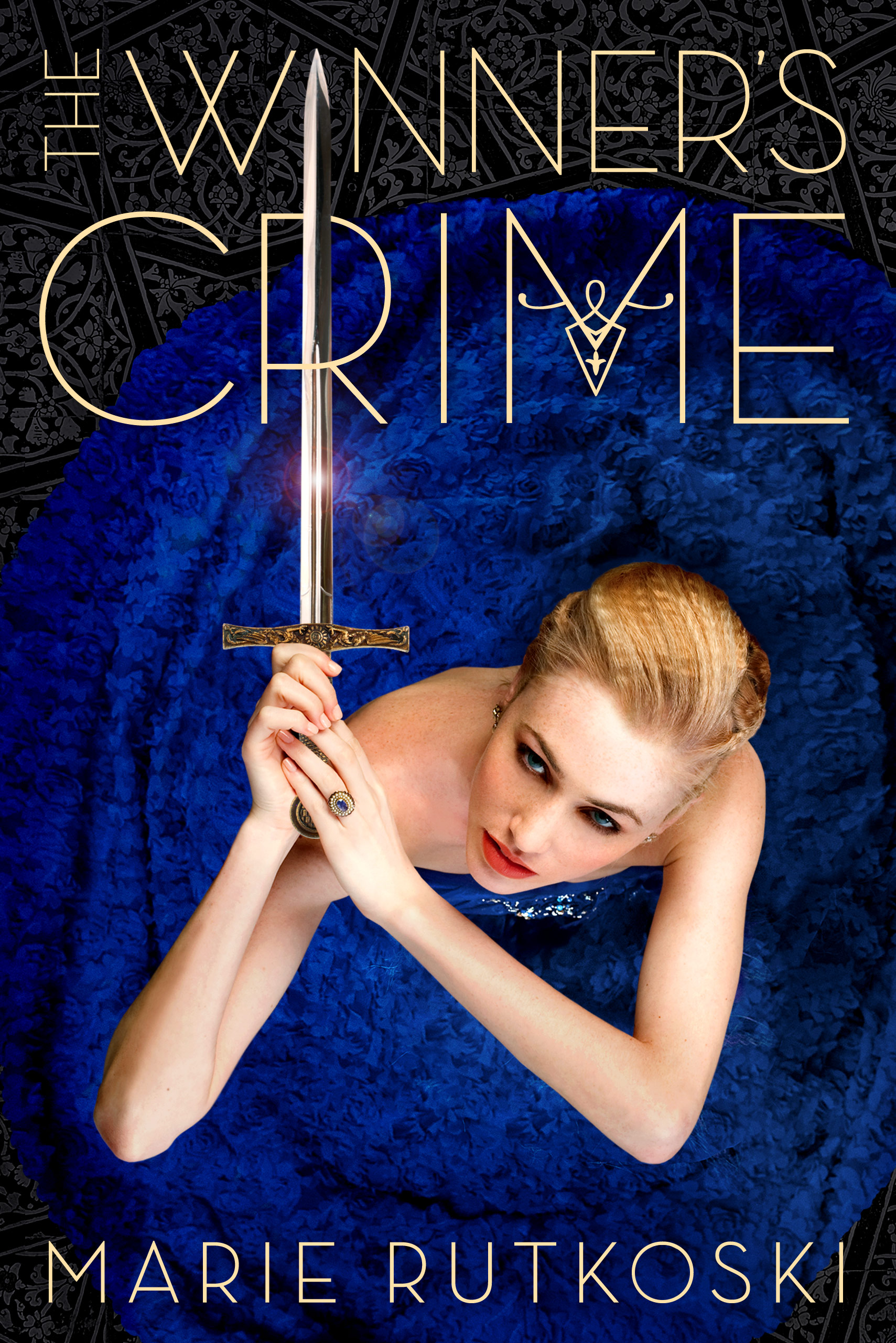
WinnersCrimeThe Winner’s Crime by Marie Rutkoski. Farrar Straus Giroux, 2015.
This story is mostly set in Val, the capital of Valoria.  Kestrel is hiding her feelings from Arin and getting to know prince Verex, considered “milk-blooded” by his ruthless and manipulative father the Emperor, but who still has some good survival skills to teach Kestrel.

I’m not going to say too much in the interests of avoiding spoilers.  There are new and complex characters, including Tensen, the Herrani minister of agriculture, new cultures, and looking at the cost of empire-building and loyalty vs. human life.  The politics are dangerous in the extreme, and Arin and Kestrel are sadly together mostly in imagination.  I really hope that boys in particular are not put off from reading this series by the Beautiful Dress covers, as there is plenty to keep non-romance focused readers interested.

The ending was devastating and kept me awake for several hours at night after I read it. I despair of the series having a happy ending at this point, but this will not stop me from reading more as soon the next one comes out, which will not be soon enough.

After you’ve read these, you could go back to Rutkoski’s past books – the Kronos Chronicles, a middle grade fantasy trilogy beginning with The Cabinet of Wonders, and The Shadow Society, which is contemporary YA alternate reality book.

Posted in books | Tagged , | 3 Comments

The Little White Horse

Often there are so many shiny new books coming out that I put off reading older titles.  I put this one on my want-to-read list after Charlotte was talking about Elizabeth Goudge on her blog, and I realized that one of my childhood favorites was also by her.  I’d never found her other works, nor have I gone back to Linnets and Valerians… but I think I should! I’ve seen this listed as a favorite by lots of UK children’s fantasy writers, too – I think the current paperback edition is blurbed by J.K. Rowling herself!

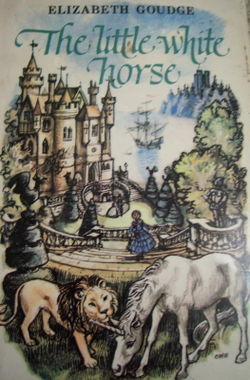
The_Little_White_Horse_coverThe Little White Horse by Elizabeth Goudge. Amereon House, 1946. Originally published in the UK by University of London Press.

This is a classic of British children’s fantasy, and won the Carnegie Medal (the equivalent to the American Newbery Award) in 1946.  We first meet our heroine, recently orphaned 13-year-old Maria Merryweather, as she and her governess Miss Heliotrope are traveling from London to her uncle’s country estate.  She can tell that her life is going to be more exciting just from the journey there, as they are attacked by bandits and she catches a glimpse of something that looks suspiciously like a unicorn as they ride through the woods surrounding the manor.  It’s a story of family and magic filled with colorful characters and beautifully described places.  She is welcomed as the Moon Maiden, and learns that Moon Maidens have left the estate after being wronged generation after generation. This sadness is causing the manor and the village that depends on it to fall apart, and naturally only Maria can stop it, though she will have help from everyone around her, including the old vicar, the little person cook with an extraordinary vocabulary named Marmaduke Scarlet, the motherly woman in a hidden cottage named Loveday Minette, and her son Robin, who is also Maria’s best friend.

I’m always a bit nervous going into books like this, especially when the vicar starts scolding Maria for her feminine curiosity.  Much to my relief, Maria stays curious and ends up solving the problems.  I do wish that the robbers living in the forest did not have dark complexions listed as one of the things that made them suspicious, even if they were dark-skinned from coming from France, not Africa – still!  The ending, where our 13 and 14-year-old lovebirds announce their intention to marry and the adults convince them to postpone the wedding for a whole year – is both squicky and unnecessary to the plot.  It wouldn’t have changed the ending at all to have them be sweethearts for another, say, 7 years, and wait until they were at least out of their teens to marry. I had a version without illustration, and I would have loved to see those described on some Amazon reviews of other editions. Those misgivings aside, however, I was charmed by Maria and her journey from individual vanity to focusing more on curiosity and helping others.  The writing is delightful, and I kept reading bits aloud to whoever happened to be nearby.  As an example, here is a scene near the beginning where Maria’s little lap dog Wiggins and her uncle Sir Benjamin’s majestic dog Wrolf are protesting being forced to live together.

“But they asked no more questions, because at this point Wiggins created a diversion. Overcome by greediness, he spashed a bit, and a small piece of carrot shot out of his dish and landed upon Wrolf’s nose. The indignity was too much for Wrolf. Outraged, he arose, and slowly and with measured gait left the room, lifting the latch of the front door with his nose. So majestic was his exit, so incomparable his dignity, that it was not so much an exit as a royal progress that compelled all eyes.

There was a momentary cessation both of conversation and mastication as he departed….” (p 28)

This is a lovely book to share with lovers of classic fantasy, though parents might wish to discuss some of the points with their children.  And now I also want to re-read another childhood favorite British fantasy classic, E. Nesbit’s The Enchanted Castle. 

Posted in books | Tagged , , | 2 Comments

11 Recent Sci-Fi Books for Grades 4 and 5

Before I get back to business as usual, I’ll note that one of my favorite authors, Stephanie Burgis, is joining a whole bunch of other UK authors in holding auctions to raise money for Nepal.  There are signed books, chances to have a character named after, and offers of writing critique.  Find them at Authors for Nepal 2015.

My son’s 4/5 class has to pick out a science fiction book to read by Monday.  Science fiction in this case can include steampunk but not superhero, and must be in prose, not graphic format, so that Zita the Space Girl, Astronaut Academy and Cleopatra in Space are sadly not allowed, though I would still recommend them to any sci-fi fans in that age range!  I couldn’t resist putting together a list of books I’d suggest to the kids if I had a chance.  I’m including only books published in the last ten years, as there are plenty of lists of older sci-fi books out there already.  Page counts included for kids who find reading longer books in three weeks challenging.

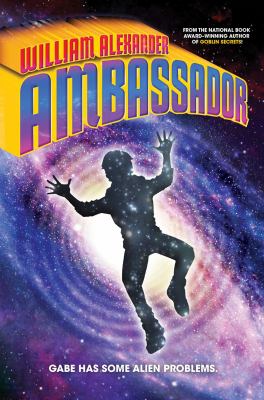
AmbassadorAmbassador by William Alexander. 222 p. Imagine you’re a kid with the responsibility to stop aliens from invading Earth.  Oh, and try to keep your parents from getting deported at the same time.  This short, fast-paced novel was one of my favorites from last year’s Cybils reading.

The Fourteenth GoldfishThe Fourteenth Goldfish by Jennifer L. Holm. 195 p. When an awkward and oddly crotchety teenager shows up at Ellie’s house, it only takes her a little while to realize that her grandfather, a scientist, has figured out how to reverse his aging.  But maybe he took it a little too far.

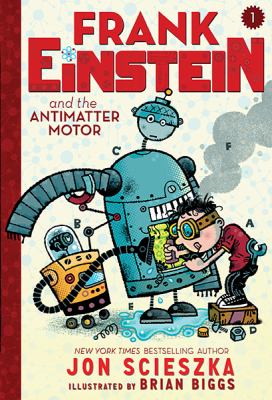
frankeinsteinantimatterFrank Einstein and the Antimatter Motor by Jon Scieszka. 179 p. This is the only one I haven’t read yet, but it’s Jon Scieszka telling a story of a boy genius and his robot, so it’s got to be good. (This reminded me to put my name on the library list, so I will read it soon.)

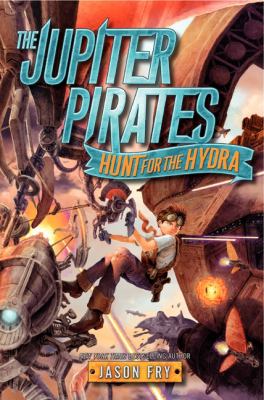
Jupiter Pirates: Hunt for the HydraHunt for the Hydra. Jupiter Pirates Book 1. by Jason Fry. 241 p. Pirates! In space!  This one did make it to the Cybils finalists this year, and is the one my son is reading.

larklightLarklight by Phillip Reeve. 399 p. A charming steampunk story of a boy and his sister growing up in an old mansion on the backwater side of the moon, and what happens when their remote home is invaded. Though on the long side, it’s a physically small book with pictures.

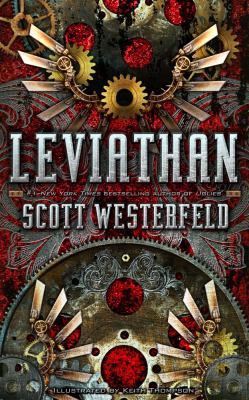
leviathanLeviathan by Scott Westerfeld. 440 p. Epic steampunk.  It’s alternate WWI, pitting the heavy machine-using German “Clankers” against the British “Darwinists”, whose weapons of war are all genetically mutated living beings, as well as a personal story of a runaway Austrian prince and British girl who pretends to be a boy to join the British Air Service.  My love and I both enjoyed this trilogy, but my son keeps the audiobook looping in his room.

Little Green Men at the Mercury InnLittle Green Men at the Mercury Inn by Greg Leitich Smith. 214 p. Aliens in Florida, a government cover-up, and lots of silliness.  The setting is close enough to real life to be comfortable for new sci-fi readers.

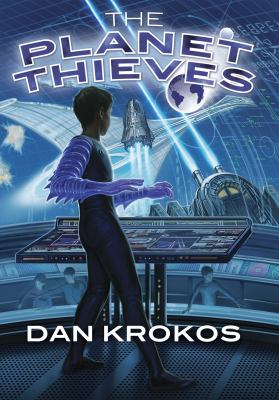
The Planet ThievesThe Planet Thieves by Dan Krokos. 253 p. Or maybe you want adrenaline-filled military sci-fi, with Earth in danger and all the adults out of the picture?  Warning: people will die.

searchforwondlaThe Search for WondLa by Tony DiTerlizzi. 486 p. Eva Nine has been raised by a robot Mother in an underground sanctuary, doing simulator training before she’s allowed on the surface.  But when she’s forced out, she finds that everything is different, and her OmniPod can’t help her.  It’s illustrated, very helpful in picturing the strange wildlife Eva Nine finds on the surface.

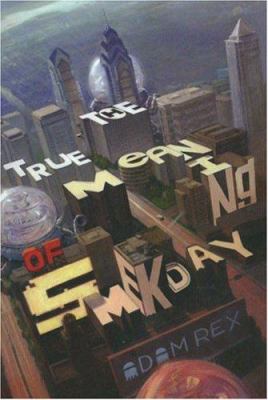
truemeaningofsmekdayThe True Meaning of Smekday by Adam Rex. 423 p. When Gratuity “Tip” Tucci’s mother is kidnapped by the alien Boov, she sets out to rescue her.  Then her car breaks down and only a Boov can help her. And then even worse aliens attack.  We liked the movie “Home”, based on the book, too, but the book has a lot more depth.  There are “photos” as well as some of Tip’s own drawings and some short comic sequences.

What We Found in the SofaWhat We Found in the Sofa and How It Saved the World by Henry Clark. 355 p. OK, the school librarian is reading this to the kids now, so they couldn’t use it – but for anyone else looking for off-beat, crazy excitement with lots of mystery and a surprising amount of depth, this would be a great choice.

What’s your favorite sci-fi for 10 and 11 year olds?

Posted in books | Tagged , , | 2 Comments

Stranger

So many people I admire were talking up this book – including Charlotte – that I had to read it, especially when I heard that Brown and Smith are self-publishing the second volume to avoid editors trying to talk them out of “too much diversity”.  This is one that I loved so much that I’m pretty sure my review can’t do it justice.

strangerStranger by Rachel Manija Brown and Sherwood Smith. Viking, 2014.
In a post-apocalyptic America with an Old West feel, prospector Ross Juarez is running for his life, barely making it past a stand of singing crystal trees.  He’s so weak from hunger that when Elizabeth Crow, the sheriff of the nearby town, finds him, he’s hanging onto a vampire tree.

We’re soon introduced to many of the teen citizens of Las Anclas. There’s its young engineer/mechanic, Mia Lee, whose doctor father takes Ross in, teacher and would-be Ranger Jennie Riley, her boyfriend Indra, and transplant Yuki Nakamura, nicknamed “the Prince”, as well as Felicite Wolfe, the scheming mayor’s daughter.  (Scheming daughter or scheming mayor? Yes.)

We can tell right away that this is a changed and dangerous world – people live in walled towns to protect themselves from viciously mutated wildlife, both plant and animal.  The story makes it clear that race, gender and sexual orientation are not at all issues the way there are today – but that doesn’t mean there’s no prejudice.  Humans are still human in their deep-seated tendency towards prejudice, and whatever caused the changes that we first see in the deadly singing trees didn’t leave humans untouched.  The Changed have new, somewhat X-Men like mutations that give abilities from the useful – such as healing abilities or enhanced strength – to the bizarre, like the ability to make dust devils.  This is what currently fractures people, with most living in towns of either Changed or Normals.  Las Anclas is one of the few that officially welcomes both – but that doesn’t mean that the Changed are necessarily treated equally.  Dark-skinned Jennie Riley, for example, is a little concerned that she might be just a token Changed person to the Rangers.

Ross’s arrival has brought even more change, as he’s brought with him a dangerous and rare artifact, one that the cruel leader of a nearby town will do anything to own himself.

I’m using the word “dangerous” a lot – that’s because there are a lot of dangerous things here.  It’s still a fun story to read, with things to appeal to lots of different readers.  The ensemble cast is a little hard to keep track of – the story is told from about five different viewpoints – but each narrator has a distinct voice and type face to help keep things clear.  I think it would make for a fantastic full-cast audiobook.  All of the characters were interesting (a couple of them were less likeable, for balance), the action is fast, the world-building intriguing and original.  There’s a fair amount of violence and realistic looks at PTSD, though the sexual content doesn’t get much more explicit than kisses.  I was expecting to have to wait for the next book, Hostage, but it’s out already!  I shall have to put in a request for it.

I’m now racking my brains for similar titles, and am failing to come up with anything that feels similar.  Maybe teens who enjoyed Tony DiTerlizzi’s Wond-La books when they were younger, and definitely fans of high-action epics with a sense of humor, both teens and adults.

Posted in books | Tagged , , | 4 Comments

Salvage

Here’s another Cybils Young Adult Speculative Fiction Finalist, and a great choice for those who like their science fiction adventures with spaceships and strong-willed women.

salvageSalvage by Alexandra Duncan. Greenwillow Books, 2014.
Ava Parastrata has grown up on a merchant trading spaceship. She knows with her dark hair, kept a dyed red to match her sisters, and her skin gray instead of transparent, she’s not likely to be a good candidate for anyone’s first wife. On her ships, girls are not allowed to read, sing or learn about technology – just to help with the children and livestock. When she’s told she’s to be married, she hopes that it will be to Luck, her best friend’s older brother, who is from a slightly less conservative ship where girls are allowed to read and do “fixes” on the ship. It all seems like a culture right out of Firefly, with folksy language and pioneer culture.

But things go very wrong. Ava finds herself fleeing to the Earth her people have said will permanently corrupt her. Getting her body to work in full gravity will be just the first step. For the first time in her life, Ava will have to make her way based on her own skills rather than trying to fit into a role others have assigned. The journey takes several startling turns, from the floating trash island of the Gyre where Ava’s first rescuer lives, to the crowded slums outside of Mumbai. There are people to love and people to mourn as she makes and loses new friends, searching all the while for the aunt it was whispered she had somewhere on Earth, and for any sign of Luck, who must have been banished as she was.

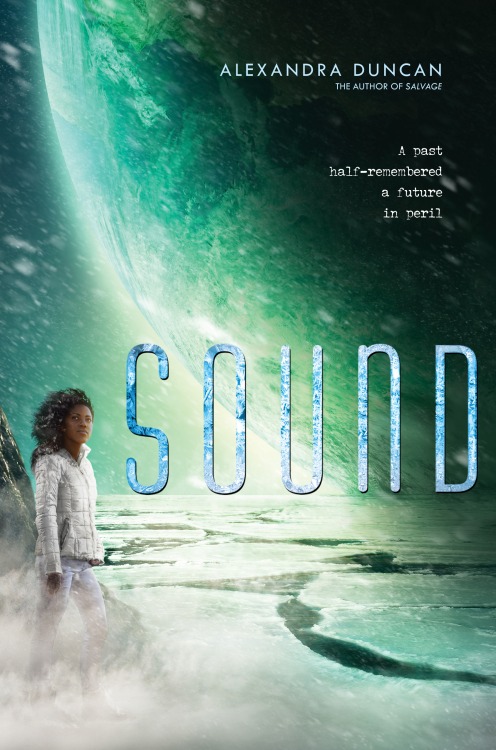
Assorted thoughts on the book: Ava has a large percentage of South Asian, making her a mixed-race protagonist – yay! She does look paler than I’d like on the cover, but the story makes it clear that her skin tone is considered horribly dark by her spaceship family, and darkens as she’s exposed to sunlight for the first time. She’s thrust into a full-color world, too, which I also appreciated. soundSometimes (maybe even often), I get frustrated with books with love triangles – but Salvage (spoiler alert) contains a love triangle that really worked for me, both of Ava’s choices having just the right amount of appeal without the choice feeling artificially skewed one way or another. If this is an indictment of the way polygamy treats girls, marrying them off while still children to men their own father’s age, it’s equally an indictment of the way the system fails most of its boys, too, counted as extras in a system where only the most powerful men have wives. Like so many of the Cybils Young Adult Speculative Fiction books I’ve reviewed, this has a lot to talk about, while still having an exciting plot and, in this case, characters I really cared about and wanted to succeed. I was completely sucked into Ava’s story, and am very much looking forward to the stand-alone sequel, Sound, which is due out in September and tells the story of Ava’s adopted sister, Miyole.

This is a good choice for fans of Marissa Meyer’s Lunar Chronicles, though what first popped into mind for a read-alike was Anne McCaffrey’s Crystal Singer series, with the caveat that I haven’t actually read these since high school.

I meant to have this review up yesterday, but I got distracted on reading that Lerner books had bought many of the backlist and upcoming books from the now-defunct Egmont by trying to see if the last book in the Demon Catchers of Milan by Kat Beyer was one of them. Alas, no – neither the two books that are out nor the sequel, so I will still have to keep my fingers crossed and hope that the last book finds a new home.

Posted in books | Tagged , , , , | Leave a comment