
 Dragonhaven by Robin McKinley McKinley, award-winning author of Beauty and The Hero and the Crown, among others, is back. This is the first book of hers I’ve read with a male protagonist, but, if you’re a fan, don’t let that stop you. Jake Mendoza lives with his father and a small community on the only dragon reserve in North America. Since his mother died several years ago, he’s withdrawn into his room, spending most of his time playing computer games. The reserve has a small zoo of lizards that are considered dragons, but the real fire-breathing, marsupial dragons, draco australiens, live only in the wild of the park, rarely glimpsed. Then Jake finds a dead poacher, dead mother dragon and one living dragonlet. Breaking federal law, he keeps the baby dragon alive. Now the reserve is fighting an investigation trying to shut it down, while keeping Jake and his dragon a secret. Jake narrates the story in a rambling teen voice that both makes the story feel more intimate and keeps the pace from being frantic. It’s a seductive alternate reality focusing on one boy’s coming of age and our relationship with the wild.
 Fairy Moon: Songs of the Ring by Maria Sangiolo A lot of my children’s music reviews seem to include, “If you are tired of voice and solo guitar…” This gentle, unplugged recording charmed me. Sangiolo’s songs of shoe-making gnomes under the pines and fairy dances range in style from straightforward folk to Irish traditional, and are accompanied by piano, flute and harp, as well as the ubiquitous guitar. They capture a young child’s easy belief in fairies and joy in life in a way that reminded me of
  Siblings without Rivalry by Adele Faber and Elaine Mazlish As far as I can tell, the major conflict in siblings books is what to do when siblings fight: do you let them work it out themselves, try to solve their problems for them, or just punish all involved parties without trying to arbitrate? This classic book from the authors of How to Talk So Kids Will Listen and Listen So Kids Will Talk brings a nuanced yet simple-to-implement solution to this as well as many other classic sibling problems. The answer to the first question is first to see if anyone is getting hurt, physically or verbally. If they are, describe what you see, say that hurting is not allowed, and separate them to give them time to cool off. If there isn’t imminent danger, have both of them describe the problem, describe each side back to them. Then tell them that it’s a difficult problem, but you’re sure that they will be able to find a solution. Then leave the room, telling them where you’ll be. They recommend never taking sides yourself, voting only as a very last resort, and not punishing. The last is to protect the other child, as a punished child will be out for revenge and see the sibling, as responsible for the punishment.
  How I Live Now by Meg Rosoff. Narrated by Kim Mai Guest. Fifteen-year-old Daisy is only a little nervous when she leaves her pregnant stepmother in New York to stay with her aunt and cousins in the English countryside. She loves suddenly being part of a large family, and the old farm house with its animals. Then, her aunt leaves the country for a few days. England is attacked and the borders are sealed, leaving four teens and nine-year-old Piper alone in the big house. Somehow, Daisy falls in love with her younger cousin Edmond (fourteen), who seems to be able to read her thoughts. In spite of the ickiness factor, but aided by the war, they have a tender romance that gets only as explicit as “not chaste”. Then the children get discovered and separated, the oldest brother joining the military, Daisy and little Piper to one house, Edmond and his other brother to another, hours apart. As the war gets worse, Daisy knows that it’s up to her to reunite the only family she’s ever felt she belongs in. And as food gets scarcer, the eating disorder she brought over from New York, while never made a focus of the story, starts to look very different.
 Dealing with Dragons by Patricia Wrede This is an older, but definitely still good one. I listened to the audio, an early full cast production by Bruce Coville. In the story, Princess Cimorene’s parents want to marry her off, due to her unfortunate tendency to study fencing, Latin, cooking, and anything else anyone will teach her. She runs away and volunteers to be the princess for the dragon Kazul. Between fending off would-be rescuers and dealing with the other dragons’ princesses, she discovers a plot by some nasty wizards to take over the dragons’ country. You can’t help but like the opinionated Cimorene, who refuses to let anyone tell her what to do. And Wrede’s humorous riffs on fairy tale conventions make the story laugh-out loud funny. If you’re a fan of fairy tales or fantasy, whatever your age, don’t miss this book. The audio version suffers a little from over-enunciation and inconsistent sound quality, but overall, the characters are convincing and hearing all the different voices makes the story come alive.
-
Join 888 other subscribers
- Follow alibrarymama on WordPress.com
-
Recent Posts
- Seasonal Reads for Elementary Readers: Greta Grimsdark and the Normal New Neighbor and Holidays at the Castle
- Unraveling Family Secrets in The Inevitable Undoing of Zahara Douglass by Leslye Penelope
- Cozy Fantasy: The Tea Princess Chronicles by Casey Blair
- 8 Sapphic Graphics for Teens
- Author Interview with Julie Abe on the Magic Library of Waterfall Way
Archives

Tags
- #OwnVoices
- Adult Nonfiction
- adventure
- African-American
- Armchair Cybils
- Asian-American
- audiobooks
- award winners
- bibliography
- book-review
- book reviews
- books
- contemporary fantasy
- cooking
- Cybils
- diversity
- dragons
- fairy tales
- Fantasy
- fiction
- ghosts
- graphic novels
- historical fantasy
- historical fiction
- humor
- knitting
- Latino/a
- Latinx
- LGBTQ
- Middle Grade
- mr. fp
- multiculturalism
- Mystery
- mythology
- parenting
- picture books
- pirates
- reading
- Romance
- science fiction
- steampunk
- teen
- teen fantasy
- teen fiction
- teen science fiction
- Top Ten Tuesday
- youth fantasy
- youth fiction
- youth graphic novels
- youth science fiction
-
Top Posts
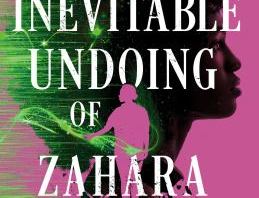 Unraveling Family Secrets in The Inevitable Undoing of Zahara Douglass by Leslye PenelopeSeptember 16, 2026Katy K.
-
© Katy Kramp and alibrarymama.com, 2004-2024. Unauthorized use and/or duplication of this material without express and written permission from this site’s author and/or owner is strictly prohibited. Excerpts and links may be used, provided that full and clear credit is given to Katy Kramp and alibrarymama.com with appropriate and specific direction to the original content.

 alibrarymama