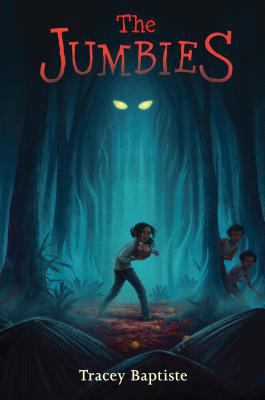
The Jumbies

Here’s a scary adventure story perfect for this time of year.

The JumbiesThe Jumbies by Tracey Baptiste. Algonquin Young Readers, 2015.
The woods of Trinidad are filled with jumbies, the collective term for a wide variety of supernatural creatures, with one thing in common: they do not mean humans well.  Most of the residents of Corinne’s village stay away from the forest.  Corinne’s father, though, doesn’t believe in the jumbies, and so Corinne feels free to take shortcuts through the woods.  But when two pesky boys steal the necklace she inherited from her mother and tie it to a lizard that runs into the woods, Corinne is sure she hears things following her.  It turns out that something even worse than the jumbies she’s grown up hearing about is after her – a jumbie in the shape of a beautiful woman who enchants her father so that he no longer recognizes Corinne.  She has no choice but to join with the two boys (maybe too quickly, in my one quibble with the book), as well as another girl from the marketplace, Dru, to try to stop the jumbie before the whole village is taken over with them.

Tracey BaptisteAs a child, I read through all the books of folk tales from around the world that I could find, so I definitely agree with the author that Caribbean folk tales are hard to find, and novels based on them rarer yet.  Baptiste – born and raised in Trinidad but now living in New York – has written a compelling story incorporating the folk lore she grew up with. (It was fun to hear her talk about this at Kidlitcon.) But even those who aren’t specifically interested in the folk tale can’t help but be captivated by the story.  Corinne is a winning character, and the adventure is exciting on its own merits.  Many of the jumbies are quite scary, from the one that looks like your grandmother until it takes off its skin and bursts into flame, to the ones that look like little kids in big hats that call your name and lure you into the forest, never to be seen again.  They aren’t hands-off in this story, either.  It’s nicely balanced with humor and affection, though, as Corinne builds friendships with the other children, works to save her beloved father and learns more about her power to grow.

Official disclaimer – this book is nominated for the Cybils award, but this is my personal opinion on the book, not the opinion of the Cybils committee.

Posted in books | Tagged | 7 Comments

Roller Girl

Here’s a Cybils-nominated graphic novel that I really enjoyed.

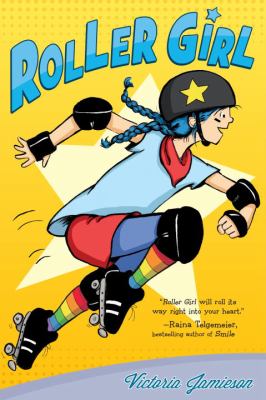
Roller GirlRoller Girl by Victoria Jamieson. Dial Books, 2015.
It’s the summer before middle school, and Astrid is just about to learn what a bumpy ride that will be.  After watching a roller derby game with her best friend, Astrid decides she wants to do roller derby summer camp, even though she can’t skate at all.  She’s horrified when her friend signs up for ballet camp instead – something Astrid isn’t interested in at all. Even though she’s on her own, Astrid makes a new friend, Zoey.  At first it looks like it’s mostly going to be physical training – learning to skate and how to be tough are hard enough – but Astrid comes to the hard realization that as disappointed as she feels by her old best friend, she’s not a great friend herself.  There’s looks at that difficult time when some girls are starting to be interested in boys and others still think they’re icky.  I also loved the locker-room notes exchanged between Astrid and the city’s star player, Rainbow Bite.  The art is mostly rounded and friendly, reminiscent of Raina Telgemeier, but once in a while it veers towards the metaphorical, perfectly illustrating Astrid’s inner life.  I can vouch for general kid appeal on top of my enjoyment, as both of mine ate this up.

Posted in books | Tagged | 3 Comments

Shadowshaper

This book was making the rounds of my favorite blogs – The Book Smugglers, Charlotte’s Library, By Singing Light  – and I couldn’t resist it.  It’s one I loved so much that I don’t know if I’ll be able to say anything coherent about it.

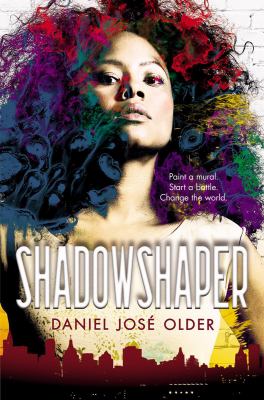
ShadowshaperShadowshaper by Daniel Jose Older. Scholastic, 2015.
Our heroine is teenaged Sierra, a dark-skinned bilingual girl of Puerto Rican extraction, who lives in an accurately diverse Brooklyn neighborhood, Bedford-Stuyvesant.  (‘m making a much bigger deal of the diversity than it is in the book, where it’s just Sierra’s world.) I’m used to “urban fantasy” mostly being about whites and “urban literature” being about people of color doing horrible things to each other. In both cases “urban” usually comes in the same breath as “gritty”.  But here, as Charlotte pointed out, it’s urban but not gritty – Sierra’s people aren’t rich or white.  They stick by each other and are the kind of close-knit that suburbia pines for.  So when things start going wrong, it’s not normal, and Sierra and all of her friends band together to stop it.

Sierra first notices it when she sees a mural of an old friend crying. Soon she sees flickers of life in murals around town, and is asked to paint a mural as an attack on an ugly, unfinished building in their neighborhood.  Hints from her grandfather, mostly incoherent after a stroke, lead her onward. She’s just finding out that cute boy Robbie from Haiti is also an artist when they’re chased by a zombie-like corpse. Sierra learns that she is a Shadowshaper, able to use the shades of the dead, a power that gets dangerous very quickly in the wrong hands – I really appreciated how this felt truthfully coming from her heritage.  There’s action, research (helped by a friendly librarian!), help from friends of multiple generations, uncovering family secrets and refusing to put up with old prejudices, all with just the right touch of romance kept nicely to the side.  This could be perfect if you’re looking for something a little spooky for Halloween – or anytime you need a good contemporary fantasy.

Side note: I gave this to one of the people at my ESL conversation group who really wanted ghost stories from around the world.  Not only is it a great story in general, but fast-paced, not too long and with a straightforward narrative that I thought would be good for a non-native reader. I know, I know… you’re not supposed to give kids’ books to adult language learners, but my own experience living abroad was that children’s books are much easier to understand, both because kids are also learning how their culture works and because they don’t feel obliged to use the literary tricks that so many adult books do.  Also, I nearly always like kids and teen books better.  So I tell my language learners both of these things, and figure out if they’d rather have help finding adult books at their level, or if they’re OK with books for kids and teens.

Posted in books | Tagged , , , | 9 Comments

The Wells Bequest and The Poe Estate

Just as a reminder – you still have time to enter the giveaway for Oddly Normal!

I have a never-ending list of books to read for myself in print – but when it comes to audiobooks for the car that are exciting enough for my son and not too scary for my daughter, five years younger, it’s often a challenge.  When I found this on the library shelf, I checked it out, even though it was the second in the series the first, which we hadn’t listened to, was nowhere in sight.

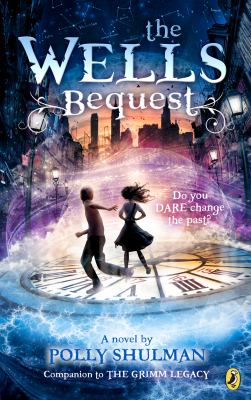
The Wells BequestWells Bequest by Polly Shulman. Narrated by Johnny Heller. Penguin Audio, 2013.
Leo loves taking things apart and putting them back together again to do something else – but he’s the youngest and least scientific of a nerdy Russian immigrant family.  He’s depressed thinking about what he might do for a science fair project that will live up to his family’s high standards, when a tiny flying machine appears in his bedroom.  A tiny version of himself is riding on it – with his arms around the most beautiful girl in the world. He only really catches that he should read H.G. Wells’ The Time Machine before the tiny machine and the tiny people on it vanish again.

Thinking of time machines leads him to want to do something related to that for his science fair project.  His science teacher (a very cool sounding Korean-American woman brightly dyed hair) directs him to the New York Circulating Material Repository, a library where he can check out, if not time machines, at least early robots.  When he gets there, not only does Leo find that the Repository is the coolest place ever, but also that his dream girl, whose name turns out to be Jaya, is the head page there.  Before he quite knows what’s happened, Leo is working as a page at the Repository himself, and he and Jaya are racing to get a time machine in working order, to stop Simon, another page and rival for Jaya’s affections, from stealing Tesla’s death ray from the past and using it in the present.

There were some references to the first book, The Grimm Legacy, but as it clearly had mostly different characters, it didn’t feel like we were being dumped into the middle of a story.  I am always happy to find stories of magical libraries, and the New York Circulating Material Repository, which stores both regular historical artifacts as well as artifacts from fiction that have somehow become real, is a very fun one indeed. They all know it’s confusing and doesn’t quite make sense, and have conversations about it that were also hilarious.  I liked both Leo and Jaya very much, and this gets points for diversity, both with Leo’s first-generation non-native English speaking immigrant family, and for Jaya, who is Indian-American.  Heller reads with an energetic, lightly accented voice that felt just right for Leo, even if some of the minor characters’ accents didn’t come out quite right.

Normally, I’m not a big fan of instalove, but this really worked for me.  Leo’s not quite sure why he’s so drawn to Jaya, aside from her beautiful smile with one crooked tooth – but it’s a believable middle grade intense crush, focused more on her personality and intelligence than the physical attraction and nothing else that really turns me off.  Leo also work hard to be friends with Jaya and has to overcome his shyness to do so in a way that I found adorable and did not cause my son to cover his face in embarrassment, as he has been known to do.  This was an exciting story, with Leo and Jaya racing off in jets and all kinds of fictional methods of travel from submarines to time machines – but they were not in clear mortal danger until the very end.  Since my youngest hates to be scared like that and my oldest wants his books to be exciting, this was a nearly perfect lighthearted, not-too-scary adventure.

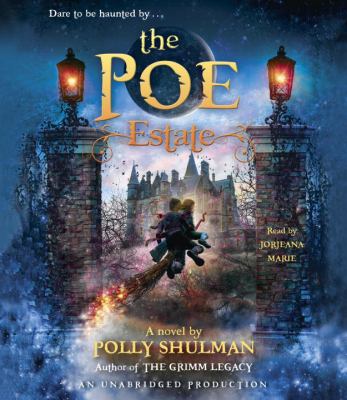
The Poe EstateI requested the next book, The Poe Estate by Polly Shulman. Narrated by Jorjeana Marie. Penguin Random House/Listening Library, 2015 from the library, but ended up listening to it on my own.

I’m glad that I did, because this one – perhaps predictably, given the subject – took a sharp turn from the fun adventure of the previous book.  Our new heroine, Sukie, is dealing with a lot: her older sister, who’d always protected her from everything, died a few years ago.  Now her parents haven’t been able to find enough work to live in the house they’d built for themselves, so they are moving in to the giant old family house of their aged Cousin Hepsibah.  The whole first disc of the audiobook is about Kitty’s death and Sukie’s subsequent depression and losing all her friends. While Sukie meets some people collecting haunted artifacts and houses for the New York Circulating Material Repository fairly early on, it isn’t until far into the book that she actually gets to go there.  (I was a little surprised that they needed a whole magical annex to store the haunted houses – I’m used to Greenfield Village, which stores its collection of historical houses on regular land, with historical transportation options to get around to them both for fun and the less mobile.) The last third of the book turns into more of the fun adventure, as Sukie and her friend race against ghost pirates to find a treasure – but that comes after and mixed with scary ghosts.  There are kids who like scary, but for me, a dead sister turning evil is a different level of scary than the scary ghosts of unknown adults or the friendly ghosts of long-dead children that are more common in children’s books.  I am sure there is still an audience for this one, but it’s not my kids, who don’t like scary and especially not siblings dying.  The narrator sounded like she had a cold the whole time, which was also less appealing. We’ll probably still go back for The Grimm Legacy, though.

Posted in books | Tagged , , , | Leave a comment

Kidlitcon 2015

I was very grateful to attend Kidlitcon in Baltimore this last weekend, courtesy of the Friends of the Library.  Kidlitcon is a small conference sponsored by the Kidlitosphere, an association of children’s and young adult literature bloggers.  They also sponsor the Cybils award, now in its 10th year, which I use at least weekly in Reader’s Advisory for our young patrons.  (I am also serving as a Cybils judge for the second time. This was, however, my first time attending Kidlitcon.

Anne Boles Levy, founder of the Cybils award, at the Cybils birthday party

Anne Boles Levy, founder of the Cybils award, at the Cybils birthday party

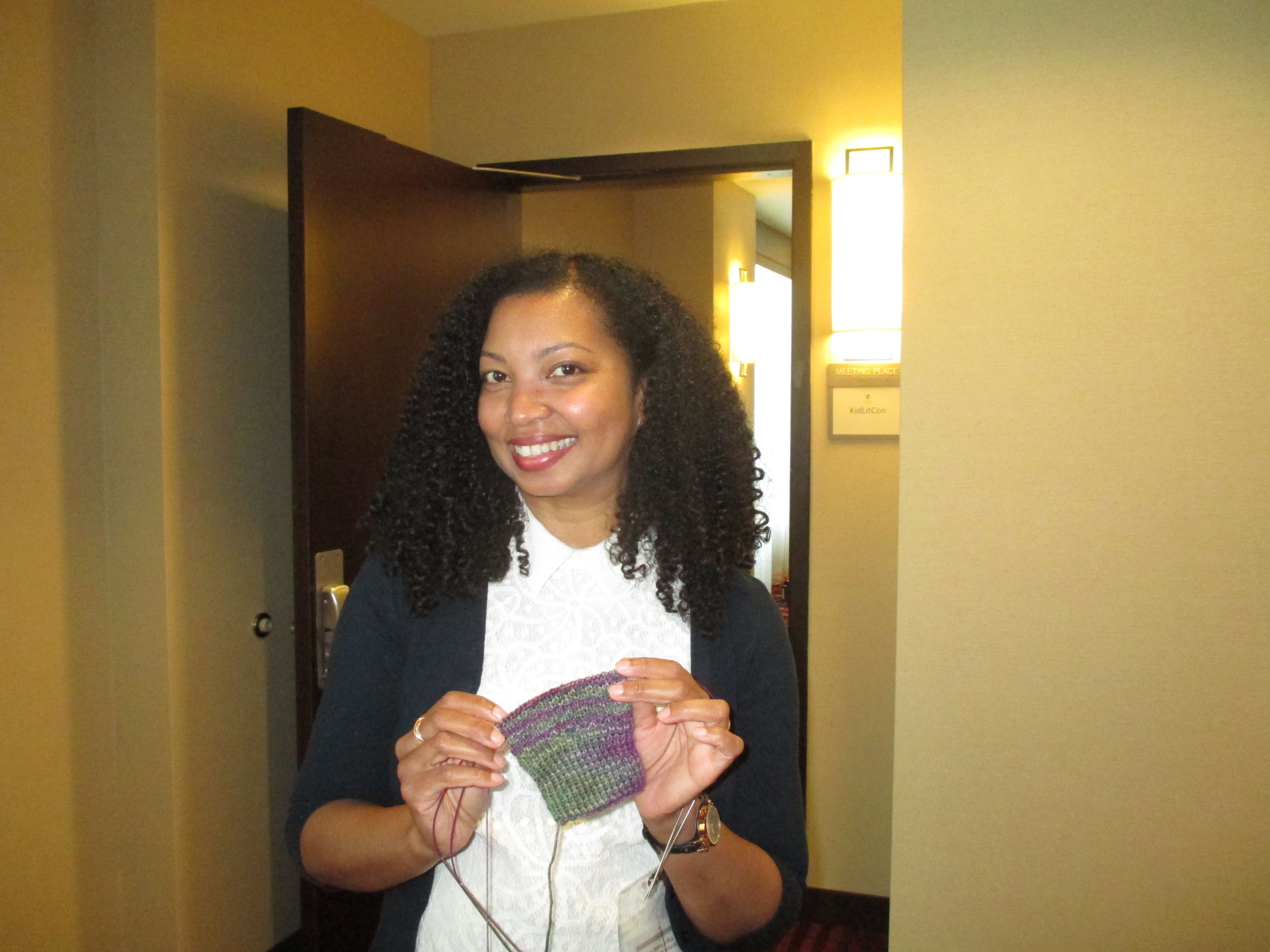
Kidlitcon is a cozy conference, with only about 100 people attending, mostly librarians, teachers, and authors, with a small sprinkling of enthusiastic readers who blog about children’s literature without doing it as a career.  It is (as I had previously been told) the perfect conference for introverts.  There are no large groups coming from libraries, but it’s easy to get to know everyone there without being intimidated because there are just a small number of people, all of whom are happy to talk about books.  There was no giant room full of vendors, just a set of tables in the hallway outside the meeting room filled with publisher and author donations.  All of the authors and illustrators I talked to were happy not only to autograph books but also to let me photograph them holding my knitting project.  Both of the keynote speakers went to other sessions and hung out with the rest of the attendees at mealtimes.

Session Highlights

I attended nine and half sessions at the conference.  The two author keynote sessions were with Carrie Mesrobian, the author of several realistic teen books, on Friday and Tracey Baptiste, author of the middle grade horror/adventure novel The Jumbies on Saturday.  Carrie talked about finding the “edges” for teen readers – reading at the right level to meet them where they are. Baptiste, who grew up in Trinidad, talked about writing the oral traditions there and her childhood love for printed fairy tales, which inspired her to write the mystical creatures of her homeland into a novel for children.  Except she was very funny and approachable about telling the story.

Genre Panels

Tracey Baptiste

I attended four sessions focused on different ages/genres of books, all with panels of authors and/or artists.  Middle Grade Horror featured authors Tracey Baptiste, Mary Downing Hahn, Dan Poblocki (“best use of ghost Nazis ever” according to the moderator), and Ronald L. Smith.  I was very pleased to note from the get-go that the panel was evenly divided both between men and women and between whites and people of color.  Although the whole discussion was fascinating, the most useful take-away from this session was having benchmark books to reference when helping kids find the right level of scariness for them.

Visual Storytelling had picture book artists Matt Phelan, Minh Le, Kevin O’Malley and Shadra Strickland, and was moderated by former Caldecott committee member Susan Kusel.  Here, the artists talked about how they fit the art to the story and what choices are theirs versus the publishing house, editor, and author.  Message: don’t rate the artist down for plain endpapers – every one of them will jump for fancy endpapers if the publishers give them a choice.

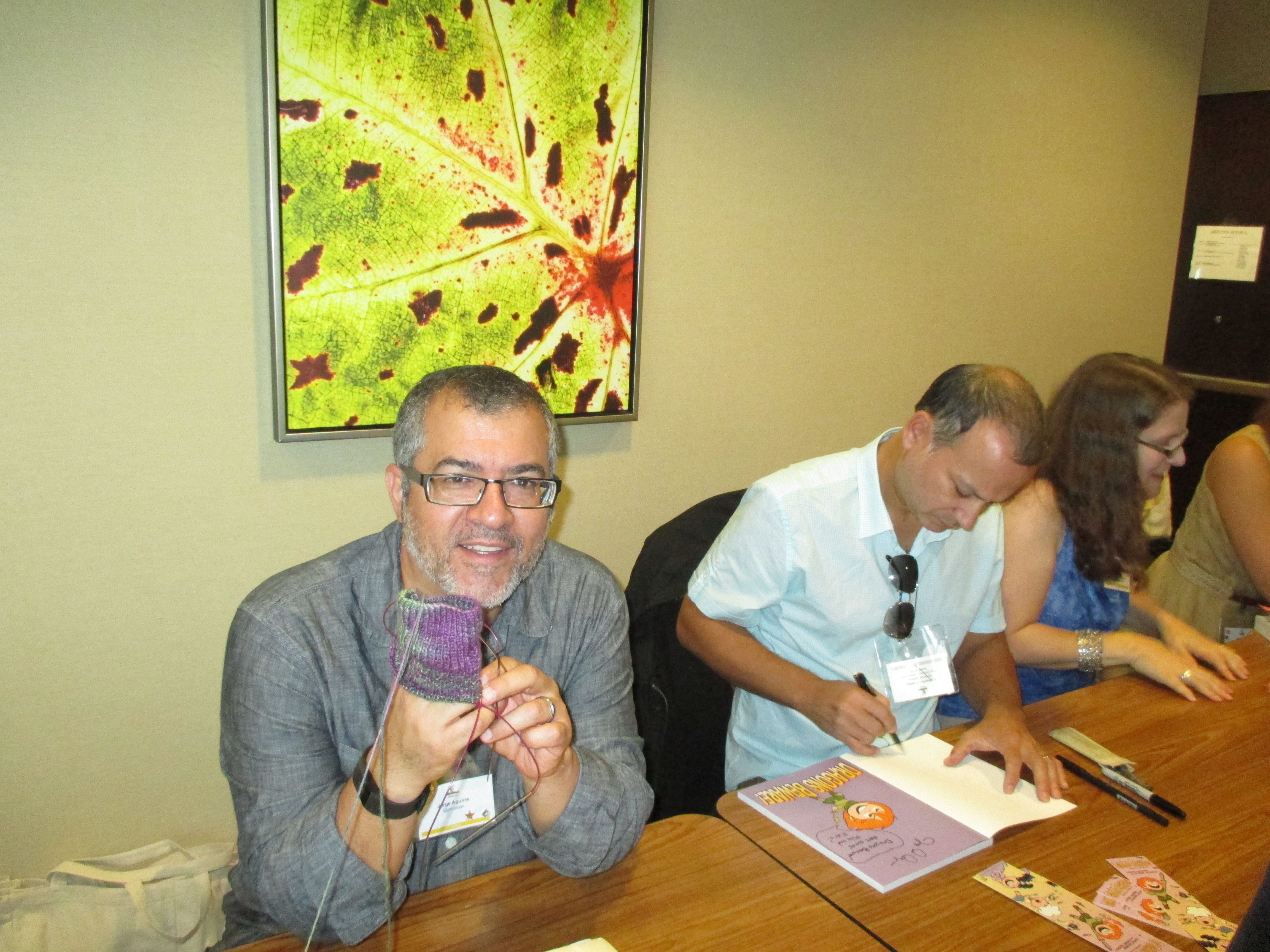
Jorge Aguirre and Rafael Rosado

Jorge Aguirre at the book signing, with my sock in progress! Rafael Rosado signing. Author/illustrator of Dragons Beware!

How Graphic Novels Work had author/artists Jay Hosler, Maggie Thrash, Rafael Rosado & Jorge Aguirre, moderated by extremely enthusiastic graphic novel librarian Miriam DesHarnais.  The author/artists (still ethnically diverse) also wrote a large range of books from science to memoir to fantasy adventure.  Jay, the science writer pointed out that studies have shown that the combination of words and pictures is much more powerful in getting kids to learn and remember than either by themselves.  Maggie, the memoir writer thinks that words put you in someone’s head, while comics put you in the situation yourself.  Rafael, one of the fantasy adventure team, talks about the magic that happens in kids’ heads when they fill in the events that happen between one panel and the next.  Comics stimulate empathy and let you linger on a moment as long as you want, unlike movies.

Middle Grade Madness had authors of realistic middle grade fiction Elissa Brent Weissman, Erica Perl, Elisabeth Dahl, Carol Weston and Wendy Shang.  The authors talked about what they like to put into books for 9-13 year-olds. A particular topic that came up was writing for boys vs. girls – only Carol Weston writes specifically for girls.  Everyone else is trying to let stories be for everyone, whether they’re writing about boys or girls.

Diversity Panels

Diversity was the main focus of last year’s Kidlitcon. This year’s conference had two panels specifically focused on diversity, and the organizers paid close attention to having diversity on every panel whether or not diversity was the focus.   Intersectionality with Mary Fan and Libertad Araceli Thomas and Guinevere Zoyana Thomas (the Twinjas), with absent member Zetta Elliott, looked at how people usually belong to multiple groups – not just the one we tend to want to limit them to.  The Twinjas, for example, are Black and Latina; Mary Fan is a woman from a “good” minority, and talked about privileges and prejudices in various parts of her life.  Let’s move past allowing book characters only one minority identity or problem.

Blogger trio

Meeting for the first time fantastic bloggers Pam Margolis of MotherReader, Melissa Fox of Book Nut, and Anne Boles Levy, Cybils founder

Authentic Voices with bloggers Pam Margolis and Liz Burns focused specifically on GLBTQ literature (Pam) and on making things available and authentic to people with disabilities (from Liz, who works for a library for the Blind.)  It’s good to have these kinds of people represented in books – it’s even more important that their voices be authentic and show the full range of people in these categories.  Liz opened our eyes to just how few books the Library of Congress is able to publish for the Blind each year, both in their special audio format and in the different Braille types.  It’s staggeringly few.

Just for Bloggers (and Librarians)

I also attended “And the Winner is…” a panel discussion with literary award judges, most of whom had judged on lots of different committees, including the Cybils, Caldecott, Newbery, Printz, Schneider, Odyssey, Eisner, as well as state awards. They talked about theoretical issues – making sure you’re reading for the specific criteria of the award you’re judging for – and practical ones like how to keep track when you’re reading a really large volume of books.  Also, once you’ve been a judge, can you turn off those filters and read just for pleasure?

“Who Is the Reader… and why that matters when I’m talking about books” with bloggers Katy Manck of BooksYAlove and Barb Langridge of A Book and a Hug.  A Book and a Hug has a database of book reviews tagged by reader type (Katy and many other reviewers contributed to this.)  They explained their system of identifying reader types.  Barb developed four reader types, which on the web site are shown as different types by gender, even though they’re not.   (Descriptions of the types for girls: http://www.abookandahug.com/books-for-girls2 and for boys: http://www.abookandahug.com/books-for-boys ) Basically, the types are realistic, empathetic (which often tends towards fantasy/sci-fi), thrill-seekers, and nonfiction/fact readers.  We had fun taking the quiz and figuring out our types – way skewed off the types that they’ve found with real kid readers.  They also talked about applying this kind of reader’s advisory to Ranganathan’s Five Laws.  It’s always helpful to have different approaches to try with reader’s advisory, so it was good to hear about this different twist on it.

Conclusion

Kidlitcon was a great conference, kind of like the much-lamented Fantastic Fiction, but twice as long, for kids, and with session presenters drawing from a broader pool.  I really enjoyed the sessions I went to, as well as getting to know so many people outside of the sessions.  I heard from those who attended other years that this year was more author-focused than it has been in the past – I’d really love to attend next year in Wichita, when the focus will be on gatekeepers – both our role in being gatekeepers, and working with young peoples’ other gatekeepers.  Thank you again to the Friends of the Library for supporting my trip to Kidlitcon!

For me, too, it was especially exciting to meet so many bloggers I’d only known on-line for so long.  Here’s a few more pictures:

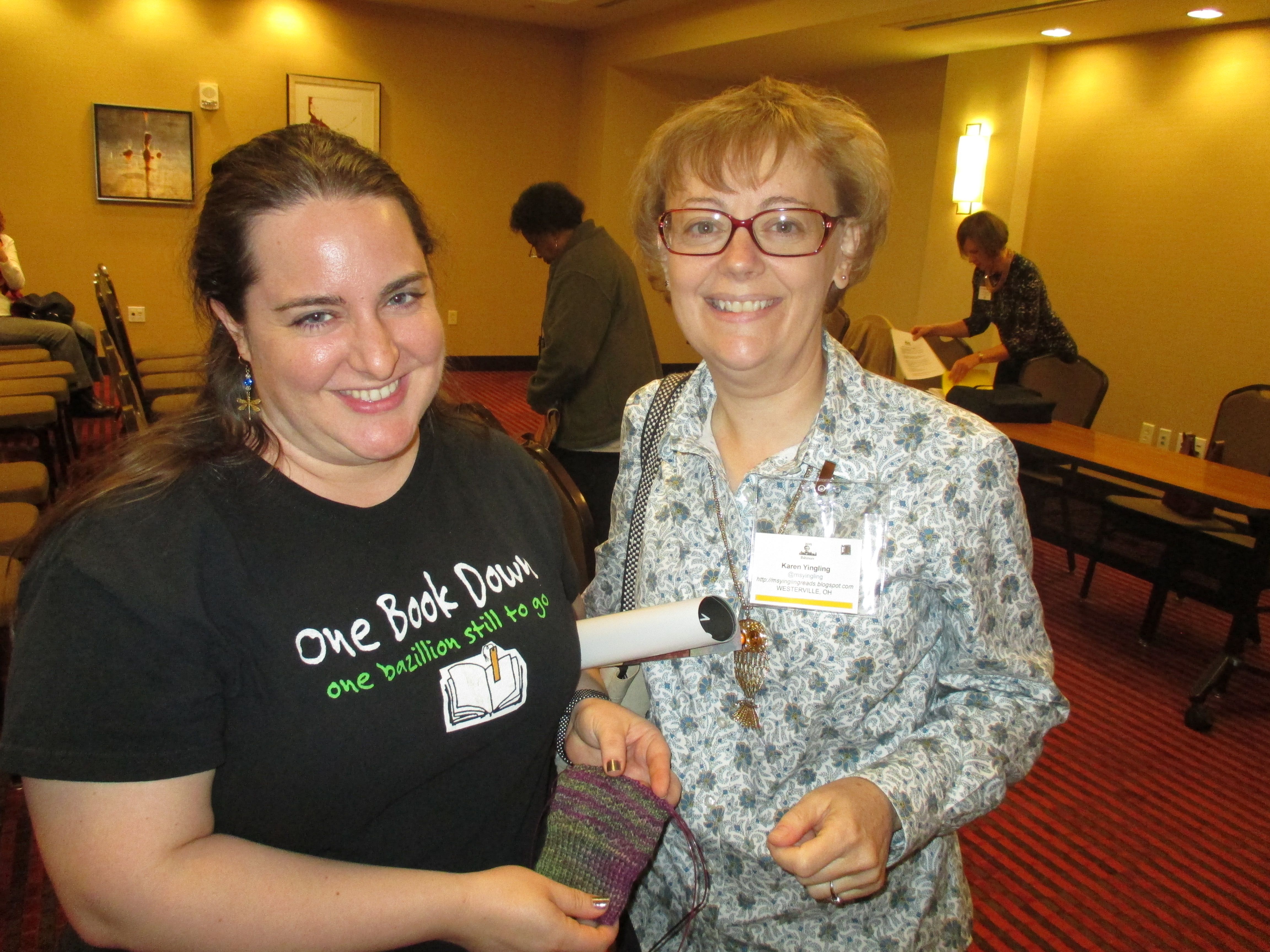
Maureen and Karen

Bloggers Maureen [ed. 10/19 to add] Kearney of Confessions of a Bibliovore and Karen Yingling of Ms. Yingling Reads

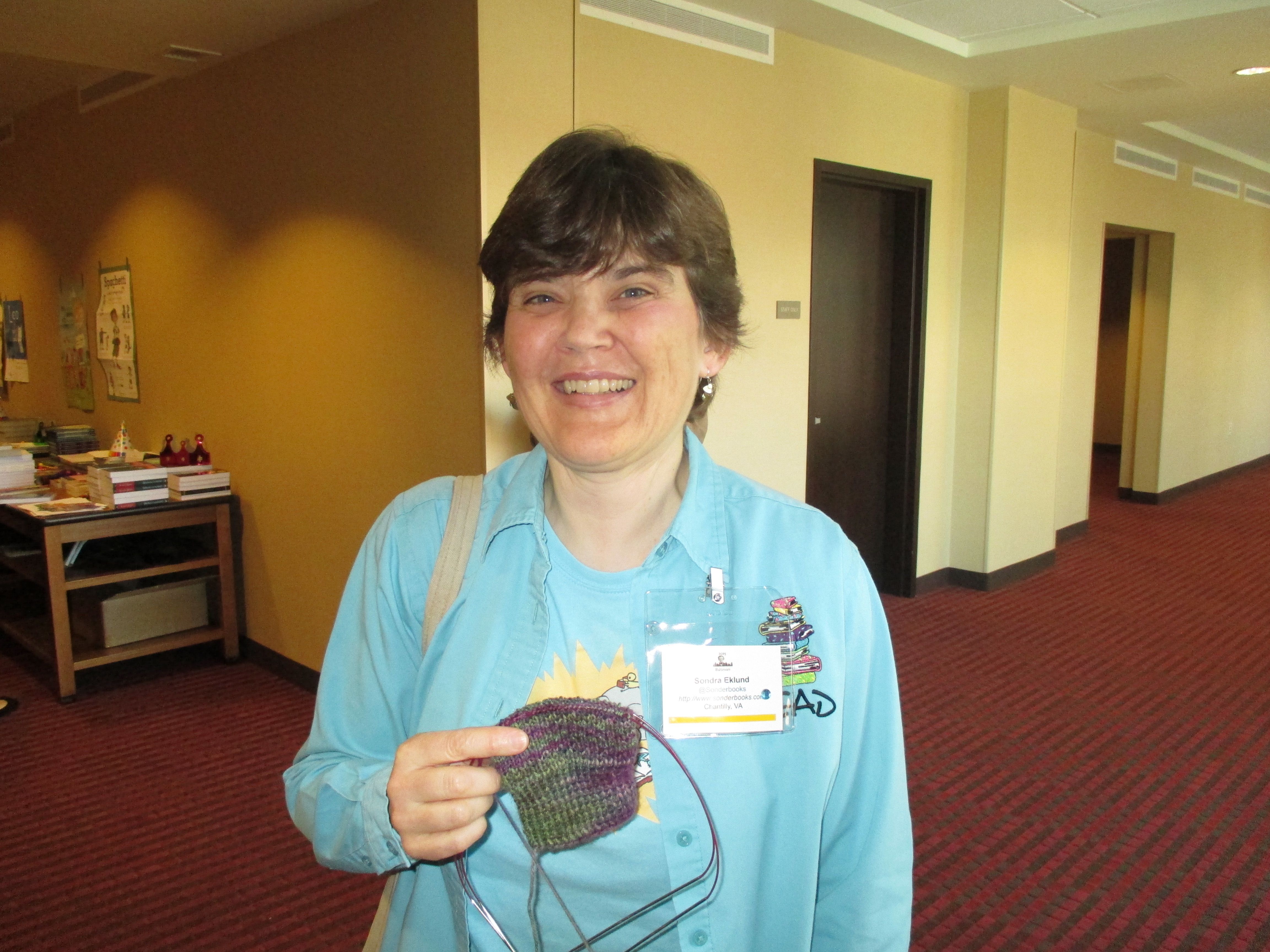
Sondra

Sondra Eklund of Sonderbooks

Me with Charlotte of Charlotte's Library

Me with Charlotte of Charlotte’s Library

Posted in Conference Notes | Tagged , | 9 Comments

The Ordinary Princess for Flashback Fridays

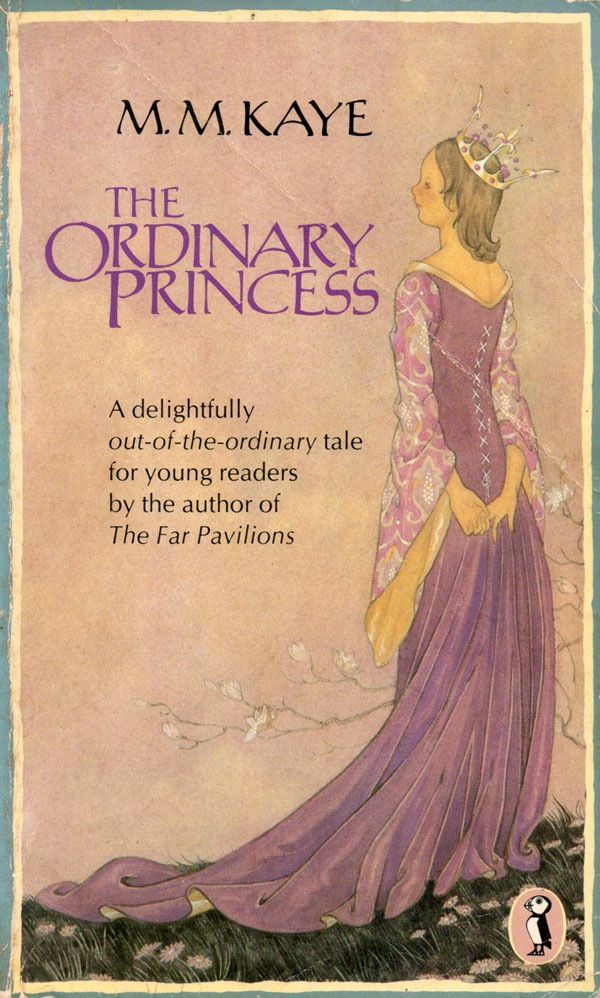
Flashback Friday is a feature I’m borrowing from Stephanie at Views from the Tesseract, whose post on this very book inspired me to read it to my daughter.  (She included more of the fantastic illustrations, too!)

The Ordinary PrincessThe Ordinary Princess written and illustrated by M.M. Kaye. Doubleday, 1980.
This is a book that I loved as a child, without paying any attention to the name M.M. Kaye, who is probably better known for her serious adult works such as The Far Pavilions. (I still haven’t read any of her adult works however.) This summer I thought my daughter might be old enough for it, so we read it together at bedtime over the course of a couple of months.

Amethyst Alexandra Augusta Araminta Adelaide Aurelia Anne of Phantasmorania is the seventh princess in her family, born even more golden-haired, blue-eyed and sweet-tempered than her six older jewel-named sisters.  But at her christening, the fair Crustacea arrives (dripping with seaweeds) and gives her the gift of being ordinary. Amethyst becomes so very ordinary that everyone calls her just Amy.  And as she’s much too ordinary to be set on a pedestal as her other sisters are, she spends her time exploring in the woods without worrying about the freckles.

The only hitch is that she’s too ordinary-looking to attract the usual sort of husband material.  When her father and his councilors hatch a dreadful plan involving hiring a dragon to Lay Waste the Countryside, Amy decides to take matters into her own hands, which eventually involves her running low on resources and taking a job as a scullery maid at the castle in a neighboring kingdom.  There she meets a young man, Peregrine, who calls himself a “man of all work” and even more wrinkles develop…

This is a sweet and subversive fairy tale – though as it was first published 30 years ago and the author started writing it twenty years before that, it feels much less subversive that it would have 50 years ago. Amy, with her “mousy brown” hair instead of blonde, is the most diverse character in the book, and there’s equally no whiff either of romance beyond straight or of the possibility of a happy single life. None of those keep me from loving this book to pieces, however, and the messages that are here are still important: that who you are on the inside is more important than what you look like, and that working too hard on the outside can make it harder to pay attention to the inside and to the world outside of yourself. Amy knows that she enjoys herself and her life much more for giving up on worrying about her appearance. She has to work for her living, and work hard. And the romance that develops isn’t about social position or physical attraction, but a slow blossoming of friendship into something deeper.  All of this is packed, with humor and affection, into a chapter book of 112 pages, including the author’s beautiful illustrations.

It turned out to be a little too much for my little girl to keep track of just as she was falling asleep at night – but I found it even more delightful than I remembered it being.  We’ll try it again when she’s older – I’d say it would be good for independent readers of 8 and up, and younger for reading aloud.  Have you read this? What did you think?

Posted in books | Tagged , | 1 Comment

The Chosen Prince

Diane Stanley’s The Silver Bowl was the first book I ever nominated for a Cybils award, back in 2011.  And on that subject – today is the last day to nominate books for the Cybils, and if you were looking for a book to nominate in the Elementary/Middle Grade Speculative Fiction category, this one is eligible and has not yet been nominated.

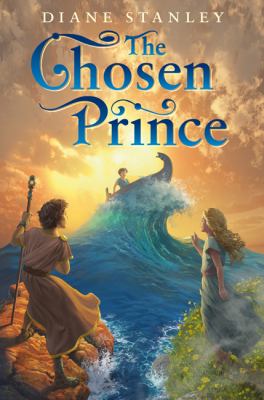
The Chosen PrinceThe Chosen Prince by Diane Stanley. HarperCollins Children’s, 2015.
The publisher’s description of this says it’s “based loosely on the Tempest”, but the dealings with the Greek gods here are a bigger draw, at least for the kids I know. The kingdom of Arcoferra was long ago found guilty of crimes against Zeus, who punished it by splitting it into the kingdoms of Arcos and Ferra, doomed to eternal war against each other. With so many resources going towards the war, both countries face drought, famine, and the debilitating summer sickness. All the people believe, though, that Athene in her mercy will one day send a champion who will end the war.

Prince Alexos, at his first visit to the temple of Athene, is determined to be the Chosen One.  His father raises him harshly, determined to make him into the perfect prince.  Alexos’s only comfort is he sweet baby brother, Teo.  But when Alexos himself comes down with the summer sickness, everything he cares about is gone.  Two things keep him going –  the wise palace doctor, Suliman, who encourages him not to give up on life, and his visions of a magical island where the fruit trees bend down to give their fruit and the beautiful girl who lives there with her father.

This has enough introspection to keep me and other character-oriented readers happy, with thoughts on survivor’s guilt and what it means to be a good person and a ruler.  But with races, deadly illness, battles, shipwrecks, and political intrigue, there is also plenty to appeal to the action-oriented.  While I was able to predict some of the plot, other parts were pleasantly twisty and surprising.  This is a great choice for fantasy fans young and old, and especially great for kids turned on to Greek mythology by the Percy Jackson books.

On that note, here’s a list I put together of Rick Riordan read alikes.

Posted in books | Tagged , , | 2 Comments

Guest Post: Otis Frampton with Oddly Normal Blog Tour with Giveaway

[Edited 10/30/15 to add]

I am updating this to include it in Mother Daughter Books Giveaway Linky Party, and extending the giveaway deadline to 11/3/15.  Please leave a comment to enter the giveaway! And head on over the Mother Daughter Books for more great giveaways.
Book Giveaway Linky

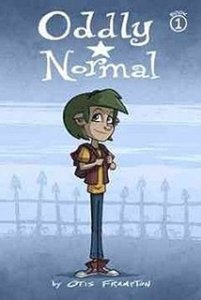
oddlynormalcoverToday I’m welcoming author/artist Otis Frampton to my blog to talk about his comic book, Oddly Normal.

Bio:

Otis Frampton is a comic book writer/artist and animator. He is the creator of Oddly Normal, published by Image Comics. He is one of the two artists on the popular animated web series How It Should Have Ended. He is also the creator of ABCDEFGeek, a geek-alphabet cartoon series that can bee seen at otisframpton.com, the How It Should Have Ended YouTube channel and on TeeFury.
If you ask 10 different comic book creators “what is your process for creating a comic book page?” you’ll likely get back 10 different answers. Sometimes you’ll get back 11 or 12 answers, depending on the mental stability of the creator in question.

But the bottom line is this: there is no “right” way to make comics. We all work a little differently to get our stories on the page, using our experience and artistic tastes to guide us. Some of us work entirely digitally, never touching paper in the creative process. Some of us have never used a computer even once to make a comic and never would. And some creators mix it up, using any tool that will help them get the job done.

I’m pretty much in the all digital camp. Sometimes I draw on paper and scan the dCaricature-Beard6 (1)rawings into the computer to color, but it’s not very often that I touch pen to paper. when it comes to how I like to work, 95% of the time I’m a pixel pusher. And I likes it that way.

So here’s my process for creating comics. It’s not the “right” way to do it (like I said, there isn’t one), it’s just my way. If you’re someone who has an interest in making comics, I hope that you learn few things from reading about my process. And if you don’t, that’s okay. I’m sure you’ll find your own way to do things and I’m certain that it will be awesome. Whatever gets the story on the page, right? Right.

Okay, here’s how I do it…

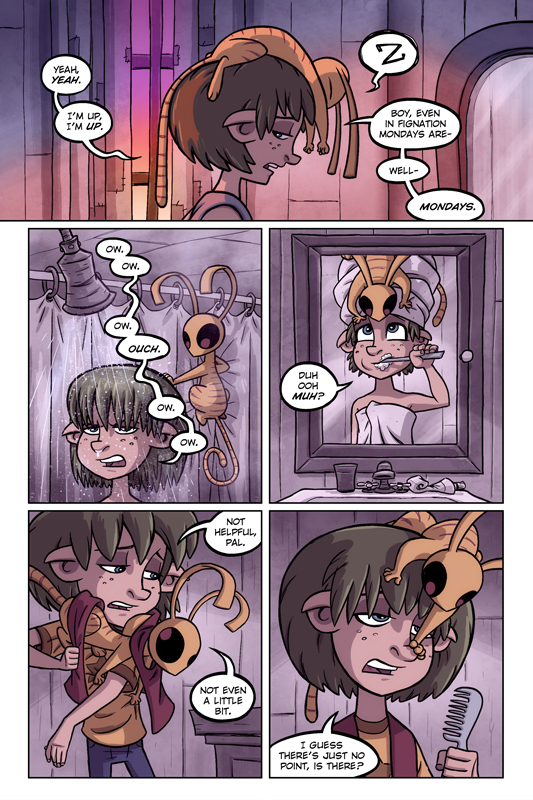
This is a page from issue #10 of my comic book series “Oddly Normal” (published by Image Comics):

OddlyNormal-Process-1[1]

And here’s how this page started out:
OddlyNormal-Process-2[1]

Like I said, I work digitally. Everything I do is hand drawn or painted, but it is done using a stylus and a Wacom Cintiq drawing tablet. I do all of my drawing and coloring in Photoshop CS5. It’s an older version of Photoshop, but it gets the job done.

When I’m laying out (or roughing out) comic pages, the drawings are pretty ugly. It’s just a big mess. But the purpose at this point is to get the ideas down on the page and get a sense of the visual information needed and the panel layouts that will be necessary to tell the story. Scribbles get the job done at this stage, so I scribble.

This page in the story is showing Oddly getting ready for a day at school while trying to deal with her new pet, Oopie. I originally thought that there would only be four panels on this page. But as you can see from the next image, I decided to add a fifth panel to the top of the page, to clarify that Oddly was on her way to getting ready for the day.

OddlyNormal-Process-3[1]

Now I start to refine the drawings, working on getting the basic poses and expressions for the characters drawn. It’s still rough, but it’s getting there. It’s all about clarifying character and action at this point. Some artists will work in silhouette for a page like this, so that a character’s body is conveying a sense of intent and purpose even in all black. It’s a great technique for action scenes, but I chose not to employ it here.

I make one more pass at what I call my “digital pencils” before moving on to drawing the final black lines for the page. Some artists play it loose with the penciling, but I like to get it all down before I commit to black lines.

OddlyNormal-Process-4[1]

One thing I do that most comic book creators don’t do is that I place all of my lettering (the test, balloons and captions) during the layout and pencilling stage. I do this so that I know that the flow of words and images will work as I intend it to before I commit to the final drawings. Most comic book lettering is placed onto a page after all of the artwork is finished. I think this is a backwards way of doing things. Comic books are a medium of words and pictures and they should work together. The lettering on a comic book page is the element that readers spend the most time looking at (initially, at least). So it shouldn’t be an afterthought. It should be as important as the images. One of my biggest pet peeves is seeing poorly placed lettering on a comic book page that covers up important visual information or creates a badly composed panel by way of awkward placement. I get around this by doing my own lettering for my comics. It’s a skill well worth learning if you want to write and draw your own comics.

The nest step is to ink the page, creating finished black lines for the artwork.

OddlyNormal-Process-5[1]

Again, the inking is done digitally, using a special custom-made Photoshop brush that gives me the kind of line weight I like. I usually draw the character lines and the background lines on separate layers in Photoshop so that when I move on to the coloring phase I can have more leeway in how I work on them.

Next up is my least favorite part of coloring anything in Photoshop: flatting.

OddlyNormal-Process-6[1]

Flatting is basically filling in the flat areas of color on everything in each panel. It’s boring. It’s mind-numbing. I hate it. So I pay someone else to do it for me. Most comic colorists have flatters who work for them and they’re angels sent from above to make life easier for us. God bless the flatters.

Now comes the fun part, my favorite part of working on a comic book page: bringing everything to life with color.

OddlyNormal-Process-7[1]
I start by doing a few lighting passes on the characters and background. Choose a light source, add shading and then refine. My work is very “cartoony”, so there’s not a lot of fancy rendering done. I try to keep things simple. Oddly Normal’s world is a cartoon fantasy land, and the artwork reflects that.

Next up, I add some subtler shading to the page.

OddlyNormal-Process-8[1]

This is also when I would add in effects, like the water and the streaks on the mirror. There isn’t too much that requires fancy effects work on this page, but I usually save that for after the basic shading is done so that I have a base to work from and know where my light sources are coming from.

We’re almost done now. Just a few tweaks to make.
OddlyNormal-Process-9[1]

At this point, the page is basically finished being colored. But it’s not finished having its color enhanced. Once I have all of the base coloring done, I add color overlays and adjustment layers using Photoshops color tools to “plus up” the colors. I add some glows and lighting here and there and try to make the colors pop a bit more. Sometimes I’ll add a very strong color overlay to an entire scene to give an environment a specific feel. Blue for night, warmer colors for daytime. It’s important to me that readers can easily and quickly orient themselves in a new environment while reading the story so that they always have a sense of where and when they are. Color can be an important storytelling tool in that way.

And that’s it! The last thing I do is make the lettering layers visible once again and the page is complete!

OddlyNormal-Process-10[1]

I hope you enjoyed reading about my process for creating a page of “Oddly Normal!” You can find the series in any book or comic shop and watch for “Oddly Normal” Book 2, which collects issues 6-10 to hit stores in the next few weeks.

Thanks!

-Otis Frampton

Here’s the complete blog tour, so you can visit them all:

Monday, October 12: Guest post, Log Cabin Library
http://logcabinlibrary.blogspot.com/

Tuesday, October 13: Interview and review, Kdub’s Geekspot
https://kdubsgeekspot.wordpress.com/

Wednesday, October 14: Guest post and giveaway, A Library Mama
http://alibrarymama.com

Thursday, October 15: Interview, review, and giveaway, The Book Monsters
http://thebookmonsters.com/

Friday, October 16: Interview, Outright Geekery
http://www.outrightgeekery.com/

Saturday, October 17: Review and giveaway, Charlotte’s Library
http://charlotteslibrary.blogspot.com/

I have one copy available to give away within the US and Canada only!  Leave a comment below with your favorite fictional witches by October 31st, 2015, to enter the giveaway.

Posted in books | Tagged , , | 9 Comments

Kidlitcon or Bust!

Just a quick post – I’m off to Kidlitcon for the first time tomorrow morning!  (It will also be my first time flying off without my children – wish us luck.)  I am super excited to meet my blogging friends in person for the first time. I’ll be rooming with Charlotte of Charlotte’s Library – I can’t even remember how long we’ve been “imaginary” friends.  Watch for me to come back inspired, with even more fun books to read!

And in the meantime, please hop on over to the Cybils website and nominate some books!  I really think every good, eligible book should be nominated, and there are still lots that haven’t been.

Posted in Conference Notes, Personal | Tagged | 2 Comments

The Princess and the Pony

Cybils nominations are still open! And there are lots of good books, and books that look good, that haven’t yet been nominated!  Our fearless leader, Charlotte, has put together several lists of unnominated books in the Elementary/Middle Grade Speculative category if you are in need of nominating inspiration…

I’m always game for stories of unconventional princesses.  This is one my kids and I enjoyed.

Princess and the PonyThe Princess and the Pony by Kate Beaton. Arthur Levine Books (Scholastic), 2015.
Princess Pinecone is born to a family of warriors in a culture of warriors. Her mother looks like Xena and her father is a Viking dude with hipser glasses – but her they just won’t see Pinecone as a warrior.  What she wants more than anything else for her birthday is a real warhorse.  What she gets is a a pile of adorable sweaters and a chubby, cute little pony which farts too much.  Still, when the big warrior field day come up, Pinecone is determined to participate, chubby pony and all.  The battlefield is crowded with warriors of many eras and ethnicities, fighting each other with “dodgeballs and spitballs and hairballs and squareballs (those were new).” And what Princess Pinecone learns is that brawn and speed are not the only way to win a battle – she has a secret weapon she never even knew about.

I said I love stories about unconventional princesses (and girls in general.) Pinecone wants to be a warrior, and while she wears a dress, it’s short and blue and lacking in frills.  Her blond hair is a realistic length, practically rather than decoratively braided, and she is lacking the ubiquitous extra-long eyelashes.  But for all that, she is undeniably cute, and she does not win the day by being better at manly things than the men, like Violetta in Cornelia Funke’s Princess Knight (though I love that book, too.)   The art is digital, but looks like ink and gouache or watercolor, very much in the cartoon style that Beaton is famous for.  The lines are energetic even though most of the characters are cutely rounded.  The language is delightful, too, with lines full of alliteration and vocabulary like this: “Pinecone was flabbergasted, flummoxed, floored!” All of this works together to make a story that’s both fun and funny, with a nice twist on the “be true to yourself” message.

Posted in books | Tagged | Leave a comment