Scratch9: Cat of Nine Worlds

Taking a quick break from my own middle grade speculative fiction Cybils reading to talk about the book I nominated for the elementary/middle grade graphic novel category.

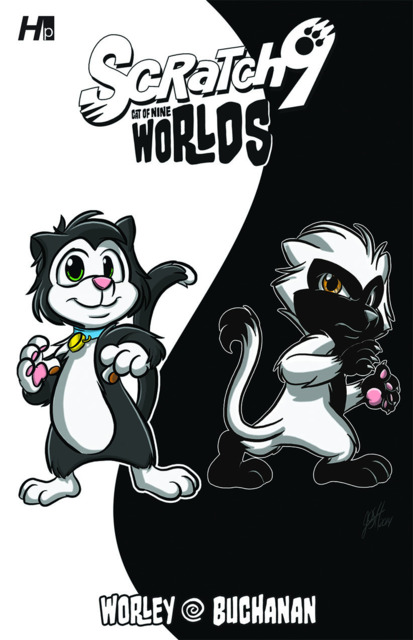
Scratch9: Cat of Nine WorldsScratch9: Cat of Nine Worlds by Rob M. Worley and Joshua Buchanan.    Hermes Press, 2015.
Scratch9 is a fun indy series that my family discovered at Kids Read Comics, the great little kids-and-teens con that’s in Ann Arbor every year.  I was really happy when a new volume appeared in our house this fall!  (Thanks, love!) In case you weren’t able to find volume one, The Pet Project, when I recommended it a couple of years ago, here’s a quick refresher: Scratch is a cat who has met all 8 of his other lives, very cool felines living in different times and places around the world.  The evil and of course nefarious Dr. Schrödinger would like nothing better than to harness Scratch’s power for himself, which usually involves great danger for both Scratch and his beloved owner, Penelope.

In this volume, Scratch has snuck himself into Penelope’s suitcase as she’s off to Camp Robo.  Penny is really smart and good with programming and robots, so this should be right up her alley – except that it turns out to be an elaborate trap set up by none other than Dr. Schrödinger. (Cue the scary music.)  This time he has even more on his side – bigger computers, smart robots, and Strick, a cat much like Scratch who is out to make Dr. Schrödinger’s evil dreams come true.  Scratch is blasted to the time of one of his other selves, and must make it through to all of his other lives, collecting the powerful 9-stones on the way, before he can get back to Penelope and stop Dr. S.  Penny, though, far from waiting helplessly for Scratch to come back for her, is doing everything she can to turn Dr. Schrödinger’s robots against him and lead the way for Scratch to get back to her.

This is still a super-fun adventure series with broad appeal.  The complication comes mostly from the time-travel, but even that is pretty straightforward.  Mostly this is just fun with a big helping of pet friendship and loyalty, as Scratch and Penelope overcome all obstacles to get back together.  The art is a classic crisp and clear cartoon style, full of energy and in full color.  Buy it now – or ask your library to buy it now – as I’m afraid it will go out of print as quickly as its predecessor.

Posted in Books | Tagged , , | 5 Comments

The Fog Diver

A futuristic steampunky, piratical middle grade adventure?  Give it to me now! This is one I’d been looking forward to ever since Charlotte wrote about it, and was very happy to see it nominated for the Cybils.

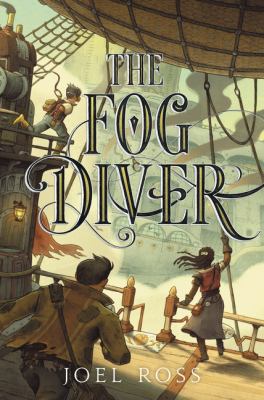
The Fog Diver by Joel Ross. Harper, 2015.
In a far future, most of the Earth has been taken over by the Fog, composed of deadly nanites that turned against humans.  Now humans live high up on mountains – the richer, the higher up.  13-year-old Chess is one of a crew of young scavengers who make their living flying over the fog on patched-together airships, while Chess dives down through the fog looking for valuables left over from the old civilization to sell.

The ship’s crew is made up of other orphans like himself, headed by 15-year Hazel, described and shown on the cover as Black.  Big strong Swedish provides the muscle, while tiny, red-headed Bea is both the ship’s gearslinger and the darling of the crew. Chess has one eye that seems to be filled with the swirling fog, which his crew thinks is why he’s never come down with the fog sickness that everyone else gets if they spend too long near the ground.  Miss E., the adult who brought the crew of orphans together, is now badly sick with it, and the kids are determined to find enough to save her and for all of them to make it out of the junkyard.

Chess is on his way up from a particularly valuable find when their ship is attacked by adult pirates from a rival settlement.  Even though it’s the one they’re hoping to emigrate to, the ship’s captains don’t look on them kindly. Things go from bad to worse as they learn that the evil Lord Kodoc, ruler of their settlement, is looking for a child Chess’s age with a cloudy eye.  Can they escape? Will they be able to save Miss E.?

The basic plot is straightforward enough – kid with special ability trying to get away from the bad guy who wants to misuse it – but the result is fresh and so much fun.  The world is novel, with recognizable bits of our own culture warped so that they no longer make sense, like the talking cats called Hello Kitties.  Most of all, the ensemble cast is a perfect found family, each member contributing to the whole and supporting the rest with a believable amount of tension.  Ross fits in an impressive amount of character development given how much time characters spend treasure-hunting and escaping enemies.  With the nice blend of gears, humor, adventure and likeable characters, it felt as if it was custom-written for my son and I to enjoy together.  I haven’t read it to him yet, but read it in less than a day myself.  This would be a great choice for any adventure-loving kid.

Posted in Books | Tagged , , | 5 Comments

Lilliput

I confess, I have yet to read the classic Gulliver’s Tale, but I read and reread T.H. White’s take on it, Mistress Masham’s Repose, in childhood. Naturally I had to read this more recent take on Lilliputians.

LilliputLilliput by Sam Gayton, Alice Ratteree. Peachtree, 2015.
Lily is a young girl from Lilliput – about 11 months old, which translates to 11 human years. She’s tiny to humans, while humans are giant to her.  In this timeline, Gulliver has already published his famous book, but as the Lilliputian livestock he brought back all died off, everyone just thinks he’s crazy.  In desperation, he journeyed back to Lilliput and captured Lilly to prove the existence of Lilliput to everyone.

Now Lily’s life consists of one escape attempt after another.  Not only is she horrified at the idea of living her life on display, but she also knows that if people believed Gulliver, Lilliput itself would be overrun by humans and all of the Lilliputians would be driven to extinction.  Gulliver is not in fact quite sane anymore, but he is quite determined, and Lily’s multiple escape attempts have been met with increasingly harsh punishments, such as being put inside a stinky, itchy, flea-ridden wool sock hanging from the wall.  33 failed escape attempts, and Lily, with time running out as she ages so much more quickly than Gulliver, is still scheming.

Then, finally, a note she attached to a mouse is found by Finn, the abused servant boy downstairs. His master Mr. Plinker, is a cruelly inventive clockmaker, who makes clocks to tell time not accurately but as their designers wish – longer work hours and shorter play hours for workhouses, for example.  Finn himself is held captive by a wristwatch that digs ever more tightly into his wrist with every second he spends on something other than work.  Neither of them can escape alone, but together, they just might manage it.

Lily is just that kind of dauntless and plucky character that I couldn’t help but root for. This is one with appeal for almost everyone, the strong characters balancing the quick-moving plot. Alice Ratteree’s illustrations bring the coal- and clockwork-powered London to life. There were a few complaints from Amazon reviewers on the harshness of Gulliver’s fate, but I didn’t notice at the time and I am not sure that children would be bothered by the “bad guy” meeting a bad fate.  At any rate, this is one that both my mother and I heartily enjoyed (she liked it enough to nominate it for the Cybils herself).  It was short and fast enough for both of us to make it through in a day, which makes it also a good choice for slower readers or fantasy book assignments.

This book is nominated for the Cybils. This is my opinion, not that of the Cybils committee.

Posted in Books | Tagged | 2 Comments

Guest Post: Cheryl Mahoney on The People the Fairies Forget

I have enjoyed the two previous books in my blogging friend Cheryl Mahoney’s Beyond the Tales series, The Wanderers and The Storyteller and Her Sisters.  This is part of the blog tour for her latest book, which I am very much looking forward to reading when I’m done with my Cybils reading.  In the meantime, I’m very pleased to have her here today with a guest post on the inspirations behind her new book. I’ll also second the recommendations for all of the books she talks about here – I have read them all myself, most of them more than once!


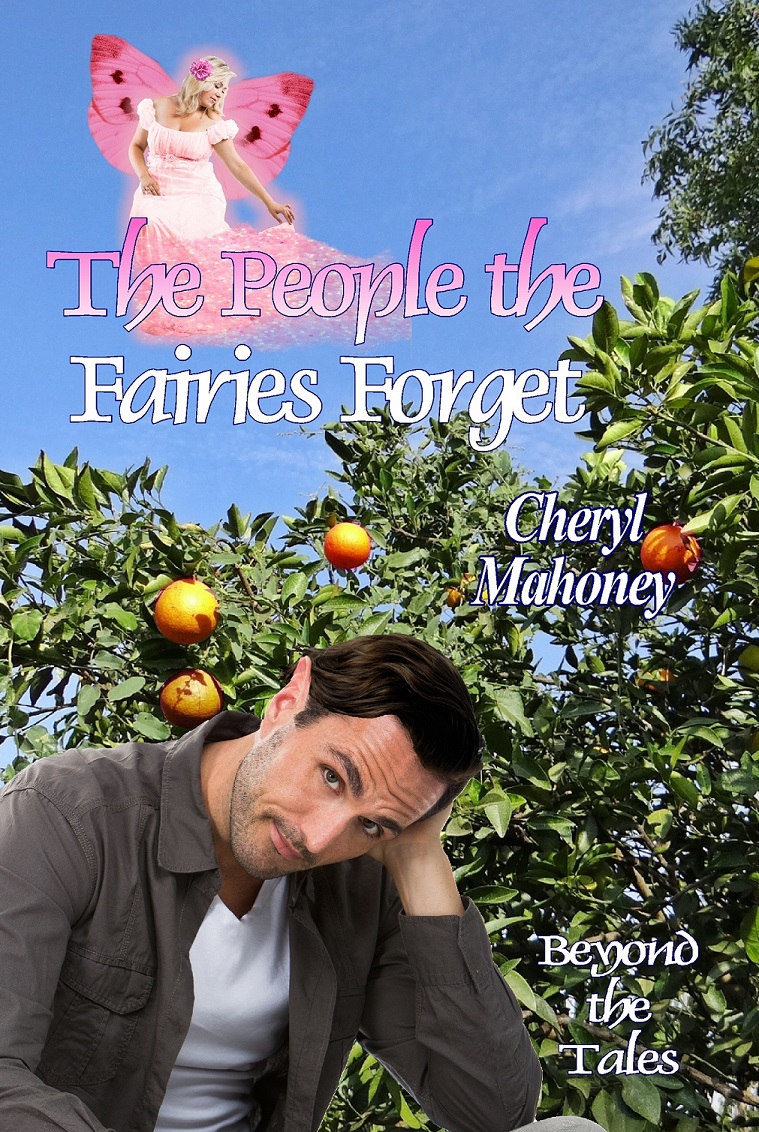
PFF Cover - SmallThe People the Fairies Forget 

Tarragon isn’t your typical fairy. He scoffs at gossamer wings and he never, ever sparkles. Plus, he’s much more interested in common folk than in anyone wearing a crown. All he wants to do is enjoy good food and good parties, but he can’t quite resist sparring with Marjoram, a typical Good Fairy if there ever was one. Against his better judgment, Tarry becomes the reluctant defender of the ordinary people Marj is trampling underfoot in her efforts to help the royalty.

That includes people like Jack, a goatherd stuck on the opposite side of a mass of thorns from his true love Emmy, a maid in Sleeping Beauty’s castle. Or Catherine, who has no desire to marry a very un-charming prince just because her shoe size matches some girl he danced with. Or Anthony, whose youngest sister Beauty got involved with a great and terrible Beast.

Tarry has to set down his supper, brush up on his magic and his arguments, and try for once to wrangle some kind of Happily Ever After out of the mess.

Cheryl Mahoney writes:

The inspiration behind The People the Fairies Forget is a very big question—because it’s really asking about the inspiration for the entire Beyond the Tales series.  Even though this is the third book to be published, I actually wrote this draft first.  So when I started it, I was still figuring out exactly what kind of retellings I wanted to do, and what fairy tale sources I wanted to draw from.

I began by going back to the classic versions: the Brothers Grimm and Charles Perrault especially.  Neither of them wrote “Beauty and the Beast” though, which brought me to the story by Jeanne Marie Le Prince de Beaumont.  I enjoyed reading those stories with an eye towards retelling—exploring the stranger aspects, and noticing just how villainous the Good Fairies could actually be!

When I set out to twist the tales, I wanted to twist elements readers would recognize, so I wanted to draw from a sort of broad cultural concept of the stories.  Not everyone will be influenced by the same version of Cinderella, of course, but as much as I could, I wanted to get the most widely-known aspects of the story…which brought me to the Disney movies.  For better or worse, those are probably the best-known versions!  They draw a lot from the same classics I was looking at, and were helpful as source material too for their own particular twists on the stories.

I’ve also read many other fairy tale retellings, and there are a handful that I especially consider to be literary ancestors of my own book.

Ella Enchanted by Gail Carson Levine is a favorite Cinderella retelling.  Levine has a wonderful way of telling a fairy tale that has plenty of magic but still feels set in a very real world, with believable people who have ordinary problems.  Ella is cursed to be obedient, which causes her problems from eating too much to always losing races to not being able to run away from ogres.  I always try to make my own characters as real as possible, dealing with the problems that would logically follow from the ridiculous fairy tale situations—like what it would really mean for a community if an entire castle, not just a princess, was put to sleep.

The Enchanted Forest Chronicles by Patricia C. Wrede has some of the same practical bent, as when Princess Cimorene needs to cook dessert for five dragons (not enough time for cherries jubilee, so she makes chocolate mousse).  Wrede also does wonderfully funny things at times with fairy tale tropes, creating characters that are either extreme versions of fairy tale types, or extreme contrasts.  My Prince Roderick is the picture of the proper handsome fairy tale prince.  He has no idea how to handle it when confronted with Catherine, who accidentally fit into the glass slipper but is not remotely like sweet and helpless Ella.

The Rumpelstiltskin Problem by Vivian Vande Velde is a short story collection, with six (very different) versions of Rumpelstiltskin. My favorite part of the book, though, is the introduction, as she explores all the ways the original story really didn’t make much sense.  Similarly, I like to expand the stories to explain why people are going about doing such odd things—like trying to find a bride by trying a shoe on every girl in town.  Prince Roderick is a very handsome prince, but also hopelessly self-absorbed, so he doesn’t know anything about this girl he’s trying to find—and never manages to remember anyone’s name.

Beauty and Rose-Daughter by Robin McKinley both retell “Beauty and the Beast,” although in very different versions.  Both highlight Beauty’s family (larger than Disney would have you believe), which also became a big part of my version; Beauty herself only has a small role in my book, with much more focus on her three brothers.  McKinley is also a wonderful inspiration simply for how different she made two versions (three, if you count Chalice) of the same story.  It really shows how well these stories can be told, and stay interesting many, many times…as long as you have something new to do with them!

I hope readers will enjoy my new take on these stories…and recognize the twists on the stories that came before.

You can purchase The People the Fairies Forget here: Paperback, Kindle and Smashwords

Cheryl Mahoney is a book blogger at Tales of the Marvelous, and the author of three books based on fairy tales. The Wanderers, published in 2013, follows the journeys of a wandering adventurer, a talking cat and a witch’s daughter.  The Storyteller and Her Sisters, retells “The Shoes That Were Danced to Pieces,” with twelve trapped princesses who decided to take control of their story. Her latest novel is The People the Fairies Forget.

Posted in Books | Tagged , , , , | 2 Comments

Hamster Princess: Harriet the Invincible

Can you resist an invincible hamster princess? I certainly couldn’t, and was quite relieved to find this just as much fun as it looked.

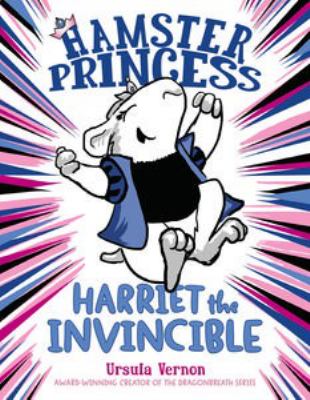
Harriet the InvincibleHamster Princess: Harriet the Invincible by Ursula Vernon. Dial Books for Young Readers, 2015
Here is a twist on the Sleeping Beauty fairy tale perfect for middle and upper elementary students, and younger for read-alouds.  Princess Harriet (yes, she is a hamster) is thrilled when her parents tell her that an early encounter with an evil fairy has doomed her to prick her finger on a hamster wheel and fall asleep on her twelfth birthday.  She’s always had trouble being the quiet, indoor type of princess and this means she’s invincible – she can do anything she wants!  Much to her parents’ disapproval – they would much rather she stayed home and work on finding the right prince to kiss her awake after the fact – she sets out on a life of adventure and monster-battling on her faithful quail steed.

Like Vernon’s popular Dragonbreath series, the story alternates prose storytelling with comic book panels, often for the action scenes.  Vernon makes this style work very well, and it’s a great choice, especially for reluctant readers who are intimidated by large blocks of text.  The story is fun for everyone, though.  Vernon looks at the stereotypes as she’s upending them, so that even as we’re sympathetic towards Harriet’s reluctance to take romance seriously at her young age and cheering for her on her adventures – Harriet also has some lessons to learn about her unthinking targeting of creatures she considers monsters.  There’s a whole lot of fun and, yes, adventure with a very likeable new heroine and her brave yet adorable quail. Ms. Yingling had mentioned that the hamsters are not quite as expressive as the reptiles in the Dragonbreath books.  Unfortunately, I have to agree with her.  I did have some trouble telling some of the characters and expressions apart, but that didn’t keep me from enjoying the book.  And it’s certainly not keeping this from flying off the shelves at my library.

Official disclaimer – this book is nominated for the Cybils award, but this is my personal opinion on the book, not the opinion of the Cybils committee.

Posted in Books | Tagged | 5 Comments

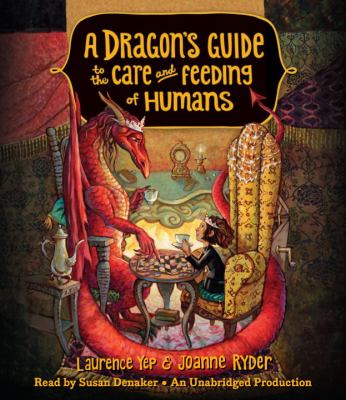
A Dragon’s Guide to the Care and Feeding of Humans

I confess, it was being nominated for the Cybils that made me pick this one up (finally), but it had been on my radar for a while, because as my son recently informed my daughter, dragons are the best.

Dragon's Guide to the Care and Feeding of HumasA Dragon’s Guide to the Care and Feeding of Humans by Laurence Yep and Joanne Ryder. Read by Susan Denaker. Random House, 2015.
Miss Drake is a dragon who takes humans as long-term pets.  She’s been doing this for several centuries, but the (unfortunate if timely) death of her latest pet, Fluffy, has sunk her into depression.  She’s startled out of this by the arrival of young Winnie, Fluffy’s great-niece.  (Winnie called her Great-Aunt Amelia rather than Fluffy.)  Miss Drake would like Winnie to go away and leave her in peace.  Winnie has strict final instructions from Great-Aunt Amelia to persist in visiting Miss Drake and making sure she is taken care of.  Can Miss Drake’s attempts to train her new pet stand firm in the face of Winnie’s desires for cookies, tea, and field trips to the local magical shops?

On the surface, this is a clever set-up. Miss Drake and Winnie each consider the other her pet, and it’s entertaining to watch them circle around each other.  It’s also a look at dealing with grief – a refreshing one where the deceased is loved and missed but not the child hero’s parent or sibling, and people are sad but are able to keep living life.  There are fun adventures with unpleasant creatures trying to attack the magical shop and Miss Drake and Winnie having to chase down some runaway magic, but the real heart of the story is the developing cross-generational friendship between the two main characters.  This gentleness makes it appropriate for younger and/or sensitive fantasy readers.  I listened to it on audio and tried playing a bit of it for my six-year-old, who found the story from the dragon’s point of view a little too confusing for her.  Susan Denaker’s Miss Drake voice sounded proper, British and a bit elderly – perfect – but Winnie’s voice sounded like she was five instead of ten, like all of Denaker’s voices for the Penderwick sisters.  That’s a slight complaint, though, for a quite enjoyable book.

If you’re looking for more first fantasy chapter book suggestions, I have a whole list for that!

Posted in Books | Tagged , | 3 Comments

Cuckoo Song

My giveaway for the graphic novel Oddly Normal is open for just a few days more – that’s another book good for, but not limited to, Halloween.  Go enter now!

October 31 is also the birthday of Juliette Gordon Low , founder of the Girl Scouts.  Thank you for believing in girls, Juliette!  I recently read the picture book biography Here Come the Girl Scouts by Shana Cory, illustrated by Hadley Hooper to my Daisy troop – they were very impressed by the beautiful portrait in the back!

Here’s one more spooky book just before Halloween – one that I’m handing off to a horror-loving middle schooler as soon as I write this review.

cuckoosongCuckoo Song by Frances Hardinge. Amulet Books, 2015.
When Triss wakes up, the people calling her are only vaguely familiar, and she can’t remember falling into the lake as the people who are supposed to be her parents say she did.  As they decide to cut their vacation short, everyone hopes that being in familiar surroundings will help Triss recover her memories.  Everyone except Triss’s younger sister, Pen, who is inexplicably furious with Triss.  But going home only drives home the fact that Triss doesn’t know things that she should know.  Other strange facts: Triss is always hungry, no matter how much she eats.  There are always dead leaves in her hair when she brushes it. And dolls open their eyes and turn their heads when she walks by.

Triss is badly frightened.  As she sets out to find out what is wrong, she learns both that something is very wrong with her – but also that the family that looked so perfect at first is falling apart, as symbolized by the bedroom that’s supposed to be left untouched in memory of the older brother who never came back from war (World War I going by technology, though it never says outright), but that in fact has regular visitors.  The more she learns, the more she realizes that she has very little time indeed to stop something truly horrible from happening.

This is horror where you find that the shadows you were telling yourself not to be frightened of – you really should be careful about. Yet as scary as the supernatural things are – they were only let in because of the horrible things done by well-meaning humans.  Even though there is plenty of action (on motorcycles! Jumping over rooftops! Falling into freezing water!), this is creepy, not gory, keeping it appropriate for middle grade kids or sensitive adults.  The characters are well-developed and the language is beautiful without focusing too much attention on itself – here’s one quote:

“The Old Docks had not faded gently. They did not look sad… Neglect had given the Old Docks a dangerous air, like that of a half-starved dog.” (p. 333)

I might have passed this up despite the numbers of my blogging friends who are fans of Frances Hardinge, as horror isn’t usually my thing.  I’m so glad I did read it, because it is excellent.

Official disclaimer – this book is nominated for the Cybils award, but this is my personal opinion on the book, not the opinion of the Cybils committee.

Posted in Books | Tagged , | 2 Comments

Hoodoo

Here’s another one for kids looking for something spooky for Halloween (or, you know, any other time.) This is one I already had checked out from the library for Cybils reading when I went to Kidlitcon and saw that the author was on the Middle Grade Horror panel!

hoodooHoodoo by Ronald L. Smith. Clarion Books, 2015.
It’s the 1920s or possibly 30s in small-town Alabama.  Hoodoo Hatcher, aged 12, is being raised by his grandma, Mama Frances, as both of his parents are dead – his mother in childbirth and his father hanged for a crime that Hoodoo has pretty much been kept in the dark about.  “Hoodoo” is both what his people call magic and Hoodoo’s name, as his grandmother thought that he was full of that.  Hoodoo feels that this is an injustice – not only does he have a funny name, but he can’t even do the magic his name would imply – at least not yet.  He’s sweeping in the general store for an extra coin when a stranger dressed in black comes into the store looking for “mandragore”.  Hoodoo knows neither what mandragore might be nor why he is so frightened of the stranger.  But when crows and the fortune teller at the state fair and his dreams tell him to be careful, he starts getting very nervous.  Still, he doesn’t want to tell his family.  (Poignantly, he and his not-yet-girlfriend Bunny have to go to the fair on the last day, “Colored Folks Day”, so the white folks don’t have to attend a fair previously attended by coloreds.)  Hoodoo – helped somewhat by Bunny – sets out on a mission first to find out what the man in black wants and stop him.  It’s all bound up with Hoodoo’s personal family history, so that in the end, Hoodoo is both stronger in himself and more connected to his family history.

This sounds pretty grim, and to some extent it is – it doesn’t stop shy of real people being killed, even if the children stay safe, and some of the magic is dark and very, very close to Hoodoo.  But it’s also filled with the warmth of Hoodoo’s extended family and friends.  Hoodoo himself has a fine sense of humor and optimism in the face of everything that reminded me of Bud in Bud, Not Buddy. He tells the story in first person, with asides to explain his world followed by “if you didn’t know” – “Molasses is like syrup but thicker, if you didn’t know.” If you’re looking for a book to make your skin crawl where the young hero still wins in the end, this is a fine one

Official disclaimer – this book is nominated for the Cybils award, but this is my personal opinion on the book, not the opinion of the Cybils committee.

Posted in Books | Tagged , , , | 2 Comments

One Witch at a Time

More Cybils reading!

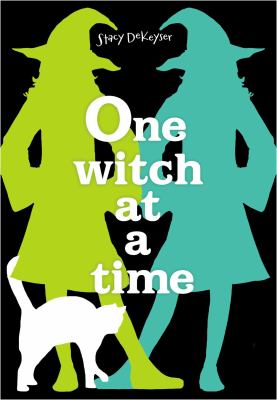
One Witch at a TimeOne Witch at a Time by Stacy DeKeyser. Simon & Schuster, 2015.
This book is the sequel to The Brixen Witch, which I haven’t read, but I deduce from references in this book was a Pied Piper retelling.  The village of Brixen has not been doing well – winter is lasting too long, and there’s not enough food to go around.  Our young hero, Rudi, is sent off to market in the neighboring town to sell one of his family dairy’s few remaining cows.  Susanna Louisa, a neighbor girl only nine years old, comes along, and ends up selling the family cow for a handful of beans that she claims are magic.  Magic beans! These were sold to her by a pretty but clearly dangerous girl that Rudi learns is named Agatha, who’s dressed in the style of people from Petz, even though they are rumored not to be able to leave their village. From this point, we know this is going to be a Jack and the Beanstalk story, with the added wrinkle that each town in this country has its own witch.  Brixen’s witch is the more traditional style: a crotchety old lady that no one wants to cross, but who really has Brixen’s best interests at heart.  Right now, though, it seems that Brixen is being affected by magic from the neighboring town of Petz, whose witch is a large and much less kindly male giant.  It’s up to Rudi, Susanna Louisa, and Agatha to stop the giant from destroying both Petz and Brixen, keeping in mind the rules about witch’s magic that the Brixen witch tells them.

When starting midway through a series, my first question is always, “Can I understand what’s going on or do I feel left in the dust?” Here, I could definitely tell that things had happened to Rudi before, but this was another adventure.  I didn’t feel left behind, but if you have time, you’d probably enjoy this one more after reading the first one.  It is a historical setting, but Rudi’s voice is fresh enough to keep it feeling approachable.  This is a fun fairy tale-inspired adventure, with strong characters of both genders. Rudi is plucky enough to respect, but isn’t the Hero of the Day, even though the story is told from his point of view, a refreshing change.  It’s also great to see a fairy tale story starring a boy, as there are not nearly enough of these for balance – too bad it doesn’t look like it from the cover. This is a fun, fast read for fans of both fairy tales and fantasy adventures.  It would pair well with Liesl Shurtliff’s Rump and Jack.

Official disclaimer – this book is nominated for the Cybils award, but this is my personal opinion on the book, not the opinion of the Cybils committee.

Posted in Books | Tagged , , | Leave a comment

The Jumbies

Here’s a scary adventure story perfect for this time of year.

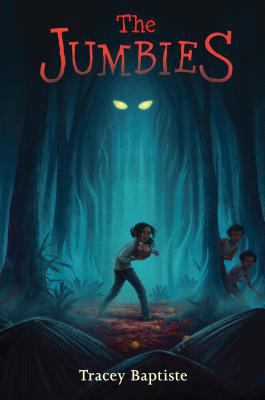
The JumbiesThe Jumbies by Tracey Baptiste. Algonquin Young Readers, 2015.
The woods of Trinidad are filled with jumbies, the collective term for a wide variety of supernatural creatures, with one thing in common: they do not mean humans well.  Most of the residents of Corinne’s village stay away from the forest.  Corinne’s father, though, doesn’t believe in the jumbies, and so Corinne feels free to take shortcuts through the woods.  But when two pesky boys steal the necklace she inherited from her mother and tie it to a lizard that runs into the woods, Corinne is sure she hears things following her.  It turns out that something even worse than the jumbies she’s grown up hearing about is after her – a jumbie in the shape of a beautiful woman who enchants her father so that he no longer recognizes Corinne.  She has no choice but to join with the two boys (maybe too quickly, in my one quibble with the book), as well as another girl from the marketplace, Dru, to try to stop the jumbie before the whole village is taken over with them.

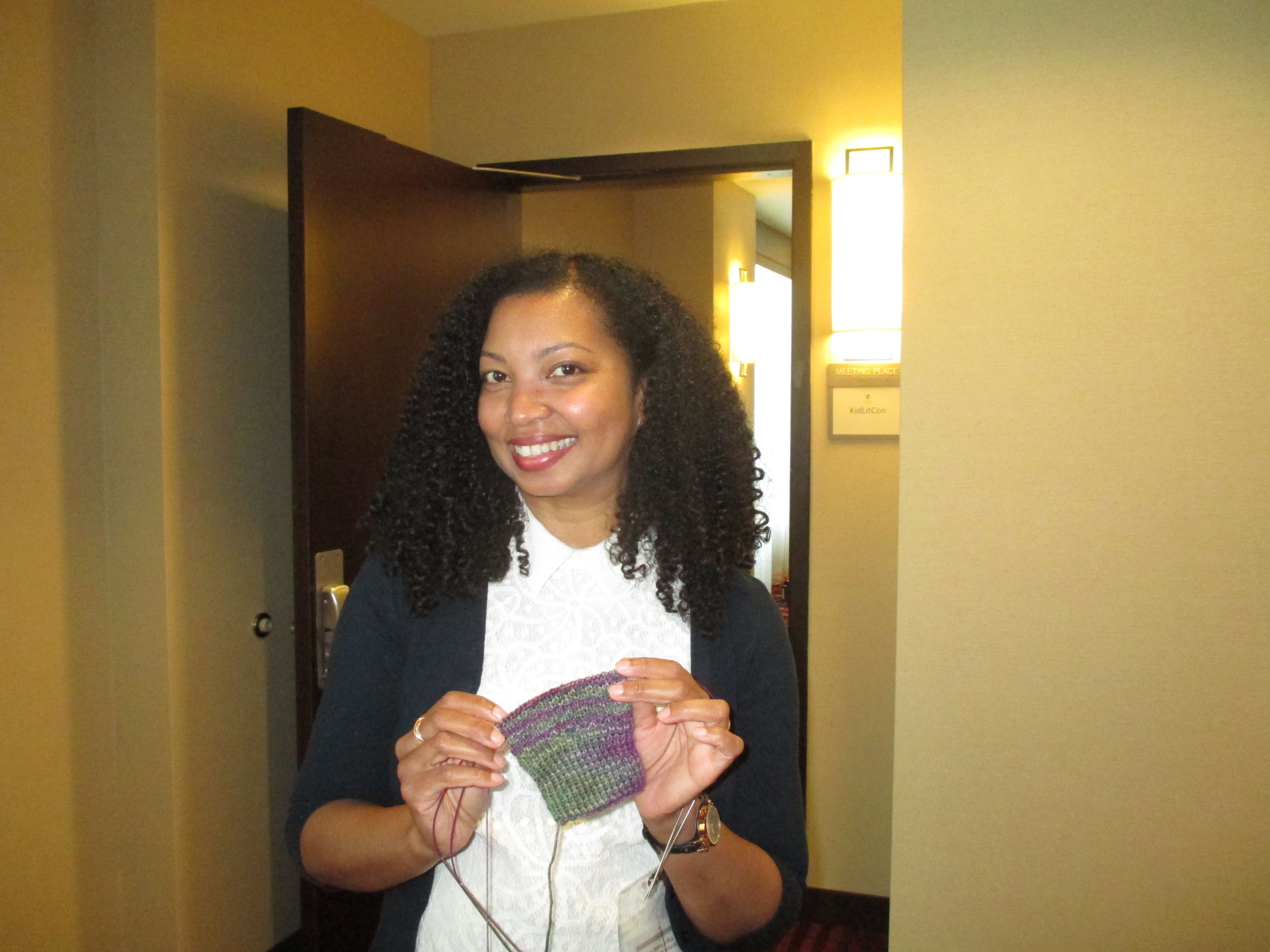
Tracey BaptisteAs a child, I read through all the books of folk tales from around the world that I could find, so I definitely agree with the author that Caribbean folk tales are hard to find, and novels based on them rarer yet.  Baptiste – born and raised in Trinidad but now living in New York – has written a compelling story incorporating the folk lore she grew up with. (It was fun to hear her talk about this at Kidlitcon.) But even those who aren’t specifically interested in the folk tale can’t help but be captivated by the story.  Corinne is a winning character, and the adventure is exciting on its own merits.  Many of the jumbies are quite scary, from the one that looks like your grandmother until it takes off its skin and bursts into flame, to the ones that look like little kids in big hats that call your name and lure you into the forest, never to be seen again.  They aren’t hands-off in this story, either.  It’s nicely balanced with humor and affection, though, as Corinne builds friendships with the other children, works to save her beloved father and learns more about her power to grow.

Official disclaimer – this book is nominated for the Cybils award, but this is my personal opinion on the book, not the opinion of the Cybils committee.

Posted in Books | Tagged | 7 Comments