Lovabye Dragon

All children should have more dragons in their lives, right? Of course right!

Lovabye DragonLovabye Dragon by Barbara Joosse. Illustrated by Randy Cecil.

Lovabye Dragon is an oddly sweet picture book. It starts on an unusually sad note – a girl in a castle (never called a princess, but who could be one) who cries and cries because she wants a dragon of her own. She cries a silver stream of tears, which finds its way to the cave of a dragon who wants a girl, and is able to follow the tears back to her. Finally together, they are immediately fast friends and have a wonderful time together before snuggling up for bedtime. It’s rare for picture books to start on such a sad note, rare for a dragon book to have a girl rather than a boy as the protagonist. This is a story of friendship rather than dragon adventure, a story of finding your heart’s desire. It’s illustrated with angular, chalky-looking oil paintings, filled with personality despite their muted colors. The language is lyrical and poetic without being forced into rhymes, making this a perfect bedtime story for boys and girls ages two and up.

Here’s another favorite dragon picture book, The Knight Who Took All Day, from when my son first discovered dragons and knights.

Posted in books | Tagged , | Leave a comment

Spirit Gate

I really enjoyed Kate Elliott’s steampunky fantasy Cold Magic, and thought I’d explore some of her earlier work while waiting for the third book of that series to come out.
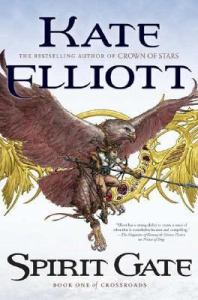
Spirit Gate
Spirit Gate. Crossroads Book 1. by Kate Elliott

The Crossroads Trilogy is a newer take on the classic epic fantasy. It’s a traditional fantasy epic in that there’s an enormous struggle affecting everyone in one kingdom as well as people in the surrounding kingdoms. It’s much denser than Cold Magic – the books are 500 tall, closely printed pages long apiece. Each one took me a good two weeks to read, when I’m used to reading a children’s fantasy in a day or two and adult books in a week. (Immersing myself into a long book or series is a wonderful thing. But I build my library request list expecting faster turnover, and can get a little stressed as my pile of checked-out books gets taller and taller and taller…) This is detailed world-building, with the close attention paid to the religion, sexual and marriage customs, treatment of women, and slaves in each of the three major cultures we’re exposed to. Rather than the traditional quasi-northern European setting, the story is set in a region where people are several different shades of brown, and the one blond, blue-eyed character is considered by most of the others to be a demon. The world, the culture, the big struggle are all fantasy – but the characters are real people with real world issues.

Long ago, in the kingdom of the Hundreds, the gods created Guardians to watch over the land and sit in judgment. The more hands-on, day-to-day watching was to be done by the reeves, with life-bonds to the giant eagles who chose them, and who would fly them over the land in search of injustice. But the Guardians disappeared a generation or two ago, and without them to back up judgment, the peaceful reeves struggle to keep hold of the respect they need to keep the peace. A Shadow has fallen over the land, and no one knows what it is or what to do about it. At first, the Shadow is just a few people missing here and there, but soon there are armies of criminals marching across the land, raping and killing everyone they meet, all wearing a cheap tin star around their necks.

We are introduced to many people whose fates will eventually intertwine, but who don’t know each other at all when we first meet. The reeve Joss, who tries to drink away the dreams of his murdered lover, still works for justice in an increasingly corrupt world. A merchant’s slave, sold into slavery when he was orphaned as a child, hides a treasure he hopes will buy both himself and his sister their freedom. In a faraway kingdom, Mai, a merchant’s daughter in a small town, is given an unexpected offer of marriage by Captain Anji, senior officer of the local Qin overlords, just before he’s transferred out. Although her family members think she’s stupid, she’s an excellent salesperson who has worked hard to be happy, no matter what life gives her. Anji – his own history a complicated secret – is the first person who doesn’t underestimate her. With Mai come her slave Priya, former nun of the Merciful One, and Mai’s only slightly older cousin Shai. Only Mai knows that Shai has the shunned ability to see and hear ghosts. He brings with him his slave, Cornflower, the blue-eyed blond girl that only Mai can’t believe is a demon. While the bad guys are very, very bad, and we never really see into their heads, none of our protagonists is perfect. Elliott does a fabulous job of making all of these characters come alive and keeping them straight, a challenge in a work of this scope.

There is both sweet, slow-budding romance and some straight up sex, mostly all with the bedroom door shut in our faces, as it were, none of it offensive to me. The violence levels, however, were another matter. That wayward army does every horribly ugly thing I’ve read about unofficial armies doing, most recently in Africa, though really throughout history. People are maimed, tortured, raped and killed every time they come in contact with the army. Mostly we see our characters finding the victims afterwards, but it’s still plenty brutal. Poor Cornflower gets raped repeatedly, as she is both a slave and not considered human. It was too much violence for me, both stomach-turning and repetitive. That being said, most of the characters that we care about and their loved ones stay safe, so Elliott isn’t jerking the heartstrings by torturing her main characters. There are readers less sensitive than I am who will not be bothered by this at all, but right now, I’m seriously considering not finishing a trilogy I otherwise enjoyed, the fate of whose characters I am quite concerned about, because I’m not sure I can take it for another book. My other issue – much less serious – is with the shadowy enemy controlling that army. They are extremely nebulous in the first book, and while we meet them first-hand in the second, I still don’t see how they could have turned to the Dark Side (not the book’s term) as they did.

Spirit Gate is an immersive fantasy experience, with a good vs. evil multi-stranded plot, strong characters, beautiful world-building, and a thoughtful look at issues of race, class and gender. Read it if you can deal with the violence and are up for the commitment its length and depth call for.

Posted in books | Tagged , , , | 6 Comments

Rabbit and Robot: The Sleepover

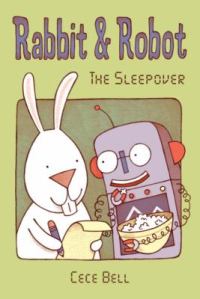
Rabbit & RobotRabbit & Robot: the Sleepover by Cece Bell.

Rabbit is planning a sleepover with his friend Robot. He has made a list of everything that he plans for them to do together. This list both appears in the text and as the chapter headings of this very early chapter book. What will happen when Robot doesn’t agree with everything on the list? Kids who like to be in control (those would be mine) will easily sympathize with Rabbit’s horror when his carefully-made plans start going awry. Robot cheerfully works to find a compromise between Rabbit’s plans and what he wants, while Rabbit panics each step of the way. In Chapter 1, Rabbit planned pizza for dinner – but he only provided carrots and lettuce as toppings, while Robot wants nuts, bolts and screws. I love that Robot a) eats and b) is OK with the bread and cheese part of pizza, just not the carrots. Robot’s solution is to take apart Rabbit’s table and use its hardware as pizza toppings, leading to another meltdown as Rabbit realizes that they no longer have a table to eat at. The simple but expressive line drawings are a wonderful synthesis of retro and modern – Robot has a single wheel underneath and coils of wire that give him a 1950s robot feel, while Rabbit’s TV both sports a bunny-eared antenna set and a remote control. The text is about on par or maybe just a touch more challenging than Arnold Lobel’s Frog and Toad books. Really, this is everything you could want in a book to coax a new reader: appealing characters, humor, and the perfect balance between familiarity and novelty. My son read it himself, enjoyed both by him and the adult he was listening to.

I’m submitting this as part of the Kid Lit Blog Hop. Hop on over and see what everyone else is posting!

Kid Lit Blog Hop
Posted in books | Tagged , | 8 Comments

Bowling Avenue

Bowling AvenueSometimes, I think, my love and I are reduced to one brain that we have to swap between us. Maybe that’s why it took me a couple months to realize that I could actually lay my hands on the new novel by one a blogger I’ve been reading for maybe eight years or so. (And look! I read two contemporary realistic fiction books in a row.)
Bowling Avenue by Ann Shayne.
Ann Shayne is half of the voice of the blog Mason-Dixon Knitting, and of the two Mason-Dixon Knitting books, both of which I own and adore. Here, she takes a break from writing about knitting to write a novel around the Nashville flood of 2010. Younger sister Delia escaped from Nashville to Chicago years ago, but is forced to return when her sister Ginna dies, leaving Delia the house. Delia has no use for a massive brick house, but is determined to save on the realtor fees and stick around to sell the house herself. Surrounding her are the cast of colorful characters, all described next to their silhouettes on the back cover: “Bennett, wretched brother-in-law; Judge Ballenger, maddening mother; Angus, peculiar neighbor; Shelly, watchful housekeeper; Amelia and Cassie, teenage nieces; Henry Peek, charming realtor.” Nearly all of the characters start out as annoying obstacles for Delia, but as the story progresses – and as the flood forces everyone else out of their houses and into Ginna’s house – Delia is forced both to be honest with herself and to find the real people under the puzzling facades. The less-than-pleasant sides revealed help keep the story honest – how much easier it is to get along with people if we’re not all pretending to be perfect! It’s heartwarming but not gooey sweet goodness with a touch of romance. There is less knitting in the book than I might have expected – Ginna was a hard-core knitter; Delia and her mother know how to knit but mostly don’t – but there are still Secrets in the Stash. The whole story is told in the first-person present-tense quirky down-home voice I love from Mason-Dixon Knitting. I feel like I ought to have some deep and thoughtful negative criticism here, but I just can’t find it in me. This is a perfect treat to read when you need a little something for yourself.

Posted in books | Tagged | 2 Comments

Fantasy for Music-Lovers

I’ve been reading more about people reading or re-reading Anne McCaffrey’s Harper Hall series, which reminds me how much I love fantasy books that feature music or musicians. Here is my List. I’ve included a few that I found in in the library catalog but haven’t actually read; if any of you have read them and want to share opinions, or if you know of others that I missed, please let me know!

Youth
The Seven Tales of TrinketThe Book of Three by Lloyd Alexander
The Grey King by Susan Cooper (book 5 of series)
Igraine the Brave by Cornelia Funke
The Seven Tales of Trinket by Shelley Moore Thomas
A String in the Harp by Nancy Bond.

Teen
Book of a Thousand Days by Shannon Hale
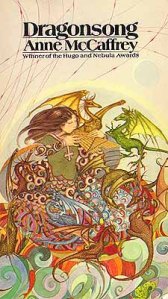
DragonsongDragonsong by Anne McCaffrey
The Naming by Allison Croggon
Seraphina by Rachel Hartmann
The Singer of All Songs by Kate Constable

Still Need to Read
The Amazing Maurice and His Educated Rodents by Terry Prachett
Pay the Piper by Jane Yolen
Wind Singer by William Nicholson

Adult

Bards of Bone PlainThe Bards of Bone Plain by Patricia McKillip
Peter & Max : a Fables novel by Bill Willingham ; with illustrations by Steve Leialoha

Still Need to Read
Bedlam’s Bard series by Mercedes Lackey
The Gutbucket Quest by Piers Anthony & Ron Leming
Harpist in the Wind by Patricia McKillip (book 3 of series)
The Hum and the Shiver by Alex Bledsoe
The Robin & the Kestrel by Mercedes Lackey
Songs of the Earth by Elspeth Cooper
Soprano Sorceress by L.E. Modesitt Jr
The Stoneholding. Legacy of the Stone Harp book 1 by James G. Anderson and Marc Sebanc

Posted in books | Tagged , , , , | 1 Comment

The Fault in Our Stars

I’d avoided this book as being too sad, until S.M. put it on my desk and told me I had to listen to it. I did. It was worth it.

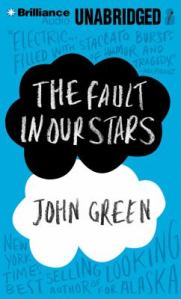
The Fault in our StarsThe Fault in Our Stars by John Green. Read by Kate Rudd
Before you read this book, make sure you have a good supply of hankies. You’ll need them for more than one reason – in the first part of the book, because Hazel, our narrator, is just so darn funny. She’s 16, and her death by what’s now mostly lung cancer has been delayed for a few years due to an experimental miracle drug. Mostly she deals with her impending mortality by watching bad TV with her parents and re-reading her favorite book, An Imperial Affliction by Peter van Houten. Hazel’s mother is convinced that she needs to get out and meet other kids. She takes Hazel to a “kids with cancer” support group that meets in a church basement, which the leader describes as “the literal heart of Jesus.” It’s usually a depressing experience, but one day, her friend Isaac-with-eye-cancer brings his friend, handsome Augustus Waters. Augustus is missing a leg due to his cancer, which is now in remission.

The basic plot is simple: two teens with cancer fall in love. But if it were either just a sob story or an Uplifting Tale, it wouldn’t be nearly so successful. Though Hazel converts Augustus to her love of An Imperial Affliction, there’s a lot of looking at the different ways that they deal with the knowledge that death is coming. Hazel cries foul on Maslow and his hierarchy of needs, saying that the idea that you only have energy to pay attention to self-actualization and beauty if your basic needs, such as health, are met, is false and insulting, making ill people seem less human than healthy people. (I found this particularly interesting as a person whose basic need for sleep has not been met for several years now – yet look, I go on reading and writing about it. Even as I place my need for more sleep above my child’s desire to do more activities.) It’s an intimate look at the pediatric cancer world, the kids who live there, and the humor and love it takes to bear the unbearable. Kate Rudd does an amazing job reading. It won this year’s Odyssey award (and was the only one among this year’s finalists I’d listened too.) The book feels like watching bubbles or the slanting golden sunshine on an autumn day.

The Fault in our Stars hit especially close to home for me. I haven’t lived in the pediatric cancer world, or even the adult cancer world (knock on wood.) But I have spent quite a bit of time at this point in the pediatric liver transplant world. This world of medicines and tubes, taking things one step at a time, overhearing the 6 am calls in the hallways from parents with horrible news that came in the night, and the sick kid perks. At my daughter’s hospital, I had to start asking them not to give us the free handmade blanket with every admission, because we had more than we could use at home already. The book cart came by with a free book (at least one for each patient and any siblings) every week; there were toys and games and gift baskets. Even though the book is written from Hazel’s perspective, I felt deep empathy with Hazel’s parents. And if Green hadn’t have managed that perfect balance of that wry humor and the serious subject, I wouldn’t have been able to do it.

Other John Green books I’ve read (just a few of the many):
Looking for Alaska (before I started reviewing, it looks like. But it was still good.)
An Abundance of Katherines

Posted in books | Tagged , , | 1 Comment

A Wrinkle in Time: The Graphic Novel

I might have mentioned once or twice that Madeleine L’Engle is one of my all-time favorite authors, and I heard such good things about this from so many places that of course I had to try it.

A Wrinkle in Time
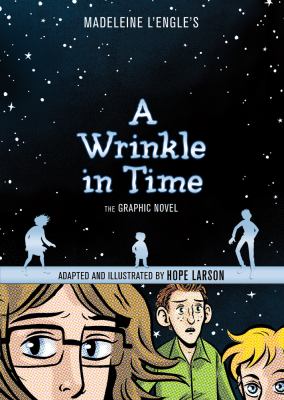
A Wrinkle in Time: the Graphic Novel by Hope Larson
It’s always dicey making a graphic novel adaptation of a well-loved book – really, if the author wanted the book to be a graphic novel, why wouldn’t she just have written it that way to begin with? But this is clearly a love letter from someone who loves A Wrinkle in Time just as much as me, expressing this in a graphic novel rather than, say, a book review or knitting, as I might. (Though I’m not sure what I’d knit as a Wrinkle homage piece.) Larson does not cut out any pieces of plot or characters, and even the dialogue was left intact. She keeps the famous opening lines, but mostly her artwork replaces the descriptions from the book. Her illustrations show incredible attention to all the details in the book, keeping them all straight better than my own head does while I’m reading. There were funny details, like the stairs drawn with an arrow pointing out the creaky step and a little knife flying out from Meg’s eyes, without saying in words that she’s looking daggers. There’s also Meg’s somewhat straggly short haircut, and the black eye that she gets in the first chapter. I had never thought about the bruise after her mother looks at it, just before Mrs Whatsit’s midnight arrival, but naturally, as the book happens over the course of just a couple of days, it wouldn’t have time to heal. Larson keeps this in mind, and shows Meg with that bruise all the way through. The pictures are lovingly drawn, and everything comes together beautifully to bring this beloved story to life visually. Of course, Wrinkle can stand on its own, but this is a well-done and enjoyable addition.

Posted in books | Tagged , | 1 Comment

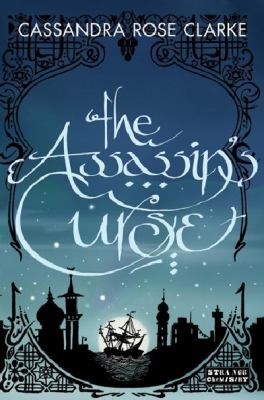
Assassin’s Curse

Assassin's CurseAssassin’s Curse by Cassandra Rose Clarke
The plot: Ananna of the Tanaru is a pirate captain’s daughter who always planned to captain her own ship one day. But her dreams are sent spinning when her parents betroth her to a captain’s son from another tribe. Her betrothed has no intention of ever letting her have her own ship, so naturally she runs away. Bad choice, as it turns out – her intended’s clan sends an assassin after her, with the message, “Marry him or die.” But when the assassin, Naji, catches up with her, she accidentally saves his life, triggering a curse that leaves them bound together and him required to protect her. They set off on a journey to break the curse, trying to dodge both of their numerous enemies. Naji uses his dark magic, and Ananna will have to learn to awaken hers if they are to have any hope of success.

The feeling: This is a romp of an adventure, with characters fully-drawn enough for us to care about them. There’s a hint of romance – it’s hard not be a bit smitten when a handsome-under-his-scars young assassin saves your life a few times – but so far, Naji doesn’t reciprocate the feelings and Ananna is a practical girl, not given to going moony over something she can’t have. (Assassin’s Curse is just the first in the series, though, so there’s time to build.) Instead, the book spends time building a tentative friendship between the two. That feels much more realistic for people who were, let’s remember, trying to kill each other at the beginning of the story. The plot has enough different strands going to be interesting without being overly complicated – no glossary of characters needed here yet. It is, however, a gloriously multicultural, full-color world, and Ananna describes herself as more full-figured than men generally find attractive. Sex is discussed in a general kind of way, and there is a body count, though definitely not a by-the-page or even by-the-chapter. There are (as previously stated) pirates, assassins, and magic, which makes this book just about perfect if you are in that kind of mood.

Posted in books | Tagged , , | 3 Comments

Soulless, the Manga

This is one that I found and bought for my library’s adult graphic novel collection.

soullessSoulless: the Manga by Gail Carriger. Art and adaptation by Rem.
I really enjoyed Gail Carriger’s Parasol Protectorate series (here’s my original review of Soulless. OK, maybe the middle missed a little of the playful sexuality between Alexia and Conall that was so enjoyable before and just after they got married – but overall, a delightfully strong steampunk series. It seems I’m not the only one to enjoy it, as it got picked for a manga-style adaptation. My verdict, having read the first two volumes: overall, very fun, if not flawless. REM chose to do one volume for each book of the series (all called Soulless, instead of having different titles, like the books.) Since each manga volume is shorter than the story it’s adapting, and pictures take more room than text in the first place, a lot of the story had to be cut. Basically, all the side plots. This is especially disappointing as one of our favorite characters, the cross-dressing inventor Madame LeFoux, doesn’t show up at all in the first volume. I spent a ridiculous amount of time studying Victorian fashion plates in high school, and so I noticed a few things in the mostly good fashions that struck me as odd – décolletage displayed in the morning and women who had definitely come out in society wearing their hair down in public. But, it’s a manga and alternate history, so perhaps some leeway should be given. I was also willing to give some leeway in the depiction of Conall, our werewolf hero, who just didn’t look large or mussed enough for me. That might be part of the manga style, though – he’s definitely bulkier than most manga men, who tend towards the reedy side, but I felt from his descriptions in the book that he should look imposingly large.

These quibbles aside, I really enjoyed the adaptation. It was wonderful to see Carriger’s steampunk world, with things like the flamboyant costume choices of Lord Akeldama and Alexia’s best friend. The genre-crossing spirit of the original came through loud and clear, despite being trimmed. I’d not recommend it without the novel, but for fans who can’t get enough and are waiting for Etiquette and Espionage, or for those who’d like a first taste before trying the original. It’s rated for older teens, and includes violence and strategically covered nudity.

Posted in books | Tagged , , | 1 Comment

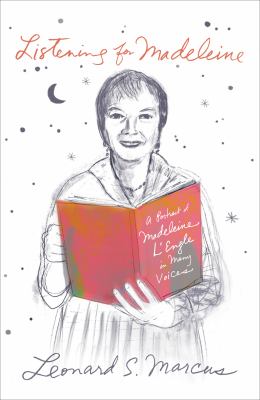
Listening for Madeline

Madeleine L’Engle has been one of my top favorite authors ever since I was about 10, so of course I bought this for the library as soon as I heard about it. I’m hoping some other L’Engle fans at the library will find it soon.

Listening for MadelineListening for Madeleine by Leonard S. Marcus
Listening for Madeleine is a pointillist portrait of the Newbury Award-winning author. It starts off with a short biography by the editor, but is mostly composed of lots and lots of thoughts by individuals who knew her, gained from letters and interviews. They are divided up by how people knew her: from childhood, as a writer, matriarch, mentor, friend or icon. They include friends from childhood, editors and publishers, writers like T.A. Barron and Mary Pope Osborne, her daughter, granddaughters, and former son-in-law, and lots of people whom she was friends with or mentored over the years. Many people referred to an unflattering profile of L’Engle that was published in the New Yorker in 2004, which I hadn’t read, but which I was able to pull up on Gale’s Biography in Context without any difficulty. (“The Storyteller”, by Cynthia Zarin.) Family members acknowledged the frustration of living with a writer whose published version of their life together – the writer’s perspective, warts airbrushed out – became the version that readers everywhere believed was true; the fictional works inspired by family life felt more true to reality than those published as nonfiction. Outside the family, people were generally horrified that family members were willing to air as much dirty laundry as they did while L’Engle was still alive. But the fact that these discussions are in the book give me the comforting feeling that this isn’t a hagiography, even though most of the people contributing to the anthology cared about her. For all the painful things voiced by her relatives, they were still there caring for her in her increasingly dependent old age. Balancing that were the many, many tales of her writing from the publisher’s side and of her support for young and aspiring writers especially. Continue reading

Posted in books | Tagged , | 2 Comments