The Hero’s Guide to Saving Your Kingdom

Image

The Hero’s Guide to Saving Your Kingdom by Christopher Healy

Why is it that the princes from all the fairy tales are simply called Prince Charming?  According to this book, it’s because the bards are more interested in a good story than in getting the facts right.  We start the book by meeting a different Prince Charming, one chapter at a time.  Prince Frederic, a risk-averse dandy, loses bold Ella when she realizes that marrying him wouldn’t be the adventure she was hoping for.   Rapunzel leaves Prince Gustav when she realizes he’s more brawn than either brain or heart.  Handsome and arrogant but kind-hearted Prince Liam is driven out of two kingdoms when he tries to break off his engagement with the shallow and cruel Briar Rose and she in return has a bard make up songs lambasting him.  Loopy Prince Duncan, happily married to Snow White, gets literally lost when she asks for a little space and he wanders off in the woods.  All four of the Princes have ballads written about them in which they are called Prince Charming.  They meet, and get involved in heroics involving stopping the evil witch Zaubera’s multiple evil plans, and dealing with the child robber king Deeb Rauber.  To give a small degree of gender balance, both Ella and Liam’s little sister Lila are on their own heroic missions, which may or may not intersect with those of the Princes Charming. 

The whole thing is written in a slapstick style, with cartoonish illustrations chapter titles like “Prince Charming Defends Some Vegetables” and “Prince Charming Annoys the King”.  The four princes started out so very one-dimensional that it was really hard for me to feel enough sympathy for them to enjoy the story.  At the halfway point, I was still considering giving up on it altogether.  However, soon after that, they begin to come together as a team and experience Personal Growth that makes them both more sympathetic and interesting.  There are just enough plot threads left dangling at the end to expect a sequel.   I still prefer Sondheim’s Into the Woods or the adult graphic novel series Fables for massive fairy tale integration, though both of those are best for adults.  However, middle grade children looking for a light (if lengthy) read will probably like this.  It’s full of action scenes that will appeal to boys – I could see my son eating this up.  Readers could also try the Sisters Grimm series by Michael Buckley for a modern fairy-tale integration for middle grade readers. 
Posted in books, Uncategorized | Tagged , | 1 Comment

Dust Girl

I’ve been reading Sarah Zettel for over a decade now, and wish that more people knew her wonderful books. Hopefully this book, her first children’s/YA, will help her gain some broader recognition. Standard disclaimer: Sarah Zettel was responsible for my love joining the Society for Creative Anachronism, where I later met him. But I like her books for their own merits.

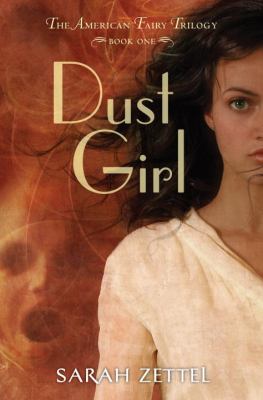
Dust Girl by Sarah Zettel

Dust Bowl Kansas, 1935.  Callie LaRoux lives with her mother in the Imperial Hotel, which they run.  The town of Slow Run is nearly empty, as the dust and the lack of food and water have caused nearly everyone else to leave.  But Callie’s mother refuses to leave, even when the doctor tells her that Callie is dying of dust pneumonia.  Callie was fathered by a wandering musician who promised to come back.  Callie must keep this secret, hiding behind a pretend Irish last name and staying out of the sun, because her father was a black minstrel.  The doctor’s warning does make Callie’s mother worried enough that she makes Callie play the hotel’s piano, which had not been played since Callie’s father left.  To Callie’s surprise, her untrained fingers bring out rolling chords, followed immediately by a dust storm.  Callie’s mother goes out into it and vanishes, accompanied by the sounds of vicious, triumphant voices.  Callie’s search for her turns up only an old dark-skinned man with eyes full of stars, who shares a vision with Callie. Now the plot ramps up, as what seems to a beautiful family comes to the hotel and eats everything – not just the food, but the draperies and even furniture – later revealing themselves as giant magical locusts.  But while she’s still figuring out what they are, running back and forth to the store for more food, she meets and hires a boy her own age to help her.  Jack has plenty of secrets of his own and, as a travelling homeless boy, tricks up his sleeve and a will to survive.  Callie had always believed that her father was just a no-good bum, but from what both the old man and one of the Hopper girls tell her, he was a prince of Faerie, kept from his human lover against his will.  With the hotel destroyed by the Hoppers, Callie and Jack set out to find her parents.  On the way, Callie meets a couple who give their names as Shimmy and Shake.  While Callie thinks that her parents are in California, Shimmy says that Callie needs to go to Kansas City, to the Fairyland amusement park.  With some people claiming to want to help and others clearly trying to hurt, chased by the Seelie Court and an anti-bum crusader turned zombie, Callie has to figure out who she can trust and where to go.

There’s a whole lot going on in this book.  It’s the first of a trilogy, so it’s got all the plot beginnings for three books.  The traditional Seelie and Unseelie courts are used somewhat differently here.  The Seelie Court appears to be white and the Unseelie black, but neither one of them appears to be what we’d consider good.  Western European faerie traditions are mixed with the reality and mythology of the American West to create a compelling new American.  Callie and Jack have to deal with a lot of prejudice – against blacks, Jews, and bums, which felt real enough to bring it home to kids who might not have considered it before without it turning into a hammer-on-the-head Issue book.  The book is set solidly in the 30s, filled with both the ever-present dust and the rollicking music of the dance marathons popular at the time.  At the same time, Callie and her quest for her own path and identity remain deeply sympathetic and universal. There’s only the hint of possible future romance, and some violence, so appropriate for older middle grade students as well as teens.  But my love and I both enjoyed it lots as well.

Posted in books, Uncategorized | Tagged , | 5 Comments

Bitterblue

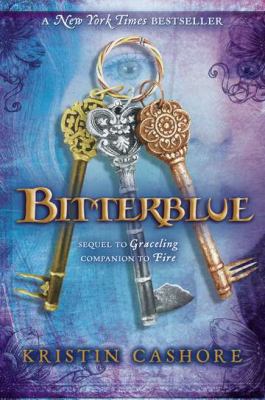
I was very excited to win this from Charlotte’s Library several months ago.  Anyone who, like me, read Graceling and Fire, or who heard about the massive competition for the ARCs of this book knows it was a big splash in the teen fantasy realm this summer.  Still, since the book came with a request that I tweet about it and I don’t tweet, so I thought I’d review it. Bitterblue

Bitterblue by Kristin Cashore

In Cashore’s first book, Graceling, our heroes defeated the sadistic King Leck, whose Grace allowed him to force people to hurt themselves or others and believe that nothing bad was happening.  They rescued his ten-year-old daughter, Bitterblue, and set her on the throne with a team of advisors.  Now Bitterblue is 18 and trying to repair the damage her father did to the kingdom.  We’re talking kidnapping girls from every village in the kingdom just as a start, so this is no small matter.  Her advisors are for the most part men who served her father, as well.  They have decided that what the kingdom needs is forwardthinkingness, so that nothing from Leck’s reign will be discussed or brought up for trial.  All crimes committed during the reign are forgiven, because Leck could have forced any crime.  But Bitterblue feels that she needs to know what her father did and what’s going on with the kingdom now if she is to do her job.  She starts sneaking out at night, finding the hidden pubs where people tell stories, often obliquely related to what happened during Leck’s reign.  The very first night she is out, she befriends two young trouble-makers, Saf and Teddy, giving her name as Sparks to protect her anonymity.  Thus her trying to find out the truth starts out with lies, which always complicate matters.  Katsa and Po make brief visits from time to time, but they are busy trying to topple evil kings in other nearby kingdoms, and so cannot stay.  The more Bitterblue learns, the more she realizes that the problems in the kingdom are deep.  They did not die along with Leck, and she must find out who among her advisors she can trust and who is perpetuating the problems.  Bitterblue journeys through darkness trying to understand her father, comparing remembering and forgetting as paths to healing.  There’s a lot of dealing with ciphers, as Bitterblue’s mother taught her the theories of ciphers in secret, and both her parents used ciphers to keep their secrets.   And while Bitterblue’s darkness is dark indeed, there’s still light to balance it, from the beauty of art and the joy of friendship, with a bit of early romance.  It was very satisfying to see Bitterblue find her way towards a more open justice.  It’s not for reading when one needs unicorns and rainbows (one does, sometimes), but it is a hopeful treatment of a dark subject with a most courageous protagonist.

A note: my teen librarian said she’d been hearing rumors of racism about this book.  I read and read looking out for it, until finally at the very end, I found the passage that I think must have bothered people: a woman with dark skin is described as a monster.  She is in fact Fire, the heroine of the book of the same name, and she is a monster not because of her skin color but because she has “unimaginable beauty and the ability to control minds”, as do other people and animals of various skin colors on the other side of the mountain.  As usual, reading in context is helpful and highly recommended.

Posted in books, Uncategorized | Tagged | 1 Comment

Book of a Thousand Days

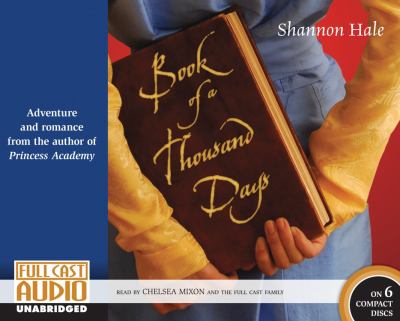
Book of 1000 DaysThis is the only fantasy I’ve ever read set in a version of Mongolia.  My love is so fascinated by Mongolian culture that some of this has rubbed off on me, so that I was delighted recognizing bits of the culture.

Book of a Thousand Days by Shannon Hale. Full Cast Audio.

Dashti, our heroine, is a Mucker, part of the native nomadic tribes of the steppes.  As our story begins, she’s relating the story of how she was orphaned, failed to find another family to take her in, and so was forced to go to the city of Titor’s Garden to find work.  Although large port-wine stains on her face and hand would otherwise keep her out of sight of nobility, she knows the Mucker healing songs.  She’s taught to read and write and assigned as a lady’s maid to the fragile and illiterate Lady Saren, daughter of the Lord of the city.  Unfortunately, Dashti has come just as Lady Saren is about to be locked in a tower for seven years.  She is refusing to marry the powerful and land-hungry lord of a nearby city, the evil Lord Khasar, citing a prior engagement to Khan Tegus, lord of another city.  All of Saren’s other maids have run away rather than be locked up, but Dashti is both determined to honor her vow to serve Saren and doesn’t much care if she’s locked up as long as she’s warm and fed.  The book is written as her journal, started when she is first locked in the tower.  At first, things go well.  Dashti is resourceful; they are well-supplied with food and their guards give them fresh milk every morning.  Khan Tegus visits, talking secretly at night through their waste hole.  Saren doesn’t have the courage to talk to him herself and makes Dashti pretend to be her – a hanging offense that Dashti protests but ultimately goes along with.  At this point, I thought we were going to have a classic love triangle a la Cyrano de Bergerac.

Then the evil Lord Khasar arrives, attempting to burn the tower up from inside after telling Saren that even though she’s too scared to reveal his horrible secret, one day she will run to him.  That night, they hear terrible screams from outside the tower, and the giant jaw of a wolf pokes through the flap.  After that, there are no milk deliveries, and the rats run rampant, eating up their supplies.  When they are almost out of food and Lady Saren appears to have lost her mind completely – three or four years after they were originally locked up – Dashti realizes that her duty is now to rescue Lady Saren from the tower, and the story takes yet another sharp turn.

This is a character-driven story, with plenty of adventure and a beautiful setting.  Dashti’s loyalty and Lady Saren’s stubbornness both got a little frustrating, but not enough for me to stop caring about the book.  The Gods – the Nine Ancestors and the Eternal Blue Sky – play important roles.  As in our world, Dashti prays to the gods and feels them telling her to do things, but it’s hard to tell whether things work out because of her faith in the gods or because of her own resourcefulness.  The descriptions of the culture – religion, the gehrs (more commonly called yurts by westerners these days), the clothing and the food make this feel quite authentic, even if it is fantasy and maybe a little Navajo mythology is thrown in, too.  This story felt to me like the reverse of the first Shannon Hale I ever read, Goose Girl.  There a lady is betrayed by her maid pretending to be her, and must find a way to rescue herself.  Here, Lady Saren’s forcing Dashti to pretend to be her causes such massive tangles that I couldn’t tell until it happened how Hale was going to pull it off.  The audio is read full cast, which is mostly Dashti with little bits from other voice actors.  The voice actor for Dashti did a wonderful job, even singing the many healing songs in a rich alto.  This was a book where I rushed to find time to listen to it, and felt a wrench at saying good-bye to the characters at the end.

Posted in books, Uncategorized | Tagged , | 7 Comments

The Night Circus

ImageHappy International Talk Like a Pirate Day!  We celebrated with an author talk and a treasure hunt through downtown at my library this weekend… yay pirate fun!

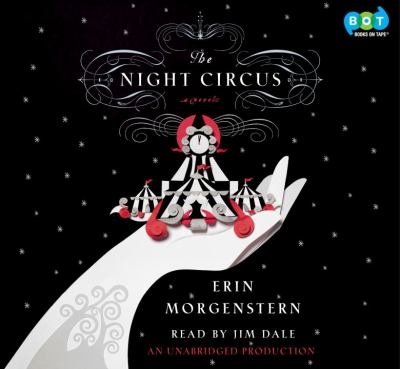
The Night Circus by Erin Morgenstern.  Read by Jim Dale. 

Really, this has been on the bestseller list for so long that there oughtn’t to be any need to review it.  I put off reading it for a very long time because it was so big, though I remember noting the reviews when it first came out.  On the other hand, I loved it so much that I bought it in print and am seriously considering buying it on audio as well. 

The book is the story of two magicians, students of rival magicians.  They have been raised from children to compete against each other in a formally pledged competition whose rules they are never told.  Prospero the Magician, who disguises his real magic onstage as ordinary sleight of hand, trains his daughter Celia through such inhumane methods as slitting her fingertips open so that she will learn to heal them.  Mr. Alexander, on the other hand, takes in an orphan boy and trains him in theoretical, book magic.  It’s Prospero’s idea to make the contest a public one, and he and Mr. Alexander work subtly on one of London’s movers and shakers to create a marvelous circus to be the stage.  What the two older magicians didn’t count on, however, was that for young magicians, friendship with another person like them might become more important than the rivalry they never asked for. 

But, as the title suggests, this is also the story of the circus.  The story of Celia and Marco (as the orphan boy decides to be called) is only one of the three stories that we learn.  Their story is set clearly in the 19th century, but the book actually starts with you, the reader, getting an invitation to the circus, and your journey to and through the circus, presumably in the present day, as well as a lonely boy watching for the circus, somewhen between the present and the beginning of the circus.

And the circus!  Here is a book with a built-in fan club!  Because (aside from my tired parent brain’s shock at the idea of a circus that opens at dark and closes at dawn) the circus is a marvelous thing.  It appears near a town – any town – without warning, all black and white, with wrought iron gates around it. The black-and-white striped tents, filled with wonders, line twisting paths that radiate from the central courtyard where a white bonfire is always burning.  The scents of caramel and cinnamon fill the air.  The people who work at and run the circus are just a vividly drawn – the mysterious contortionist, the fortune teller, the illusionist (who is Celia), the twins born on either side of midnight the very night the circus opened – to name just a few. 

The stories unfold in layers, circling around each other.  You the reader journey further into the circus as in the past; the circus is started and develops; the two magicians come into their own and try to puzzle out the mysteries of the contest; and the lonely boy grows up visiting the circus and finding it more home than where he stays in the intervening years.  It all comes together in a beautiful whole.  The narration by Jim Dale worked very well; he is forever the sound of Harry Potter for me, and this world, with its vividly described characters and scenes, felt a lot like Harry Potter, though it is more adult in the lack of a Voldemort-type character, and the magician’s quest is less world-altering than Harry’s, if no less absorbing.  This is one for my favorites shelf. 

Posted in books, Uncategorized | Tagged , | 3 Comments

Are You My Mother?

I was first introduced to Bechdel by one of the lesbian intern pastors at my church.  While I enjoy Dykes to Watch Out For, I recommend Fun Home frequently to people who don’t know where to start with graphic novels.  Naturally, then, I had to read her latest book. 

Image

Are You My Mother? by Alison Bechdel.

Fun Home, the book that made Bechdel famous outside of the lesbian and indie comix scene, examined her relationship with her by then deceased father.  It was filled with references to the classic English literature that was their closest bond.  This book, rather obviously, turns to look at her mother.  This is significantly complicated by the fact that her mother is still alive.  Bechdel’s narrative is frequently punctuated with scenes of Bechdel’s mother discussing her reaction to the current draft of the book.  We also meet several of the therapists that Bechdel has worked with over the years, as she examines her relationship to her mother.  Throughout, the book is filled with references  to classic psychoanalysts as well as female poets.  This makes it still fascinating, deep and multifaceted, but also somewhat less accessible than Fun Home.  It’s a complex look at the mother-daughter relationship that manages to be deeply universal at the same time as deeply personal. Go for this when you are ready for some deep thinky thoughts. 

Posted in books, Uncategorized | Tagged , , | Leave a comment

The Cabinet of Wonders

Once upon a time, I was studying in Germany and thought it would be a good idea to try to learn a language I couldn’t learn at my own college. I picked Czech. I made very little headway with it, but I did make some good friends in class and joined the class trip to Prague, a beautiful city.

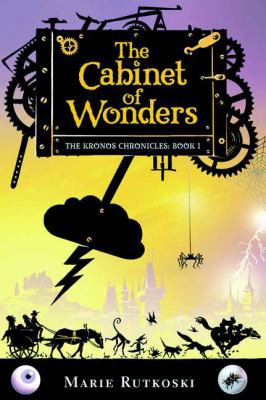
Cabinet of WondersThe Cabinet of Wonders. The Kronos Chronicles Book 1 by Marie Rutkoski.

Renaissance Bohemia. Petra Kronos, aged about 14, is expecting her father from Prague, where he has been working on a large and beautiful clock for Prince Rodolfo. I would guess it’s around 1552 although the story doesn’t say so because we are starting with the magical alternate history of the real astronomical Orloj still functioning in Prague. Mikal Kronos, Petra’s father, has a shop where he sells animated tin creatures – not wind-up toys, but real living beings that think, talk, dream, and eat – in their case brassica oil. Petra’s companion is a small tin spider named Astrophil which her father made for her. Her father is returned in a cart, however, with both of his beautiful silver eyes gouged out. Petra is outraged and, with the help of her magically gifted friend Tomik Stakan runs away to Prague to get her father’s eyes back. (Some other magician has enchanted them so that the prince can use them himself). Alone in Prague, she meets a Romany boy named Neel. Despite the fact that he was just trying to rob her, she befriends him, and learns the legends of his tribe’s history and gifts. Soon Petra is up to her own silver eyeballs in intrigue. She obtains a post in the castle with Countess Iris and her dyeworks near the Thinker’s Wing and comes to the attention of John Dee, ambassador, magician and spy. Close up, Prince Rodolfo is even more dangerous than Petra had already known him to be – can she accomplish her mission and get back home in one piece? Petra is delightfully prickly, emancipated, brave, and prone to getting into scrapes. I wished in this book that Tomik had played a larger role, as he drops out for most of the book after helping Petra set off for Prague. (He does play a much larger role in book 2.) I loved the combination of real historical information with fantasy and rollicking adventure. Some dark deeds of the prince’s are revealed that make this potentially too scary for younger or sensitive kids, but there is as of yet only the barest hint of possible future romance. This is good for boys and girls, right on target at the middle grade through middle school, as well as for those of us older people who still enjoy reading fantasy written for children.

Posted in books, Uncategorized | 4 Comments

Around the World in 80 Days

As I’ve been enjoying the recent steampunk literature, I realized that I’d never read many of what are now considered the Originals. I downloaded this audio version from the library website, and happily listened to it while washing dishes.

Around the World in 80 DaysAround the World in 80 Days by Jules Verne. Narrated by Frederick Davidson.
For those who are unacquainted with the book, here’s a brief summary: The year is 1872. Phileas Fogg is a reasonably wealthy Englishman, with no known family or real friends. As many Englishmen of the era were wont to do, he spends most of his time at his club, playing whist. His most distinguishing characteristic seems to be his unfailing regularity. He has just fired a manservant for not keeping proper time. His new manservant, Passepartout, who took the job in search of a predictable life, is therefore shocked when Fogg announces that they are going on a trip around the world, as he has bet his club members 20,000 pounds that it is possible to make it around the world in 80 days. Things are pretty quiet for the first weeks, with the only interest being a detective who has followed them from London, convinced that Fogg must be the bank thief currently sought in London. Things pick up once they hit India, however, as Fogg detours to save the life of a beautiful young Indian widow, Aouda, and they must travel by elephant between stretches of railway. Even past India, travel remains challenging. Fogg’s detached attitude towards the whole affair contrasts with Passepartout’s French emotions as the scrapes get closer and closer. Even if Fogg loses his entire fortune – will he despair? And can the beautiful Aouda convince the confirmed bachelor to care about something? Neither outcome is ever seriously in question, but the book is an entertaining romp (while staying very proper, of course.) It’s fully conscious of its own humor and the ridiculousness of trying to live life as a machine, even as it celebrates the modern technology that allows the voyage. Davidson was, I thought, the perfect narrator for this. His accents were spot-on, but turned to eleven, as it were – Phineas Fogg’s English accent extra-crisp, Passepartout extra, um, however it is that you describe French accents. This is an excellent choice for kids and adults wanting to explore a classic.

Posted in books, Uncategorized | Tagged , | 2 Comments

When Parents Hurt

This is meant for parents of older children than I’ve yet recommended, but the information in it is both a valuable (if potentially painful) glimpse of possible futures and helpful for looking at any damaged family relationship.

When Parents HurtWhen Parents Hurt by Joshua Coleman.

This book is aimed at parents of adult and to some extent older teen children who have a painful relationship with those children. The key message in the book that is particularly relevant for all parents is this, “It is possible to be a devoted and conscientious parent and still have it go badly.” That’s a sobering message for parents in my position, still hopeful that good efforts and a therapy fund will be enough for our kids to end up OK. For parents where the relationship is already bad, that same message is, I think a little more comforting. I’m always interested in reading about the evolution of parenting advice, and Coleman talks here about how society now places a historically unprecedented degree of responsibility with parents rather than kids for how those kids turn out. It started in the 1920s with the behaviorists, who believed that with the right training, any child could be trained to have an ability or temperament. Though psychology has long since disproved that idea, its hold on popular parenting theory seems only to have increased, with the result that everyone involved seems to take it for granted that if something is wrong with the grown child, it is the fault of the parent. Coleman addresses issues like how to heal feelings of guilt, deserved or now; balancing the reality of the child’s feelings with the realities that caused your behaviors or imagined behaviors; how to try to heal relationships; and knowing how far across the gap to build the bridge yourself before giving up. He talks about the very real problems of difficult children and temperament mismatches between parents and adults; divorce wounds and parental alienation (when your ex convinces your children that you are evil.) There is specific advice on problem marriages, adult children who “fail to launch” their own lives successfully, when children cut of contact with their parents. There is more general advice on parenting teens: Teens learn about expectations and being their own person by failing to meet expectations and seeing what happens (really the same kind of boundary testing that kids from toddler up engage in, I think, but magnified.) And, though it doesn’t seem that way, they lash out with hurtful accusations because they feel powerless themselves. He has a sample behavior contract with teens, and advises parents to start thinking of themselves as consultants rather than managers. Towards the end, there’s a chapter on addressing your own past in your parenting, which I found very helpful and which would probably be even better read by newish parents than those with adult children. I found it very difficult reading the stories of parents with angry children, and the thought of my own children ever refusing to have contact with me breaks my heart. But forewarned is forearmed, and the explicit warning that parents are far from the only forces shaping our children is good to keep in mind. The advice on conflict resolution, while aimed specifically at parents, seems more generally applicable.

For family conflicts from other points of view than just the parents, books like Byron Katie’s Loving What Is, Healing from Family Rifts by Mark Sichel, or several of Deborah Tannen’s books could also be helpful.

Posted in books, Uncategorized | Tagged , , | Leave a comment

The Book of Story Beginnings

Once again, I’m dreadfully behind… and this week I’ve been dealing with planning my Talk Like a Pirate Day program, a daughter recovering from surgery, and a deep obsession with harps. Also contemplating the upcoming Cybils.

Here’s another one that Dr. M. recommended to me.

Book of Story BeginningsThe Book of Story Beginnings by Kristin Kladstrup.

In 1914 a boy named Oscar (14) finds a book called the Book of Story Beginnings. Bored with Iowa farm life, he ignores the warning poem on the first page of the book. He writes the beginning of a story, of a dark sea coming up all around a farm house on a hill and a boat pulling up to the front door. When he looks out the window, the dark sea and the boat are truly there. He climbs into the boat – witnessed only by his little sister – and is never seen again.

Now in the present, Lucy’s great-aunt Lavonne has just died and left them the Brick, the large brick farmhouse on a hill in Iowa. Her father, a chemistry professor who just failed to get tenure, and her mother, an editor, decide that moving to the free house in Iowa beats being broke in the big city. Lucy, of course, is not consulted. With nothing to do but explore, Lucy finds first Oscar’s old journals and then the Book. There are other story beginnings in the book, including one about a ship crewed by orphans with a girl on board who dreams of another life, and one that Lucy remembers her own father telling her of the king of cats and the queen of birds, who are married but can’t stop arguing. This situation reflects both Lucy’s parents and, from his journals, Oscar’s. But Lucy feels compelled to write her own story beginning, and so she writes a story where her father is a magician. Before she’s quite grasped what’s happening, Oscar is back, still 14, and her father has turned into a bird and flown off. Now Lucy must convince a very disoriented Oscar to work with her to get her father back. To do so, they must journey into the stories held in the Book of Story Beginnings – working with the very tight constraints that they can only write the beginning of stories, not the middles or endings. If they can get into the story, will they be able to think like story characters themselves well enough to find Lucy’s father safely? And then, how will they get back to Lucy’s time? And if they can get back to Lucy’s time – should Oscar stay there or try to return to his own time? This is a meaty adventure story, with engaging characters and plenty to think about in between the close shaves and narrow escapes. It’s fat enough that it might go over best with older middle grade readers, but there’s nothing in the content that would make it inappropriate for the advanced younger reader.

The struggle to get back to the right world reminds me of my childhood favorite Parsley Sage, Rosemary and Time by Jane Louise Curry, as well as the much more recent Edge Chronicles by Jacqueline West. The contemplation of the story that one is involved in reminds me of Marissa Burt’s Storybound (though I liked this one better) and, happily, but for adults, Jasper Fforde’s zany classic The Eyre Affair.

Posted in books, Uncategorized | Tagged | 1 Comment