Mansions, Mysteries & the Fair Folk in Thirteens and The Clockwork Crow

Here are two Cybils-nominated fantasy books, one contemporary and one fantasy, one set at Halloween and one at Christmas, that nevertheless have many elements in common, including the exploration of mostly empty mansions and stopping the disappearance of children at the hands of the Fae, though they have different names in each of the books. They are also both refreshingly shorter books, coming in at 225 and 175 pages respectively, something that being the mother of a kid with dyslexia has made me very aware of.  

Thirteens by
Kate Alice Marshall


Viking, 2020.
ISBN 978-0593117026.
Read from library copy. 

Eleanor – whose mother always called her Elle – is newly living with her very pregnant Aunt Jenny and Aunt Jenny’s husband Uncle Ben in an old, illogical mansion (including a stairway leading nowhere in the middle of the fireplace) on the edge of the perfectly picturesque town of Eden Eld, where her mother grew up and which she told her never, ever to go to.  But since the mysterious event which has left Elle living without her mother, she’s not sure either how much she can trust her mother. The only thing she has left is a book of strange fairy tales called Thirteen Tales of the Grey, a book her mother had read to her frequently but that Eleanor was sure was lost until it appears in her room. 

She’s always known not to talk about the things she sees and hears that no one else can – but what about the huge grandfather clock, ticking backwards, that appears outside her room overnight?  Then, at school, she meets two children who can also see unseen things, Otto and Pip, both, like her, turning 13 on Halloween.  Together, they piece together some of the secrets of Eden Eld – and find out that they are in danger, with only days to save themselves.  

This is a contemporary tale filled with gothic and fairy tale dread – the People Who Look Away are major characters in the Thirteen Tales of the Grey, people whose bargains are tricky and whose feet point backward.  Creatures from the book, including a flame-eyed dog, a bone crow, and a cat of ashes, also appear both in the storybook and the main narrative. Other important, repeated elements include palindromes and the number 13. Though there isn’t much in the way of actual violence, the creepiness factor is high and the ending is both hardwon and uncertain.    

The Clockwork Crow by Catherine Fisher


Walker Books US, 2020.
ISBN 978-0062698728.
UK Firefly Press, 2018.
ISBN 978-1910080849.
Read from library copy. 

In the Victorian era, Seren Rees was orphaned years ago, and after a string of other living arrangements, is traveling by train to stay with her godparents in Wales.  She has high hopes of a warm family life and a boy her age, Tomos, to play with – maybe even a Christmas with beautiful decorations and lovely, personal gifts, such as she never got in the orphanage where she spent many years. On the way, late at night in a nearly deserted train station, she’s given a package wrapped in old newspapers by a mysterious man who runs away, promising to be back soon as telling her under no circumstances to open the package.

But the man doesn’t come back, and the mansion at Plas-y-Fran is nearly shut down, leaving just two servants and none of the family Seren was expecting.  Naturally, as a bright and inquisitive child, the first thing she does is open the package and, ignoring the dire warnings on the paper inside, put together the clockwork crow in bits that the package contains.  

Next, now with the dubious help of a sarcastic and selfish clockwork crow, she decides to find out just what happened to Tomos and why no one will talk about him.  She may not know enough to be as frightened of the Family as everyone else is – but she’s also determined not to just abandon the search for a kid her own age.  This is a beautifully told tale with a very classic children’s literature feel.  It starts off feeling a lot like The Secret Garden before quickly veering off into fantasy territory.  Though set just before Christmas, it’s more of a cold, wintery book, with lots of exploring of the empty mansion and learning about her Welsh heritage. It felt like enough Christmas to make it pleasantly seasonal for those who celebrate that, but not so much that it would be oppressive to those who don’t. It would also be an excellent fit for my Winter Fantasy list

I am very much looking forward to the next book in the series, The Velvet Fox, which is out now in the UK and coming to the US at some point, though I was unable to find a date. 

Posted in Books, Fantasy, Middle Grade, Print | Tagged , , , , , , , | 2 Comments

8 Winter Fantasy Books for Middle Grade Readers

Are you ready for some cozy reading for yourself, or looking for something seasonal for the kids in your life? This list is a mix of Christmas, Yule, and just snowy adventures. (I was unable to find any middle grade Hanukkah books, whether fantasy or realistic, so I guess I’ll be sticking with recommending Hershel and the Hanukkah Goblins to those looking for Hanukkah magic.)

Most of them are available for download from public libraries through either Hoopla or Libby, and hopefully you’re able to request them from your library in print as well if that’s your preference. As usual, links are to my full reviews.

Breadcrumbs by Anne Ursu – winter – Ebook and audiobook on hoopla

The Forgotten Girl by India Hill Brown – Christmas – audiobook on hoopla

The Girl Who Speaks Bear by Sophie Anderson – winter – ebook on Libby

Greenglass House by Kate Milford – Christmas – ebook on Libby, audiobook on hoopla

Midwinter Witch by Molly Knox Ostertag – Yule – graphic novel

When the Sea Turned to Silver by Grace Lin – winter – ebook and audiobook on Libby

Winterfrost by Michelle Houts – Christmas – ebook on hoopla 

Winterhouse by Ben Guterson. Illustrated by Chloe Bristol  – Christmas – ebook on Libby, audiobook on hoopla

As always, if you have suggestions for this list, please let me know!

Posted in Books, Fantasy, Lists, Middle Grade | Tagged , , , , , | 4 Comments

Book Club Picks for 4/5s on Hoopla

Since my kids schools are all online these days, we’ve been working hard to find ways for kids to connect, especially with books. I’ve been working on ideas of discussable books for the 4/5 classes and middle school kids. And while I have lots of books that I love, here’s a small starting sample limited to books available on Hoopla, which is ideal for book clubs because unlike Libby, a whole class can check out the same title at the same time. I tried to mix in older and newer titles, realistic and fantasy, and throwing in a few books just because my own daughter loves them.

Aru Shah and the End of Time by Roshani Chokshi. Ebook on Hoopla, ebook and audiobook on Libby. 

Because of Winn-Dixie by Kate DiCamillo Ebook on Hoopla.

Coraline by Neil Gaiman. Ebook and audiobook on Hoopla

Curse of the Night Witch. Emblem Island 1 by Alex Aster. Ebook on Hoopla.

From the Desk of Zoe Washington by Janae Marks  ebook and audiobook on Hoopla

The Incorrigible Children of Ashton Place. Book 1: The Mysterious Howling by Maryrose Wood ebook and audiobook on Hoopla and Libby.

New Kid by Jerry Craft Graphic novel and audiobook on Hoopla.

Sal and Gabi Break the Universe by Carlos Hernandez. Ebook on Hoopla; ebook and audiobook on Libby. 

Save Me a Seat by Sarah Weeks and Gita Varadarajan audiobook on hoopla, ebook on Libby. (This is the only one of these I haven’t read. I swear I will once my Cybils reading is over, though! And also A Place at the Table by Saadia Faruqi and Laura Shovan, though this one doesn’t seem to be available on either Libby or Hoopla yet.)

Upside-Down Magic by Sarah Mlynowski, Emily Jenkins, and Lauren Myracle. Audiobook on Hoopla, ebook and audiobook on Libby.

What would you add to this list?

Posted in Lists, Middle Grade | Tagged , , , , | 2 Comments

The Girl and the Ghost and The Girl Who Lost Her Shadow

I apologize for the silence on my end, dear reader!  There has been so much real life interfering with my writing of late (it turns out that I have a hard time writing with loud hammering and drilling sounds going on, among other things!)  But I have been reading lots and hope to start to catch up here. 

Here’s a start, with two stories mixing introspection, action, and dealings with the supernatural.  

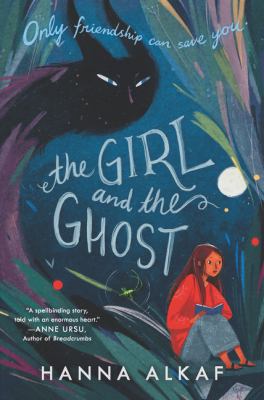
The Girl and the Ghost
by Hanna Alkaf. HarperCollins, 2020.
ISBN 9780062940957


Read from library copy. Ebook and audiobook
on Libby.

The old witch used the ghost she’d captured for curses and vengeance, making life miserable for villages without their knowing it, then taking their money to remove the curse before moving on.  The ghost has always lived feeding (in small, ritual amounts) off her blood, so when she dies, he goes hunting for more, finding her small, joyous granddaughter.  

That granddaughter, Suraya, grows up with the ghost as her best friend, naming it Pink for her favorite color when she’s 4.  She lives alone with her mother, always too busy and stressed to be affectionate. But while Pink loves Suraya as much as a vengeful ghost-type can, Suraya isn’t interested in the kind of magic he does.  When she makes her first good friend, Jing, in high school, Pink is terribly jealous.  And when the trouble he makes gets bad enough that Suraya’s mother notices, the help she calls turns out to be even worse.  Should Suraya try to help Pink or cut him loose? 

This is the first book set in Malaysia I’ve ever read – the author lives there now, though I didn’t see any signs of this having been translated from another language.  I appreciated the setting and magic (I have left out a good deal of the complexity of the many kinds of magical beings that show up in the story), and that it shows the diversity of Malaysia itself, not just in Suraya’s travels between the poor village by the rice paddies where she lives and the city where she goes to high school, but also between Muslim Suraya and Jing, whose religion isn’t specified but who seems to be of Chinese ancestry and talks about eating pork.  This is a story of friendship, redemption, grief, and love of many kinds.  

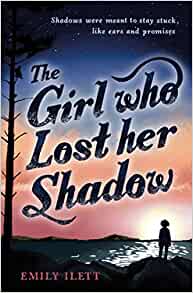
The Girl Who Lost
Her Shadow
by Emily Ilett. Kelpies, 2020. ISBN 978-1782506072.


Read from library copy.

Newly 12-year-old Gail can’t even be excited about her birthday with everything else that’s going on – her father moving out and her big sister Kay, always before her closest companion, too depressed to leave her room.  When Gail’s shadow wriggles away from her, and she sees that Kay’s shadow is also gone, Gail sets out on a hunt for it over, under, and around their tiny Scottish island.  And while Gail’s grieving has made it hard for her to keep her friends, she makes some new ones on the hunt, including a red-haired younger girl named Mhirran who’s been trying to stop her brother’s shadow collecting, and an older boy named Femi who’s been leaving messages in drawings for Kay about the conservation work they’d been trying to do before she got sick.  

The magical mixes with the mundane, and the larger world with the interior, as Gail realizes that she needs to realize who she is on her own to be able to help her sister, and that also gives her the strength to work to help the wildlife on and around the island.  

This Scottish setting with magic and the closeness of the sea reminded me of The Turning by Emily Whitman, though while I loved both, The Girl Who Lost Her Shadow is a little more active and relevant, and about half the length, making it a much easier sell for most kids.  I’ll be looking for more from this debut author.  

These books have been nominated for the Cybils award.  This review reflects my opinion, not that of the Cybils committee. 

Stay healthy and keep reading!

Posted in Books, Fantasy, Middle Grade, Print, Reviews | Tagged , , , , , | 5 Comments

The Time of Green Magic by Hilary McKay

The Time of Green Magic by Hilary McKay

The Time of Green Magic by Hilary McKay. Margaret K. McElderry Books, 2020. US ISBN 978-1534462762. UK edition copyright Macmillan, 2019. ISBN 978-1529019230. Read from library copy.

As the book opens, 12-year-old Abi is on a raft in the ocean, with a bright green parrot flying by.  Then her little step brother Louis runs by – Abi is pulled out of the book back into their new ivy-covered house in the north of London, but with salt in her eyelashes and Louis asking about the parrot. After this intro, we go back in time to Abi, Louis, his 14-year-old brother Max becoming a family when their parents, Abi’s dad Theo and Max and Louis’s mum Polly, meeting in the emergency department where Theo is a nurse after an epic skateboard accident. 

Theo and Polly may be madly in love, but Abi is much less pleased to have her reading time disturbed and most of all, to have her Granny Grace, who’s helped raise her over the past decade, move back to Jamaica.  And when the boys are absolutely not able to share a room peacefully, it’s time to move house.  

This new house does have magic in it – bits of books brought to life for all three children, including the giant cat shown on the cover for Louis.  And when Polly’s work for a charity – started back up to be able to afford the larger house – requires her to work overseas for an extended time – the kids will have to rely on each other more than they ever have before. 

As in Hilary McKay’s previous books, her depiction of the messiness of the many individuals that make up a family trying to get along together really shines, from Louis wanting to treat Abi like a close sister from the beginning, disregarding her personal boundaries, but hating reading so much he flushes his books down the toilet, to the pain of Max’s fight with his best friend and his first incandescent crush and Abi’s slow, slow journey to being willing to share even reading letters from Granny Grace with anyone.  There are details like an exhausted Theo falling asleep in the middle of telling Louis a bedtime story, mixing three fairy tales into one, and scrambles to order take-out when life has just gotten overwhelming or something needs to be celebrated, and language like, “a recorder club was tormenting a Christmas carol to shrieking ribbons”

Magic slips into the corners, at first hardly real and easily brushed away, then becomes more and more insistent, though more often highlighting the beauty of the normal world than taking over.  It’s a lot more relationships and small family moments than overarching plots.  And while I found it transcendent, I have found that it takes a particular reader to catch the appeal of McKay’s writing.

See my reviews of Saffy’s Angels, The Exiles, and Lulu and the Duck in the Park for more by Hilary McKay

This book has been nominated for the Cybils award.  This review reflects my opinion, not that of the Cybils committee.

Posted in Books, Fantasy, Middle Grade, Print, Reviews | Tagged , , , , , | 2 Comments

The Copycat by Wendy McLeod MacKnight

The Copycat by Wendy McLeod MacKnight
the ‘

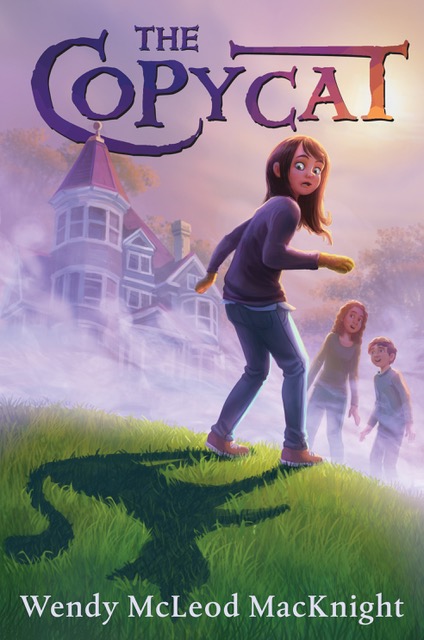
The Copycat by Wendy McLeod MacKnight. Read by Reba Buhr. Greenwillow Books, 2020. ISBN 978-0062668332. Listened to audiobook on Hoopla. 

Middle schooler Ali has just moved back to the small town on the Bay of Fundy in New Brunswick that her father left years ago.  She’s excited to be able to spent more time with her great grandmother GiGi, whose hundredth birthday is approaching, but much less excited about the constant fog and making friends in the latest of a string of new schools.  She’s developed lots of rules to help her fit in, essentially doing her best to copy whatever the popular kids at the latest school do and like.  But for the first time, her rules are getting her into trouble – causing jealousy between a popular and a geekier girl both of whom Ali likes.  And it leads her to join the debate team, even though she has anxiety about public speaking and much prefers swimming.

When Ali begins to develop her family’s hereditary copycat powers, things are kicked into higher gear.  Suddenly she’s trying to manage transforming into animals or lookalikes of her classmate without really meaning to.  She also meets a cousin for the first time – a cousin she’d never met because of a family tragedy that divided Gigi’s family in two.  Can Ali manage both her social and magical lives, and find a way to reunite her family before Gigi’s birthday? 

This is a great book for kids who like some magic with their stories of school and family troubles.  Ali’s father has never been able to hold down a steady job with her mother working long shifts as a nursing home aide to compensate, though they never quite make ends meet.  These looks both at working poverty and at a strained but still loving relationship between the parents are both pretty rare.   Because of the high correlation between Ali’s coping strategies and her magic skills, I could see this one being used in classrooms or by school social workers, though my daughter listened to a little bit near the end with me and then went back to listen to the whole book.  

This book has been nominated for the Cybils award.  This review reflects my opinion, not that of the Cybils committee. 

Posted in Books, Fantasy, Middle Grade, Reviews | Tagged , , , , , | 3 Comments

Apprentice Witches: Kiki’s Delivery Service and Eva Evergreen, Semi-Magical Witch

I was fortunate enough to read both a new translation of the classic Japanese fantasy book and a recent book inspired by in the same week. There is lots of charming witchy fun to be had in both of these!

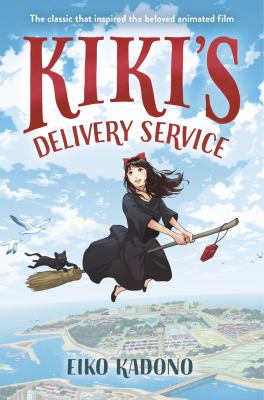
Kiki's Delivery Service by Eiko Kadono. Translated by Emily Balistrieri

Kiki’s Delivery Service by Eiko Kadono. Translated by Emily Balistrieri and read by Kim Mai Guest. Delacorte, 2020. (Original Japanese 1985) ISBN 978-1984896667. ASIN B085LQ7T5N. Listened to audiobook on Libby. 

Kiki has been waffling on whether or not she wants to do the apprenticeship she needs to do to be a professional witch like her mother, but finally does.  In this era of waning magic, most witches have only one strong skill. Kiki’s is flying – much less useful than her mother’s sneeze medicine.  

Despite having grown up in a tiny village, Kiki and her black cat Jiji decide to settle in the bigger city of Kikoro, made welcome and given a place to stay by a kind baker, Osono.  Slowly, Kiki decides on a business, builds a customer base, and solves problems, even making some friends along the way. The author was inspired partly by European fantasy stories, so the setting is Europe through a Japanese lens.  

The book is much less streamlined than the movie, more linked stories of how Kiki can solve a tricky delivery problem like taking forgotten instruments out of a speeding express train or save the day by flying. Kiki feels a very young twelve, and her friends are also less developed characters here. There are still some evocative moments, like the silver bells hanging in the tree-tops of Kiki’s home village, so that she could ring for help when she got stuck in the top as a small child.  While I appreciate more of plot arc and well-developed supporting characters myself, I can really see this shining as a bedtime read-aloud book for younger kids, along the lines of Mary Poppins or Pippi Longstocking, where children can develop a love for reading and fantasy books that will carry over as they grow older.  

Eva Evergreen, Semi-Magical Witch by Julie Abe.

Eva Evergreen, Semi-Magical Witch by Julie Abe. Little, Brown, 2020. ISBN 978-0316493888. Read from library copy.

This new series starter is a fresh, modern take on Kiki. Eva Evergreen is the daughter of one of the only two Grand Master witches in the kingdom.  She may have only a pinch of magic and a history of her spells going poorly, like producing cabbages instead of flowers, but she’s determined to do the month-long assignment to a city or village without a witch that she needs to officially move from Apprentice to Novice witch.  

But Grand Master Grottel, uncle of the only other apprentice, doesn’t want her to try and only begrudgingly gives her the magical boat ticket that will guide her to her destination.  

Eva’s other big weaknesses are that she can barely fly a broom, and that she falls asleep after using too much of her magic.  This she does on the boat after healing a man hurt by the magical flamefoxes he’s transporting.  When she wakes up at the end of the line, her ticket is ash.  She’s determined to make the port city of Auteri her home, even if it might not have been the one her ticket should have directed her to.  Fortunately, she’s managed to impress one of the boat crew members, Rin, who is native to Auteri and has enough connections to get her set up with the abandoned witch’s cottage and a vacant lot to use as a storefront for her semi-magical repair shop.  

While Eva is on her own shorter assignment, Mayor Taira of Auteri isn’t pleased to have her – they’ve been hit especially hard by magical storms and had requested a much higher level witch or wizard to help the city prepare defenses for the one that’s expected in a few months.  She agrees to sign Eva’s paperwork only if Eva can really come up with a way to protect Auteri. And though the problem seems way out of Eva’s league, she has little choice but to agree, drawing her into issues that affect the entire kingdom.

In this story, Eva’s friends have much more complex stories of their own, including Rin; Davy who works in the confectionary next door to Eva’s shop; and Charlotte, one of the older girls still at the orphanage on the other side, who stands out as a foreigner because of her lighter hair and skin.  The flamefox kit who adopts her is pretty darn adorable, too. Though this is an invented fantasy world with a tech level that feels about right for a century ago, there are lots of recognizably Japanese elements, including the delicious treats that Eva’s baker father sends her.  I really appreciated, too, that the queen of the kingdom is elected to the position, and this particular queen grew up working on a farm.  The personal and the political intertwine very nicely here, and the ending clearly points to a sequel in the works.

I usually only read print books at very specific times of day – but I’d really wanted to read this book and it didn’t come to the top of my stack until the day it was due, when I was working the evening shift.  Dear reader, I sat down on the sofa in the morning near the kids doing their remote school at the table and read until I was done.  I’m so glad I did!  

Readers looking for more like this might also enjoy The Apprentice Witch by James Nichols.  

These books have been nominated for the Cybils award.  This review reflects my opinion, not that of the Cybils committee.

Posted in Audiobook, Fantasy, Middle Grade, Print, Reviews | Tagged , , , | 9 Comments

Stories, Stars, and Grandparents: When You Trap a Tiger and the Magic in Changing Your Stars

I love it when happy accidents like this happen – two very different books with similar themes popping up back-to-back in my TBR.  Here we have two stories involving stories, stars, and close grandparent-grandchild relationships.

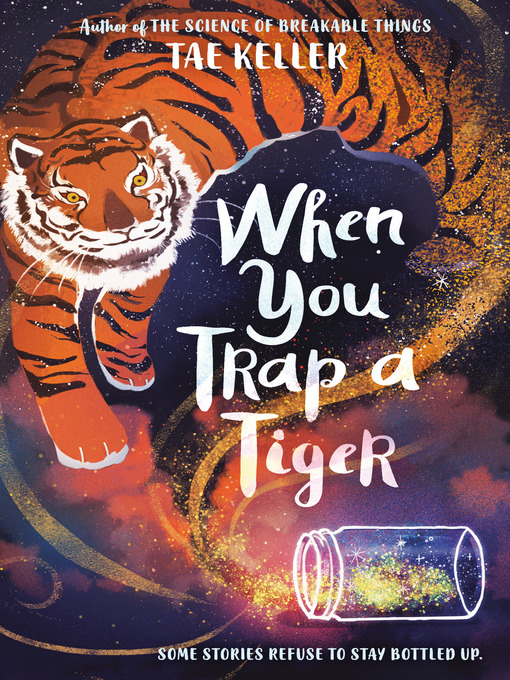
When You Trap a Tiger by Tae Keller

When You Trap a Tiger by Tae Keller. Random House, 2020. ISBN 978-1524715700. Read from library copy.

Lily’s mother is moving them in with her Halmoni.  Lily isn’t sure what to think of this move, though her teen sister is just angry about the disruption to her plans.  But on the way to the house, in pouring rain that reminds them all of the weather the night Lily’s father died in a car accident, Lily sees a giant tiger in the street in front of them.  Halmoni has always told them stories of tigers, telling Lily and her sister that tigers aren’t to be trusted. 

Continue reading
Posted in Books, Fantasy, Middle Grade, Print, Reviews | Tagged , , , , , , | 9 Comments

Tristan Strong Destroys the World by Kwame Mbalia

I read Tristan Strong Punches a Hole in the Sky, the 2019 Cybils Middle Grade Speculative Fiction Winner, near the end of February this year… just a month out from what would have been KidLitCon had not 2020 intervened.  So when I wanted to reread my own review before writing a review of the second, I discovered I never did.  You’ll just have to trust the many, many awards it won to know that it is worthwhile, and go read it now if you haven’t!  

Tristan Strong Destroys the World by Kwame Mbalia

Tristan Strong Destroys the World by Kwame Mbalia. Read by Amir Abdullah. Rick Riordan Presents, 2020. Print ISBN 978-1368042383. Audio ASIN B086Z4DW8L. Listened to audiobook on Libby. 

This book opens a month after the end of the last book.  Tristan is still staying with his grandparents on their farm in Alabama.  When his grandfather tells him that a local boxing champion will be coming to spar with him, Tristan barely hears him because he’s focused on spirits that he’s begun to see around the property, asking for help and warning that the Shamble Man is coming.  His grandmother notices Tristan’s distraction, too, when he’s not paying attention to the stories she’s telling for him to record with the Story Box Phone, in which Anansi is now trapped (though not trapped enough to keep him from being extremely snarky!)  But by the time Tristan decides to take out John Henry’s magical gloves and the bracelet with the adinkra charms* of the gods that he’d hidden away, it’s too late – his grandmother has collapsed after defending the barn from two plat-eyes in the shape of giant cats, and then been kidnapped. 

This calls for a return to the magical world of Alke!  It also requires giving Anansi some more permissions, so that he can create an app to call the goddess Riverboat Annie to transport them there – along with the happy discovery that Tristan’s friend Ayanna from the last adventure is now apprenticed to Riverboat Annie and there as well. 

Tristan had thought that he and his friends had saved Alke during their last adventure.  But once there, he discovers that the rebuilding has been slow and difficult, and new dangers threaten to undo the little progress they’ve made.  Tristan, Ayanna, Gum Baby, and a new and quite unfriendly boy called Junior join to figure out what’s wrong, rescue Tristan’s Nana, and save the world again.  They are going to save the world, right?

I really appreciated the introduction of a number of new, female goddesses. In the previous book, the big mythological/magical creatures that Tristan was involved with were John Henry, High John, Brer Rabbit, and Anansi.  While Anansi is still obviously part of the story, our magical stars in this book are now Riverboat Annie from African-American folklore, Mami Wati, the West African water goddess (also an important part of The Rise of the Jumbies), and a boo hag who runs a juke joint for those in need of refuge and who turns out to be less scary than Tristan had feared.  His Nana’s quilting and knitting are also important vectors for story, magic and tradition, something I very much appreciated as a crafter myself. But with deep looks at the effects of trauma and diaspora alongside the adventure, Tristan learning more about himself and friendship, and the consistent humor that Gum Baby brings, all go together to make a book that is if anything even stronger than the first one. 

I read the first book in print, but if you are an audiobook listener, I highly recommend the audiobook version to bring the many different sounds oof the West African and African-American characters to life. My only small quibble is that Anansi in my head sounds a little more cartoonish than the Anansi depicted here, but otherwise, this is an excellent audiobook.

*I don’t think I had encountered adinkra before the first Tristan Strong book, but they play an important (nonmagical) part in the recent picture book Nana Akua Goes to School by Tricia Elam Walker, which is an excellent book on its own and also has pictures of many adinkra in the endpapers

Posted in Audiobook, Fantasy, Middle Grade | Tagged , , , , , , | 3 Comments

Bears! Water Bears and The Girl Who Speaks Bear

I am trying to ignore my anxiety about the election by carrying on with reviewing some of the many books I’m reading. If you are eligible to vote in the US and haven’t yet voted, please do so before reading this post! If you have already voted, please let me know in the comments!

Here are two more Cybils nominees, both involving bears.  Water Bears, with a Latinx author and main character, continues with the Latinx theme of the past week, while The Girl who Speaks Bear takes us to fantasy Russia.  Whether you’re looking for a contemporary book with a hint of possible magic, or full-on folk tale-inspired historical fantasy, there’s a book here for you.  

The Water Bears by Kim Baker
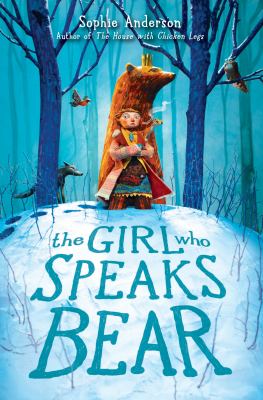
The Girl Who Speaks Bear by Sophie Anderson

Water Bears by Kim Baker. Wendy Lamb, 2020. ISBN 978-1984852205. Read from library copy. 

Newt Gomez was really hoping for a new bike for his 13th birthday, something really new and all his own on an island full of quirky collectively owned second-hand bikes.  Something that would help him stretch the leg muscles that are still regaining flexibility after he was mauled by a bear nearly a year ago. 

Instead, he gets an old taco truck with a big rooster on its side that won’t even reverse.  For a kid who’s tired of the attention the bear attack got him, this is pretty much the opposite of what he wanted.  And even though he’s only 13, his parents insist on him driving it.  

Newt doesn’t believe in the lake monster his father claims to have sighted, and he’s equally skeptical when his best friend Ethan claims to have a wish he made on the barnacle-covered bear statue they find on the beach come true.  But as more and more people start wishing on the bear – now in the back of the taco truck – all of them want Newt to question his position on magic. 

Newt is also trying to decide where to go to school the next year – with his friends in the quirky local school, with classes geared towards artistic island life, or on the mainland, with a shiny modern curriculum and equipment.  But for school this year, he’s researching the water bear or tardigrade, a tiny but ubiquitous and extremely resilient creature.  Though the report itself is a tiny part of the story, the tardigrades are symbolic for Newt and his mental and physical recovery. 

As in Mañanaland, there is more a sense of the possibility of magic than actual magic, though Newt rather than an adult is the skeptic.  The real magic may be the power of family, community, and reflection to work through trauma to recovery.  

This is blurbed by Kelly Jones of the Unusual Chickens books, and does contain a similar lone Latinx family in a quirky community with lots of humor vibe, though of course there are no unusual chickens here.  I also remembered Stef Soto, Taco Queen.

The Girl Who Speaks Bear by Sophie Anderson. Scholastic. 2020. ISBN 978-1338580839. Read from library copy. 

No one but her Mamochka and family friend Anatoly know that Yanka was raised by a bear.  She’s just called Yanka the Bear in the village because of her size and strength.  Still, as much as Mamochka tells her the stories are just stories, Yanka believes there’s truth to Anatoly’s stories of the Bear Tsarina, the Lime Tree at the center of the forest, and the House with Chicken Legs.  Every time he visits, he has new stories to tell her, and updates to the map he carries with him that she faithfully copies to her own map.  

So when she wakes up one morning after a fall with bear legs, she runs away to the forest without even telling her best friend Sasha, rather than go to the city to be examined by doctors as Mamochka wants.  Are the bulfinches who keep telling her to go to the forest right?  Is the forest her true home?  

Yanka may have left Sasha and Mamochka behind, but her fierce pet weasel Moustrap has come along, and she soon makes more friends in the forest, including Elena, the daughter of the local Yaga, and several forest animals.  Are Yanka bear legs part of a family curse?  And can she learn enough in the forest to break it? 

As in Grace Lin’s Where the Mountain Meets the Moon books, the main storyline is interspersed with stories that the characters tell each other, though it is much more immediately obvious here that the stories are about this forest and its inhabitants.  And while both Newt in The Water Bears and Yanka make some deep discoveries about home and family, readers who prefer more action (wolves! dragons! forest fires!)  and/or more magic (bear legs! houses with chicken legs! dragons!) will be more drawn to The Girl Who Speaks Bear, while  readers looking for more realism will prefer The Water Bears.  I myself fall decidedly in the preferring more magic camp, and look forward to more books from Sophie Anderson and appearances by houses with chicken legs. 

In addition to The House with Chicken Legs, fans of Russian-inspired middle grade fantasy could also try Anya and the Dragon by Sofiya Pasternack and Baba Yaga’s Assistant by Marika McCoola and Emily Carroll. The only other bear-related middle grade I can recall is Edith Pattou’s Eastcan anyone else think of any?  

Posted in Books, Fantasy, Middle Grade, Print, Realistic, Reviews | Tagged , , , , , , , , , , , | 3 Comments