Happy December! Here are some mostly quick takes on the books I read in November – so many good books! I hope your winter season is filled with lots of cozy reading.
Middle Grade
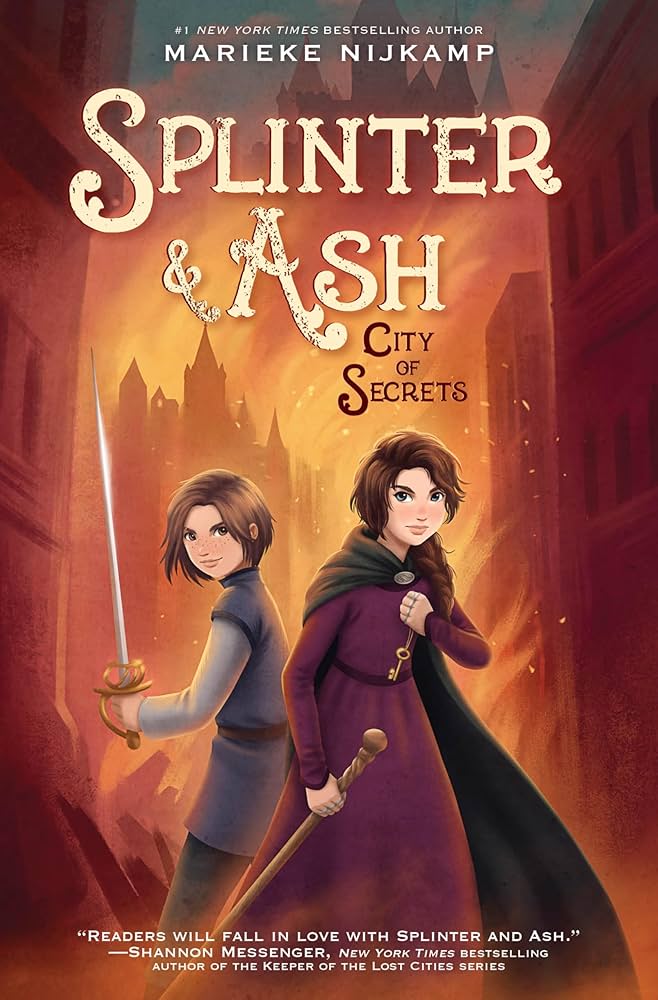
Splinter & Ash 2: City of Secrets by Marieke Nijkamp. Read by Vico Ortiz. Greenwillow Books, 2025 – Trouble comes to the city as Splinter and Ash continue to chase down the secret faction trying to overthrow Ash’s mother, the Queen. As Splinter meets another person who doesn’t identify as male or female, and they both struggle with class issues as Ash try to befriend people on the poor side of town in an effort to really know her city. Despite these issues, this is an engaging and action-filled book, and a series I’ll keep following.
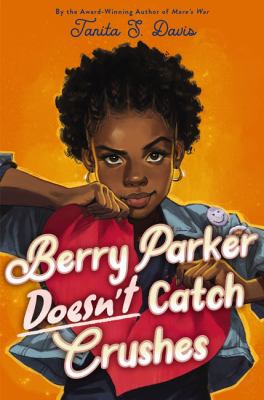
Berry Parker Doesn’t Catch Crushes by Tanita S. Davis. HarperCollins, 2025 – Berry’s mother, whom she calls by her first name, has lived in a different state almost as long as she can remember, coming back on for “August Invasions” to help Berry get ready for the next school year. Berry still dreams of her parents getting back together, but now her mother is talking more and more about a “friend” from work and moving to London with him. Meanwhile, Berry’s best friend has a crush and can’t seem to think or talk about anything but him and occasionally, who Berry might be crushing on. Berry just wishes the crushes and the pressure to have them herself would go away. This is a realistic and sympathetic portrayal, the kind that keeps me coming back to read Tanita’s books.
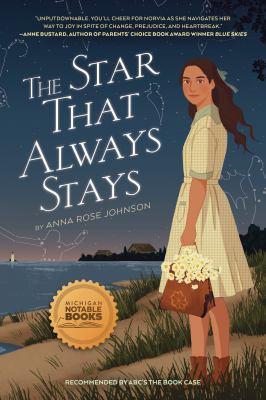
The Star That Always Stays by Anna Rose Johnson. Read by Elise Randall Modica. Holiday House, 2022 – In this book based on on the author’s great-grandmother’s life, Norvia spent the first years of her life on beautiful Beaver Island in northern Michigan. Then, her parents get divorced and the rest of the family moves to Boyne City. When her mother decides to remarry, Norvia is not happy – the social consequences in the 1910s are real, plus her mother doesn’t want them to tell their white stepfather about their Ojibwe heritage. With help from girls’ books like Anne of Green Gables and Pollyanna and Bible verses, Norvia works to find a way to be happy in her new life. It bothered me that Norvia’s older brother gets completely over his fear of being drafted for World War I because of his Bible verses, but the book still has the feel of early classics. I think it would be an especially good choice for families looking for books that address real-world topics like prejudice and divorce from a Christian framework. I’d also suggest print over audiobook here, as the narrator doesn’t distinguish between character voices and the print includes notes and photos of the real-life characters in the book.
The Misewa Saga: the Great Bear by David A. Robertson. Read by Brefny Caribou. Puffin Canada, 2021 – I read the second book in this Cree portal fantasy series, thinking that perhaps I’d remembered wrong about not being impressed by the first book. Friends, I so want to love this series! Somehow, though, the writing feels like it’s telling more than showing and I never connected to the characters as much as I wanted to. This book and others in the series are well-reviewed, though, so perhaps you’ll like it better than I.
Teen
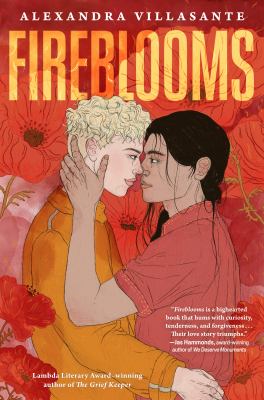
Fireblooms by Alexandra Villasante. Nancy Paulsen Books, 2025 – Two wounded teens connect in this beautiful, lightly speculative look at the way we can hurt each other and what price we’re willing to pay for safety. Sebas has moved to New Gault only briefly to help his estranged mother with her cancer treatment; she sends him to the shiny, happy TECH high school. There, Lu (they/them) is charged with signing them on to the TECH suite of tools – high-powered, ultramodern tech in exchange for constant monitoring, including a monthly word budget. I loved these characters so, so much.
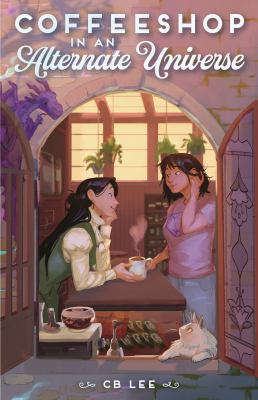
Coffeeshop in an Alternate Universe by C.B. Lee. Feiwel & Friends, 2025 – Another book that won my heart! Brend Nguyen is an ambitious and organized Vietnamese-American teen with a detailed plan to get to her goal of saving the world. Kat Woo, in contrast, deliberately underperforms in school, refusing to cooperate with the prophecy that says she’s needed to save the world from magical disaster.
Adult
Lady Like by Mackenzi Lee. Dial Press, 2025 – A first adult book from Lee, author of The Gentleman’s Guide to Vice and Virtue, continuing on with the theme of historical gay romance. Here, we have two women in Regency England – Harry, daughter of a whore and now almost earning a living acting in notorious sapphice theatre in London, and Emily, a minor noblewoman. Harry learns who her father is and is told she must marry to earn an estate. Emily’s parents, meanwhile, due to an unfortunate incident in the past, have decided that their only option for respectability is to betroth her to a horribly cruel man old enough to be her grandfather. They find themselves at the same ball, both trying to win the hand of the same eligible duke, only to be more charmed (at least eventually) by each other. I learned reading this that I don’t like when one of my romantic leads has meaningless sex on page – but your tastes may differ, and the rest of it was charming. I also really enjoyed the backmatter, complete with information about lesbians and other norm-smashing women of the era.
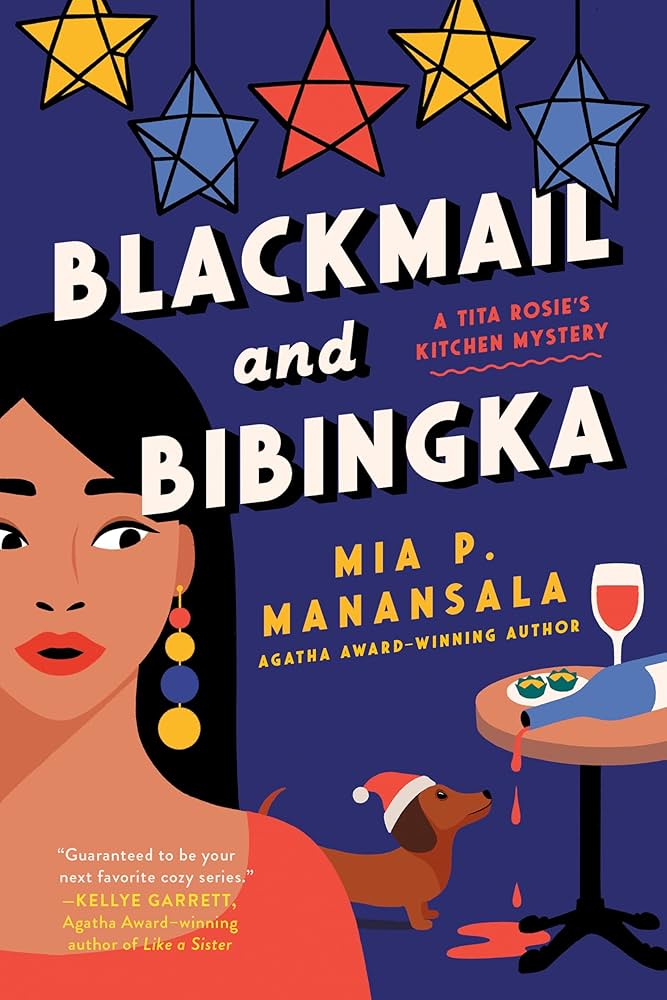
Blackmail and Bibingka by Mia P. Manansala. Read by Danice Cabanela. Berkley, 2022 – Book three in the Tita Rosie’s Kitchen cozy mystery series! This is set at Christmas, and involves Lila’s long-lost black sheep of a cousin, Ronnie, coming back and asking for help starting a business – only to bring trouble with him. There’s also a bit of development in Lila’s romantic relationship. I’m finding the series entertaining, while my love waits eagerly for each new installment.
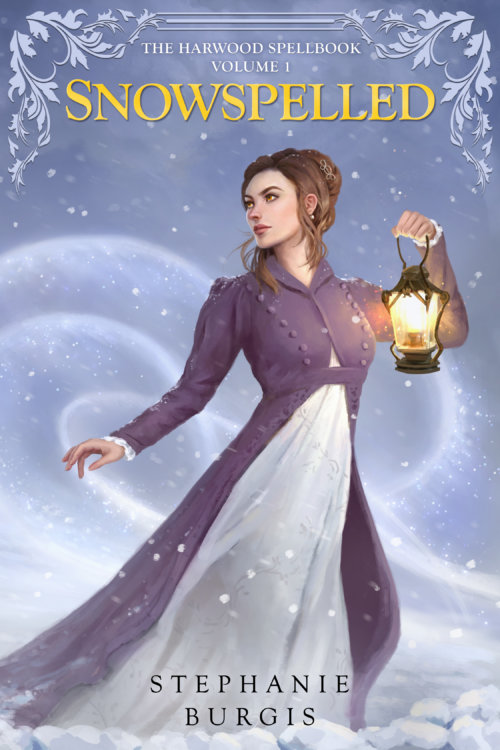
Snowspelled by Stephanie Burgis. Seven Fathoms Press, 2017 – There’s a new “boxed” set of the ebooks for the Harwood Spellbook series, and I had to reread the first one on a late and stressful evening. So worth it!
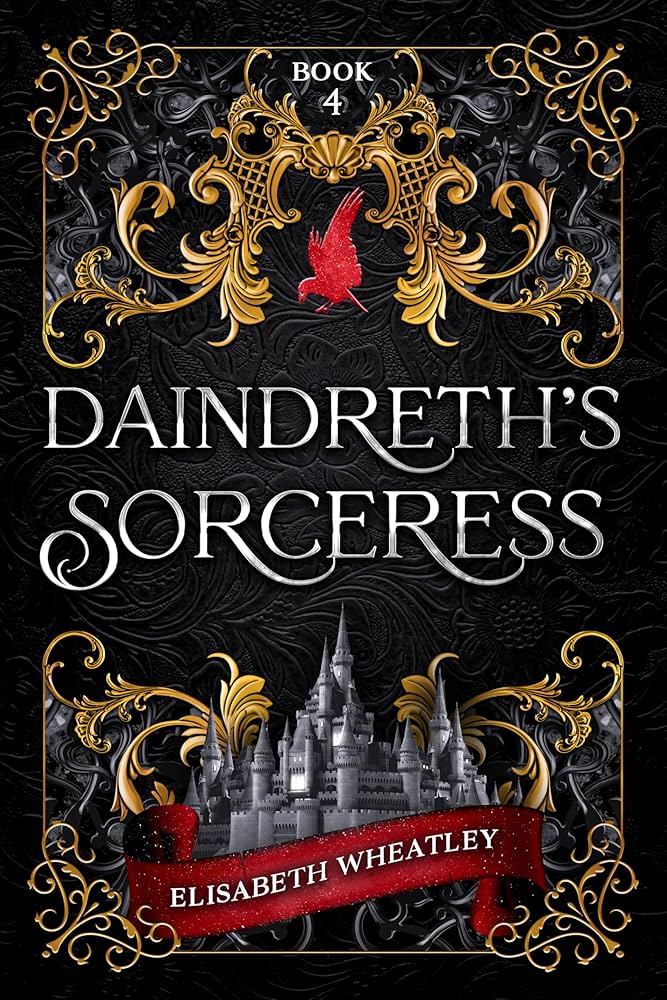
Daindreth’s Sorceress by Elisabeth Wheatley. Book Goblin Books, 2023 – Book 3! There’s not a lot to say without spoilers, so I’ll just say that I very much enjoyed the story from the point of views of our main heroes, and am less fond of things from the villain’s POV. I’ll still finish out the series, though!
The Listeners by Maggie Stiefvater. Read by Erin Bennett.Viking, 2025 – I’d been waiting for a while for Steifvater’s latest book, her first foray into adult fiction. Many of my coworkers were not excited by the idea of spending time with the general manager of a luxury hotel forced to house Axis diplomats during World War II. I wasn’t necessarily thrilled with the premise – but, oh! It’s still Stiefvater, a hotel in the mountains of West Virginia built over a spring of “sweet water” – magical water – and the few people, including that general manager, who can listen to what the water needs. It is beautifully done. Kudos to narrator Erin Bennett, too, who did admirably reading with a wide variety of accents.
Can’t Spell Treason without Tea by Rebecca Thorne. Bramble, 2024 – Have I ever mentioned that I love tea? I do, and you’ll probably have noticed by now that I am really fond of cozy fantasy, so this story of an archmage and a former Queen’s guard running away from their respectve stressful lives and trying to build a book- and tea shop in a remote border town really was my cup of tea (sorry, I couldn’t resist.) Of course things aren’t as peaceful as Kianthe and Reyna would want – but there are bandits, dragons, griffins, and rival town officials fight-flirting with each other. So much fun I had to check out book two immediately, even though I already have half a dozen library books on my TBR.
As always, I’d love to hear your thoughts – what have you been reading lately? Have you read any of these books yourself?
Things are finally slowing down a bit at work, and I thought I’d split my round-ups by age a bit, to keep them from being quite so overwhelming for me. Here are sequels, new-to-me authors, and new books by old favorite authors. Enjoy!
Middle Grade
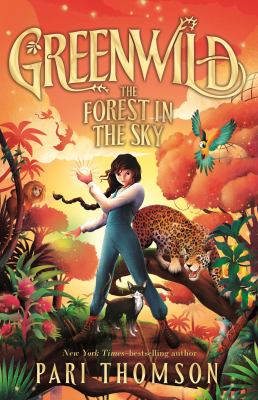
The Forest in the Sky. Greenwild #3 by Pari Thomson. Read by Sophia Nomvete. Farrar, Straus and Giroux/Macmillan Audio – This environmental/school fantasy trilogy concludes! I don’t recall hearing much buzz about these books (maybe I’m just out of the loop), but they are a great choice for readers looking for a balance of action, character, and world-building, told with both humor and thought.
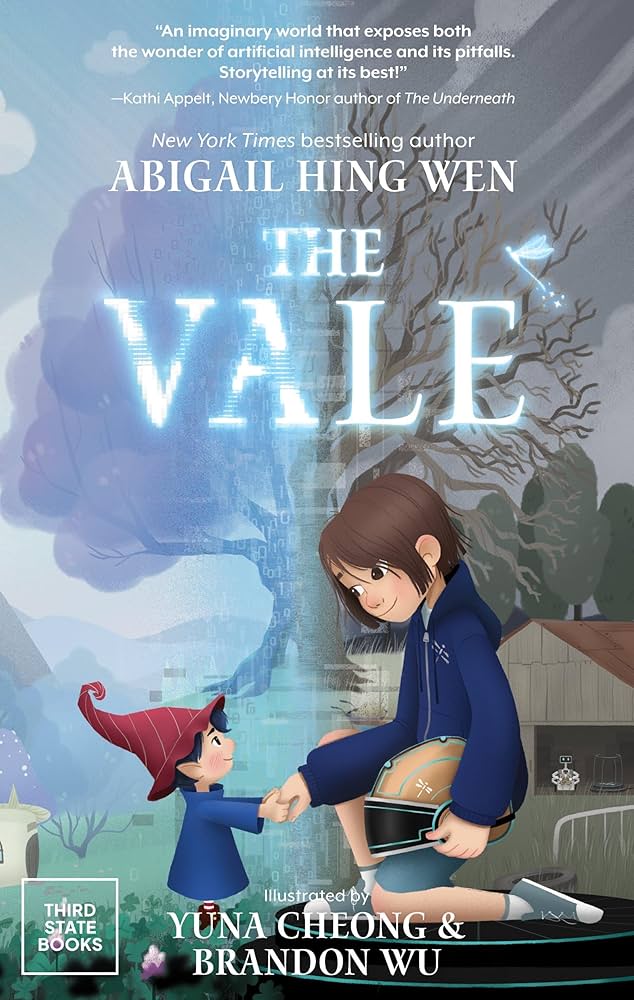
The Vale by Abigail Hing Wen. Third State Books, 2025. Review copy provided by the publisher – A boy’s AI fantasy world comes to life and affects his real life in this highly illustrated middle grade debut by YA bestseller Abigail Hing Wen. This is a fun choice especially for fans of video games and felt skewed a little younger to me, despite a crush.
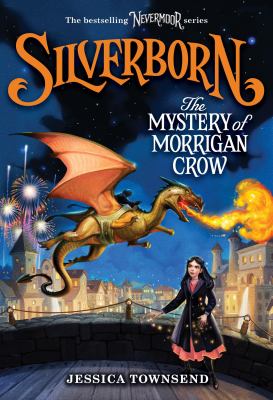
Silverborn: the Mystery of Morrigan Crow by Jessica Townsend. Read by Gemma Whelan. Orion Children’s Books, 2025 – the latest in this series, the first of which won the Cybils award. My youngest listened to this in about two days, and said that the story doesn’t let up. I can’t disagree. It’s still a heady mix of intrigue, charm, adventure, and countering prejudice.
The Library of Unruly Treasures by Jeanne Birdsall. Illustrated by Matt Phelan. Knopf Books for Young Readers, 2025 – Ms. Birdsall takes on contemporary fantasy with the classic feel that made her Penderwicks books so popular. Gwen, unwanted by her parents, is thrilled when her Uncle Matthew is pleased to meet her and even given her a bedroom painted her favorite color. Of course she doesn’t believe the little neighbor girl when she starts telling Gwen about the small flying beings – definitely not fairies – who live at the neighborhood library that Gwen’s own ancestor founded. But it turns out that they are very real, and endangered – so that it’s up to Gwen and her ancestral magic to save them. Even though we sometimes give too much weight to ancestral powers, it was so very satisfying to see Gwen, tossed backed and forth between parents and across continents, come into true family, power, and home, and the tiny flying people are a delight.
Dreamslinger by Graci Kim. Disney Hyperion, 2025- In this contemporary fantasy, those who can draw energy from dreams into reality are mostly feared. 14-year-old Aria lives in a home founded by her father to help Dreamslingers like her control the chaos and destruction that their dream power can cause. But when a public demonstration goes badly wrong, Aria volunteers to train at a school for Dreamslingers in a tiny kingdom hidden in Korea where Dreamslingers are revered and trained to use, rather than suppress, their powers. Will the lessons from her father hold up to the new training? This has an exciting mix of fast-paced action, enticing powers, friendship drama, and unburying of family secrets.
Fury of the Dragon Goddess by Sarwat Chadda. Read by Vikas Adam. Rick Riordan Presents, 2023 – I read City of the Plague God back in January of 2021, when this series based on Mesopotamian myth was alarmingly prescient. I lost track of book two for a couple of years, but I’m happy to say that the story still holds up, beautifully combing modern-day commentary and ancient myth with the action and humor you’d expect of a Rick Riordan Presents book.
Storm Singer by Sarwat Chadda. Simon and Schuster Books for Young Readers, 2025 – 12-year-old Nargis is a Worm, a poor and wingless human living in the desert lands ruled by the garuda, the winged bird creatures. Despite being orphaned and needing a crutch, she has not lost her spirit, nor the rare ability to sing magical songs to summon the elements. When her antics get her exiled and thrown into the path of an exiled garuda prince, the adventure really gets going, involving sky pirates, long-buried secrets, and learning to work together with people once considered enemies.
Return to Sender by Vera Brosgol. Roaring Brook Press, 2025 – Oliver and his mom have their first stable home in a long time, an apartment inherited from a deceased aunt. This bonus comes with some downsides – overly-nosy nieghbor Eliza, and Oliver going to a private tech-focused school, where his poverty and lack of gadgets stand out. When he discovers that the mail slot in the wall in the apartment can make wishes come true, Oliver is thrilled at first. But when he and his new friend, mischief-loving Colette, really get going, things get out of control. This starts out sad, proceeds to over-the-top hijinks, and finished up on a more serious note as Oliver and Colette figure out the high cost of their wishes. It has spot illustrations throughout, making this an illustrated middle grade as opposed to Brosgol’s previous graphic novels. The anti-consumerist message might be a bit heavy-handed, but I still enjoyed it lots.
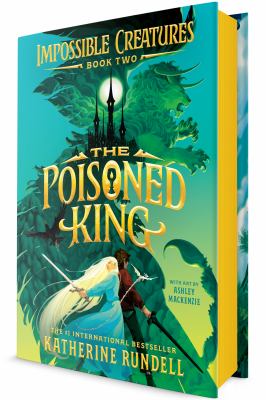
The Poisoned King by Katherine Rundell. Illustrated by Ashley Mackenzie. Knopf Books for Young Readers, 2025 – Impossible Creatures was one of my favorites last year, and the winner of the Cybils MG Speculative-Fiction category, so naturally I had to read this sequel. It couldn’t, of course, be the same, but it was beautiful and immersive and I’m looking forward to more.
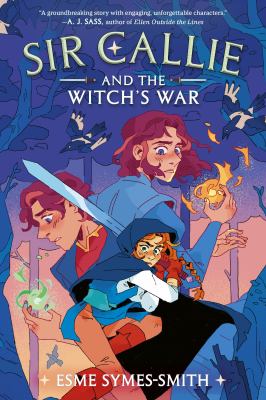
Sir Callie and the Witch’s War by Esme Symes-Smith. Labyrinth Road, 2024 – Another continuing series here, in book 3 of 4 of the Sir Callie series. Here, Callie and their friends find themselves separated and seemingly on opposite sides of the conflict, yet all trying to find a way to build a world that has room for people like them. It’s a mix of action and introspection that I enjoy, though I felt like it could have been a little shorter for me. I’m still looking forward to reading book 4, which is out now.
Labyrinth of Souls by Lesley Vedder. Illustrated by Abigail Larson. G.P. Putnam’s Sons Books for Young Readers, 2025. Thanks to the author for a review copy! – Ix Tatterfall has always had to keep a lot of secrets – she often crosses over into the realm between life and death, the Labyrinth of Souls, and she can see and sometimes befriend the Nightmare creatures that cross over from the Labyrinth into the regular world. Others know they exist, but have to rely on the elite Candle Corps to push them back into the Labyrinth. The other secret is that she and her aunt have not turned over her father’s crystal-encased body to the Candle Corps. The consequences for both of these things are very serious – so Ix is astonished when she’s caught in the Labyrinth and invited to join the Candle Corps instead of being punished. This is a lovely cozy-spooky magical school story that I’d give to fans of Amari and the Night Brothersor The Marvellers for the similar themes of kids loving and yet not quite fitting in to their magical schools.
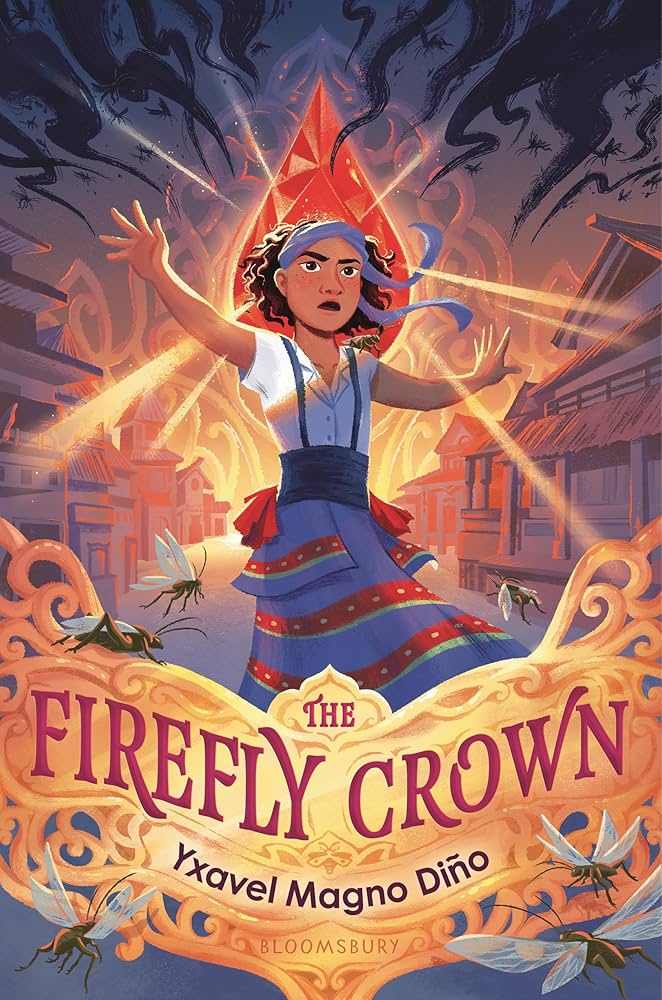
The Firefly Crown by Yxavel Magno Diño. Bloomsbury Children’s Books, 2025. Review copy kindly provided by the publisher. – In a world where magic users are strictly divided into heirarchies by what insect their powers borrow from, Yumi and her parents are lowly crickets, dressed in brown and working to rid crops of pesky crickets. Yumi wants more – but being attacked by the Ghost Horde of life-sucking ghost insects on the way to a mandatory meeting at the capitol, and then being blamed for both the horde and royal Firefly Crown is much more excitement than Yumi really wants. On the plus side, while working to clear herself and her parents and figure out who really is behind the theft and the Ghost Horde, she might actually make her first friends.
Teen
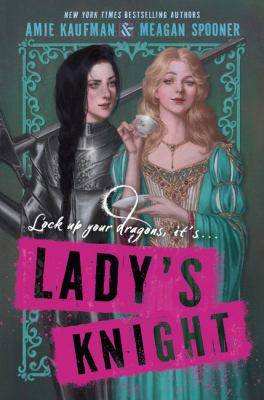
Lady’s Knight by Amie Kaufman and Meagan Spooner. Read by Helen Keeley and Barbara Rosenblatt. Storytide, 2025 – Gwen is a blacksmith’s daughter who’s secretly both doing most of the blacksmithing work for her father and longing to be a knight, making her own beautiful sword and armor. Isobel is the most beautiful and eligible lady in all of Darkhaven, set – very much against her will – to be the prize in the tournament that Gwen has her heart set on competing in. Perhaps together they could both achieve what they long for – if longing for each other doesn’t get in the way. It has a lot of the sensibility of Gwen and Art Are Not in Loveand My Lady Jane, together with the dry intrusive narrator and bold, self-aware anachronisms of the Bridgerton Netflix series. If you hate any of those things, this might not be for you, but I thought it was a lot of fun.
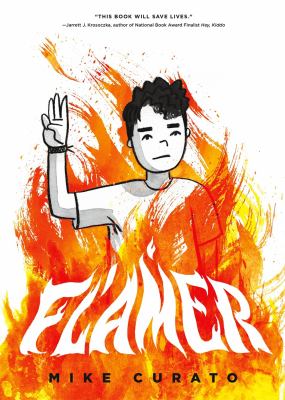
Flamer by Michael Curato. Henry Holt and Co, 2020 – This has been one of the most banned books every year since it came out. I’d been hesitant to read it because I knew it dealt with a boy being treated badly for being gay and I was worried that my tender heart couldn’t take it. Not to worry! Yes, the main character, like the author, is dealing with being an overweight, effeminate Filipino boy at a Boy Scout camp filled with thin white boys. There is bullying, and one particularly heart-wrenching scene. But there’s also friendship, both in person and by mail, the joy of camping, the majesty of nature, and the comfort of faith. This is absolutely a book that belongs in every library for teens.
Somadina by Akwaeke Emezi. Read by Nene Nwoko. Knopf Books for Young Readers, 2025 – I’ve been hearing blogging friends and colleagues praise Akwaeke Emezi for years, and finally got around to reading one of her books. In an African-inspired world where young people receive magical gifts at puberty, Somadina and her twin brother Jaiyeke have grown taller and taller without every hitting puberty. When their powers finally arrive, Somadina and her parents are terrified by her power, while her brother is quickly kidnapped by a horrible, yet powerful man. As she journeys to save him, she must come to peace with her own power. This was original and engaging, with plenty to think about.
As always, I’d love to hear your thoughts – what have you been reading lately? Have you read any of these books yourself?
Here I am with the lovely books I read in August! I was on vacation the first half of the month, and so missing most of the normal audiobook listening I do – my total count is just nine books this month.
I’d set myself the goal of reading 20 books by Black authors this year, and I have now met that goal – though of course that won’t stop me from reading other good books by Black authors I come across. I still have quite a ways to go with my goal of reading 8 books by Indigenous authors – this month’s reading has brought me up to just 3. If you have any recommendations for any books, especially fantasy or science fiction books, by Indigenous authors, please let me know in the comments!
Middle Grade
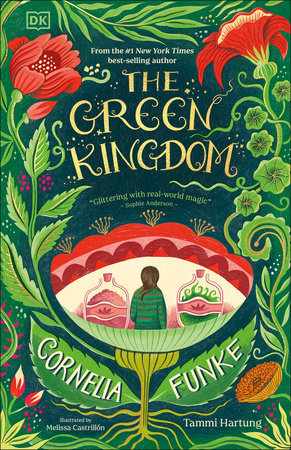
The Green Kingdom by Cornelia Funke. Read by Jessica DiCicco. DK Children, 2025 – Caspia, from rural Maine, is horrified when her parents announce that they’ll be spending the summer in Brooklyn, where she knows no one. The apartment they’re renting is still furnished and decorated in the heavily floral style of the previous owner – and in a jammed dresser drawer, Caspia finds a sheaf of letters from the deceased previous owner’s blind sister, who traveled around the world with their botanist father, and sent a riddle about a different plant, or member of the Green Kingdom, in each letter. Through tracing the riddles, Caspia meets and befriends lots of new people – the grandmotherly owner of the local spice store, the teen who helps run the flower and book store, the woman who runs the gate at the Botanic Garden, and a boy her own age who turns out to be the son of one of the gardeners at the Botanic Garden. She also feels like she might be friends with the unseen writer of the letters – and certainly no longer finds Brooklyn boring. I was a little surprised that this wasn’t fantasy, as I didn’t read the summary when I saw it was Cornelia Funke, but it was still a very enjoyable story of discovery. Caspia is described as white, while her new friends are many different ethnicities.
Teen
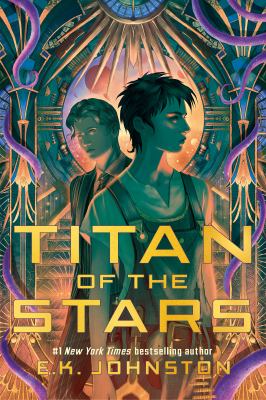
Titan of the Stars by E.K. Johnston. Tundra, 2025 – Longtime personal favorite author Johnston returns with a story in which Canada (rather than Michigan) has been destroyed by natural disaster. Two white-cued teens whose paths split in childhood meet again. Celeste Sparrow was orphaned in the disaster that created the Rift and has worked as hard as she can for a position as a lowly engineer on the beautiful starship Titan, hoping that good work here will mean a better permanent position on Mars. Dominic, also orphaned, was rescued as a young child by wealthy and prominent parents, who now expect him to carry on their dreams. On the surface he has everything – but with a jerk of a boyfriend and parents who won’t let him make his art, it sure doesn’t feel like it. There are enough stressors on board the Titan already – but we know from the opening that things are about to get much, much worse. This starts a little slowly and ramps up quickly into a horrifying look at luxury gone wrong.
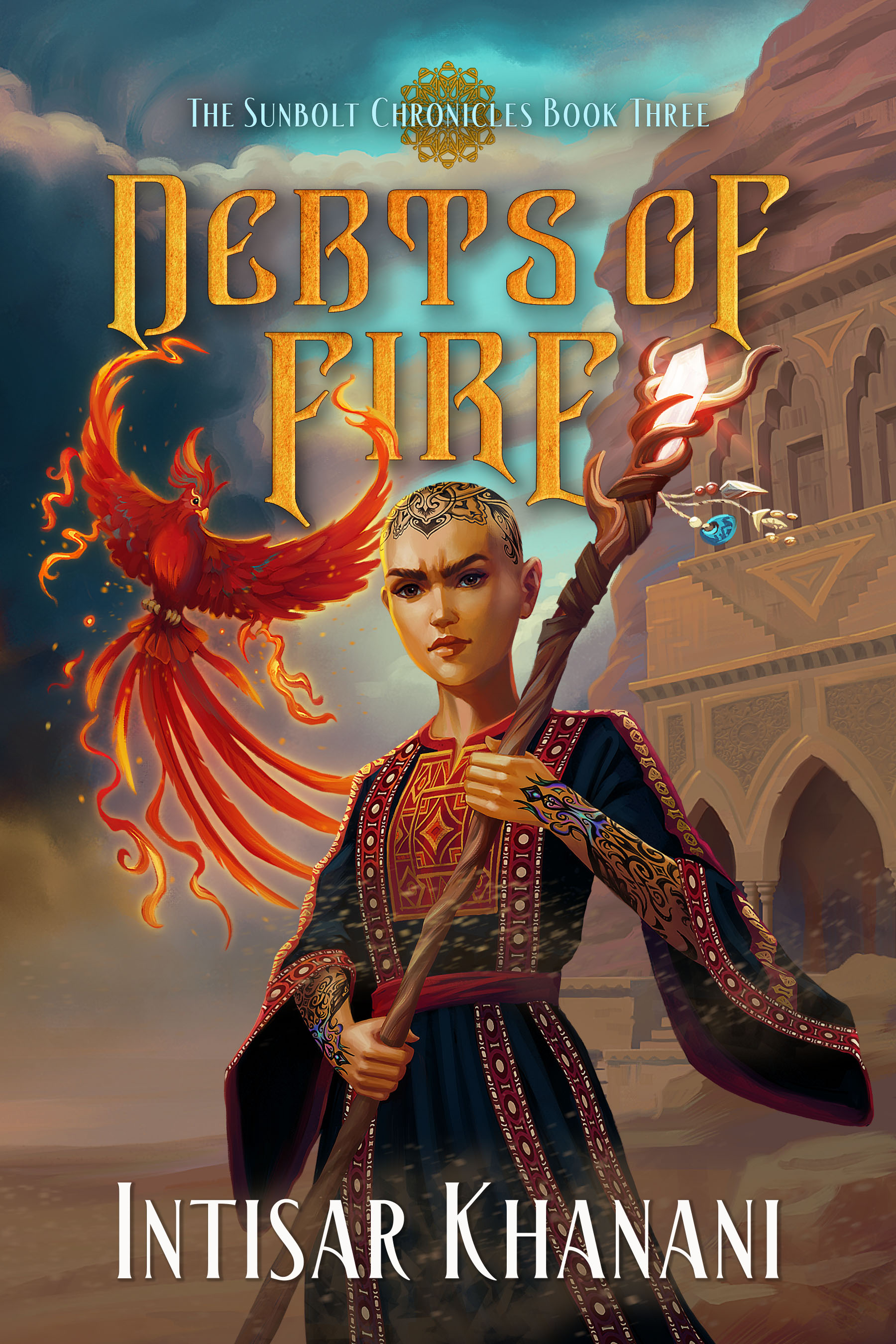
Debts of Fire by Intisar Khanani. Snowy Wings Publishing, 2025 – This is the third book in the Sunbolt Chronicles, though not the last. I’m really going to try to write a longer review of the series so far and so won’t try to summarize here, other than to say I continue to be impressed by Khanani’s writing.
Adult
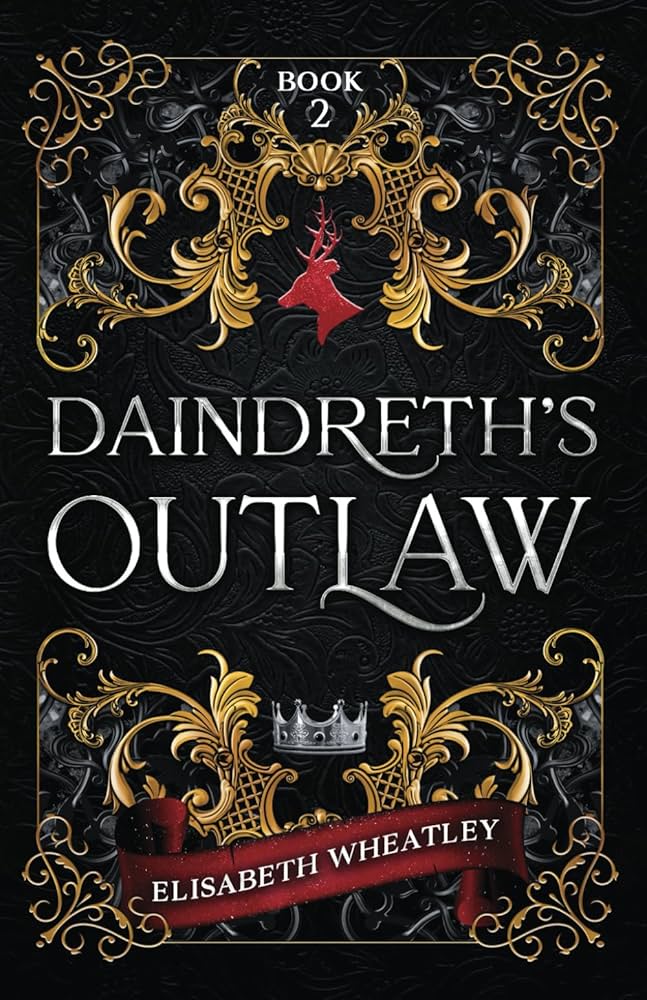
Daindreth’s Outlaw by Elisabeth Wheatley. Book Goblin Books, 2022 – Exiled from their kingdom, the former assassin Amira, her beloved betrothed Daindreth, and his handsome best friend flee from his kingdom to try to find the witches who cursed him to be inhabited by a demon and undo the curse. There is a lot of action and a lot of unfulfilled longing that kept me reading, even as the whole book is essentially the journey to find the community of sorceresses.
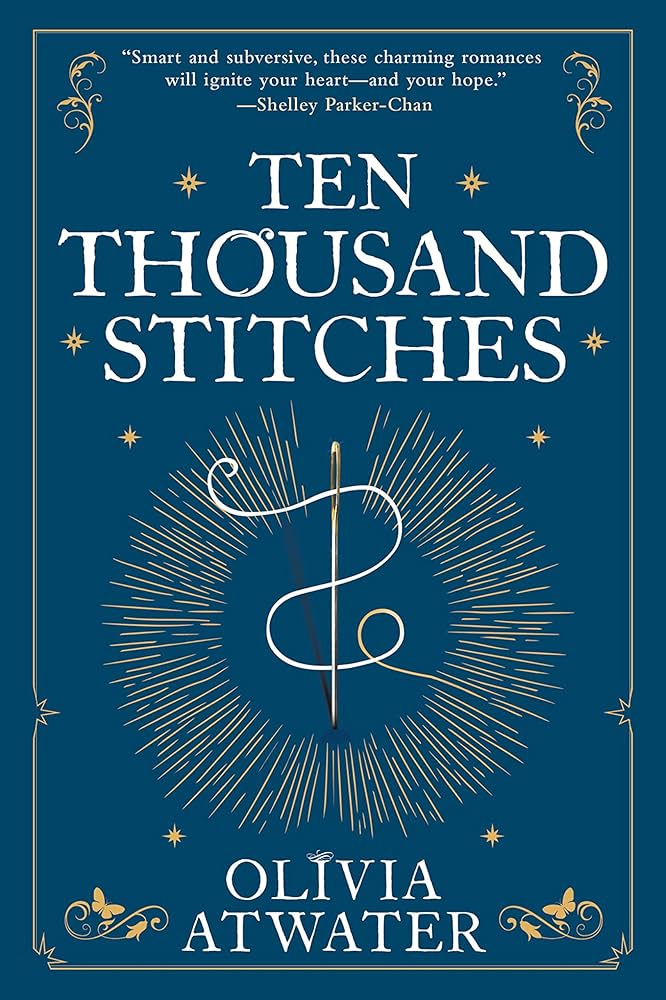
Ten Thousand Stitches by Olivia Atwater. Orbit, 2022 – The Regency Faerie Tales continue with this Cinderella twist that takes a look at who deserves a happily-ever-after. Effie is a housemaid who’s fallen quite unexpectedly in love with the handsome Benedict Ashbrooke, one of the Family she serves. When a faery lord with no understanding of human customs attempts to help her win him over, things definitely do not go as planned.
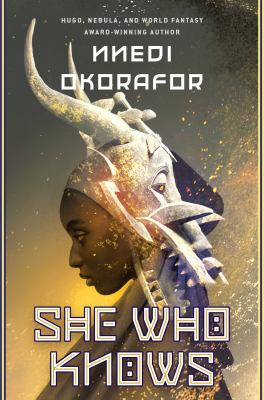
She Who Knows by Nnedi Okorafor. DAW, 2024 – This is a first novella in a newer series exploring the history of the mother Onyesonwu, the main character of Who Fears Death. Najeeba is just 13 when we meet her, but experiencing the Call to journey on the Salt Road that only boys and men are supposed to hear. Najeeba fighting for what she knows is right for herself is the beginning of the ripple that will change her society. This Afrofuturistic science fantasy is utterly absorbing, and I went right on hold for the next book (see below.)
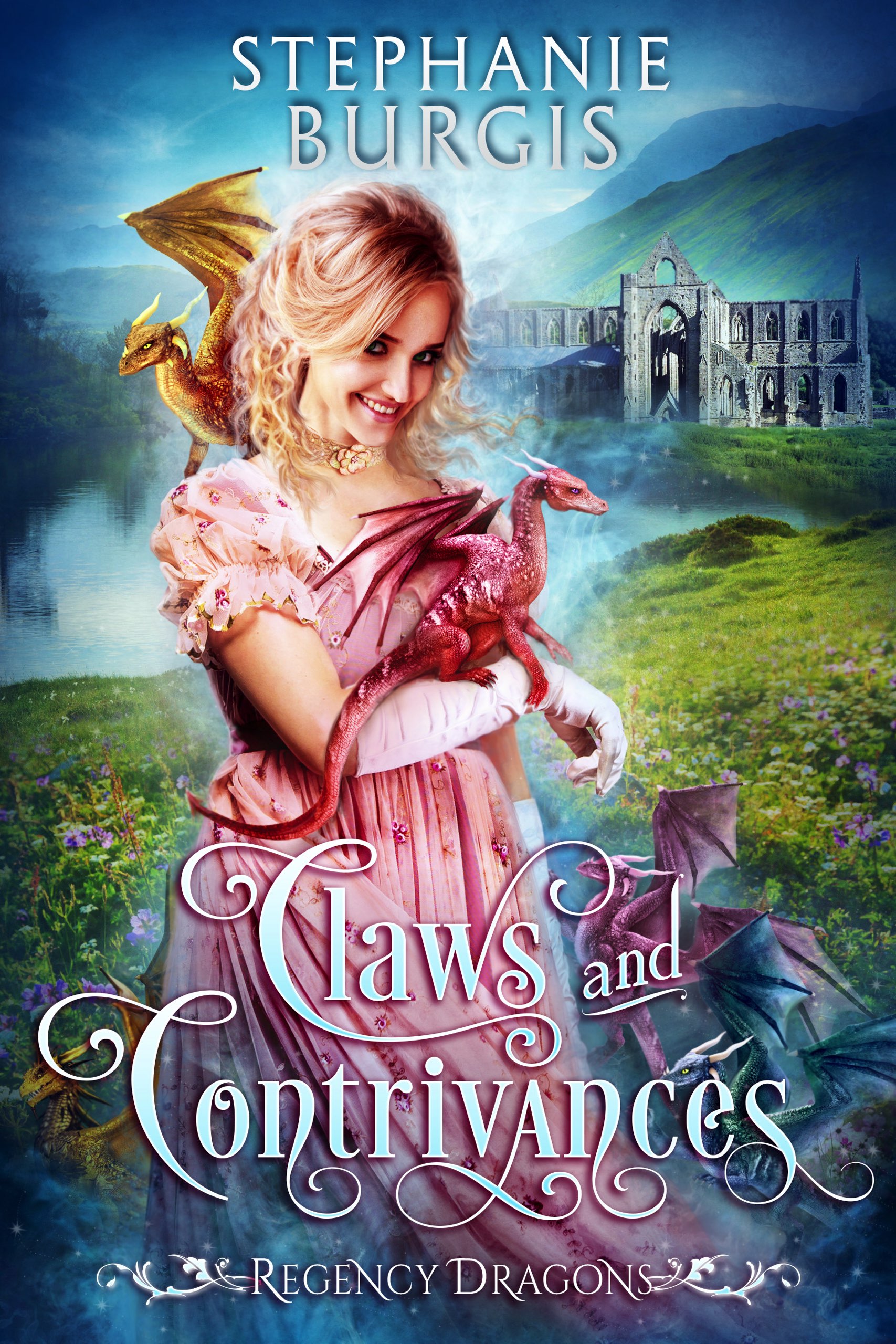
Claws and Contrivances by Stephanie Burris. Read by Emma Newman – Hooray! There’s now an audio version of this! I already love the story, full of romance and small dragons, and especially loved hearing this read aloud, where I could hear the differences between the upper class British accents and the Welsh accents of the servants and townsfolk.
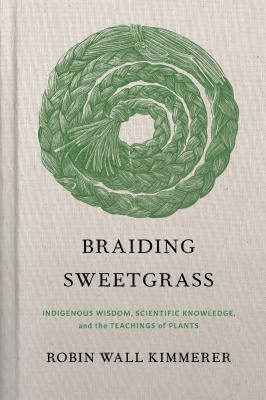
Braiding Sweetgrass by Robin Wall Kimmerer. Read by the author. Milkweed Editions, 2013 – This had been on my mental TBR for years without my realizing just how many years had passed since it came out. Seeing her new book, The Serviceberry: Abundance and Reciprocity in the Natural World, come out last fall triggered me to read this book. Braiding Sweetgrass wanders through seasons and the author’s life as she explores Native attitudes towards nature and contrasts them with the scientific and Western methods she learned in college. Her writing is beautiful and contemplative, reflecting on the beauty of strawberries, maple syrup, harvesting and gifting traditions, reciprocity and more. Her reading on audio is slow enough that if it had been fiction, I would have sped it up a little. However, given the nature of the narrative, I let myself be unhurried and just listen along. I’ll read The Serviceberry just as soon as I work through the half dozen books I have checked out right now.
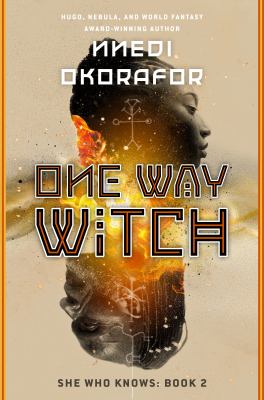
One Way Witch by Nnedi Okorafor. DAW, 2025 – You can read She Who Knows just fine without reading Who Fears Death first – but that’s not the case with the second book in this duology. Now, Najeeba’s daughter is a young adult, and we experience the very end of Onwesonyu’s story and then the aftermath through Najeeba’s eyes. As always, a complex world with deep thoughts in a story told in deceptively straightforward language. Okorafor is an author I keep returning to with good reason.
As always, I’d love to hear your thoughts – what have you been reading lately? Have you read any of these books yourself?
Hello again, dear readers! It has been a while – a lesson for me never to underestimate the chaos of Summer Reading at the library. I’ve been valiantly trying to keep up with these short reviews in the few spare moments, and now that Summer Reading is almost over, I hope to get back to sharing my reading with.
Middle Grade
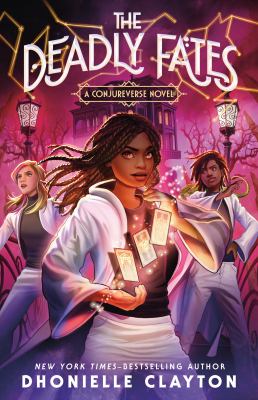
The Deadly Fates. A Conjuror Novel by Dhonielle Clayton. Read by Joniece Abbott-Pratt. Henry Holt, 2025 – I’m still enjoying keeping up with this series – good for magical adventure and for the figuring out life and friendships aspects.
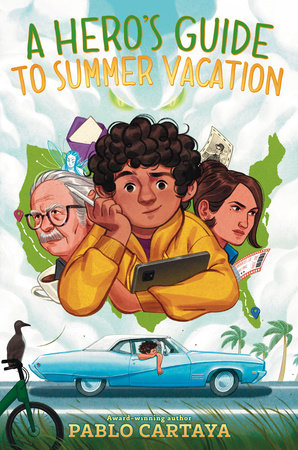
A Hero’s Guide to Summer Vacation by Pablo Cartaya. Read by the author. Kokila, 2025 – Gonzalo has never been a reader or been close to his grandfather, who’s written a best-selling fantasy book series starring a boy also named Gonzalo. Neither Gonzalo nor his mother are pleased when his grandfather announces that he will be driving his own ancient powder-blue convertible from California to Florida for the launch of the last book in the series – but the family road trip will change all of them. I have yet to read a Pablo Cartaya book that didn’t have humor and action tied together with heart and strong family relations, and this one is no exception. Highly recommended.
A Study in Secrets. Last Chance Academy 1 by Debbi Michiko Florence. Read by Mirai. Aladdin, 2025 – 12-year-old Megumi “Meg” Mizuno has been struggling since her mother’s death and her father’s retreat into endless work travel. She isn’t thrilled about being sent to a boarding school – especially one nicknamed “Last Chance Academy” by its students – but it’s infinitely better than living with her cold aunt, so she’s willing to do what it takes to succeed. When a secret treasure hunt is announced, Meg needs to find a way to succeed in this, make and keep friends, and do it all without getting caught and expelled. This was so much fun, while keeping the themes of belong real. I’ll definitely be reading more, and plan to get a copy for my niece.
Rainbow Fair by Diana Ma. Read by Dana Wing Lau. HarperAudio, 2025 – Sophie Mu has always helped out at the Chinese booth at her school’s multicultural Rainbow Fair. But when she – and the school coordinator – finds out that she’s also Muslim – she’s assigned to work with a new student on the Muslim booth instead. This requires a crash course in a culture she doesn’t really know anything about, and puts a lot of strain on her existing friendships. This is a great one for kids interested in friend drama, as well as being a sincere look at intersectionality without needing to use the word. Also, robot bunny hilarity. Recommended by Intisar Khanani, from her Muslim writer’s group.
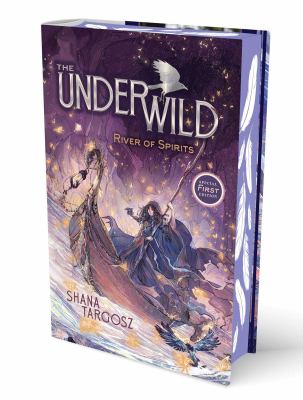
Underwild: River of Spirits by Shana Targosz. Aladdin, 2025 – As Assistant Ferryer to Charon, Senka lives in between the world of the dead and the world of the living, hoping that one day Charon will let her ferry passengers all by herself. But when a living girl chasing the spirit of her dead brother – who also ran away from the ferry – comes by, Senka finds herself drawn into the quest to help her. Senka’s tone is casual and funny, she’s borrowed a cloak with an attitude from Charon, and the adventures are many – but under it all is a heartfelt look at grief.
The AI Incident by J.E. Thomas. Levine Querido, 2025 – Foster kid Malcolm wants a permanent home more than anything, so when the new AI robot at school says he can help, Malcolm is inclined to believe him. But an AI willing to do anything to achieve its own goals might not be as trustworthy as it seems. A winning combination of true feelings and relationship-building with on-the-nose thoughts about AI and hijinks.
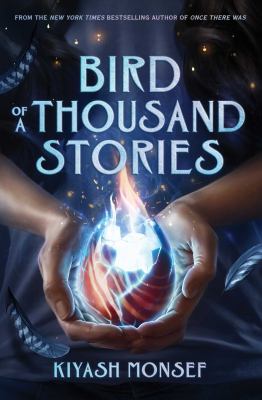
Bird of a Thousand Stories by Kiyash Monsef. Simon & Schuster, 2025 – This is the sequel to Once There Was, which I read on audio last year and really enjoyed. It is about a teen, with no romance, so good crossover appeal. Marjan Dastani is carrying on her father’s work as a veterinarian to magical creatures. She loves the creatures, but she’s led to them by a sinister secret organization who sells them to wealthy clients without regard for the creatures’ happiness. So when Marjan starts getting messages from the universe leading her to something big, she sets out hopping around to the world trying to figure out the puzzle without being tracked either by the Fells or a new and even more destructive person. All while struggling to keeps her friends at home close but not in danger. Among all of this are beautiful thoughts about relationships and the importance of stories and magic to life.
Teen
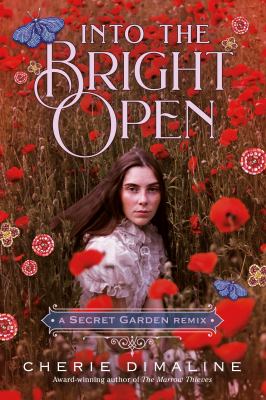
Into the Bright Open: a Secret Garden Remix by Cherie Dimaline. Feiwel & Friends, 2023 – I’ve set an explicit goal to read at least 9 books by Indiginous authors this year. I’d enjoyed both Cherie Dimaline’s The Marrow Thieves and the first several books in the Remixed Classics series, so I was very excited to read this one. In 1901 Ontario, 15-year-old Mary Craven is sent from the city to live with the uncle she’s never met. She told to be wary of the trees and the Indians – but the Metis staffing the house are the friendliest people she’s ever met. She also discovers that she has an invalid cousin, Olive, being kept in the attic by her stepmother. This queer retelling has all the joy of nature of the original Secret Garden without the outdated worship of colonialism.
Adult
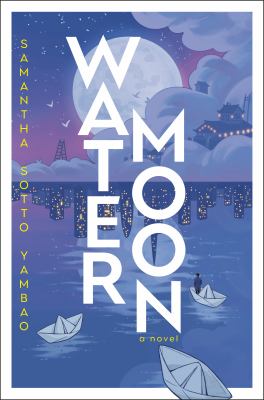
Water Moon by Samantha Sotto Yambao. Del Rey, 2025 – A dreamy story of the owner of a magical pawn shop that buys regrets and the handsome young man who walks in from the mundane world one day. I’m sorry to say that I can’t remember much of it, trying to write about it a couple of months later, but I enjoyed it and the cover does a good job of capturing the mood.
Shadow of a Dead God: A Mennik Thorn Novel by Patrick Samphire. Seven Fathoms Press, 2020 – Mennik Thorn is a mage living in poverty, mostly because he refuses to get involved in the cut-throat politics of the big magic houses in the city. But when he’s accused of murder, he has to go all out to prove his innocence and find the real culprit. This fast-paced, snarky fantasy mystery reminded me a lot of the Vlad Taltos books by Steven Brust.
The River Has Roots by Amal El-Mohtar. Read by Gem Carmella. Tordotcom, 2025 – This gorgeous short book revisits the ballads of murder over love, set in an old English village on the border of Faerie in a world where magic is grammar and conjugated rather than cast. I highly recommend the audiobook, both for Gem Carmella’s narration, and because of the original flute and harp music that the author and her sister play between chapters.
Behind Frenemy Lines by Zen Cho. Bramble, 2025 – Zen Cho continues the smart contemporary romance series she began with The Friend Zone Experiment. Kriya Rajasekar is an attorney whose every painfully embarrassing professional moment has been in front of Charles Goh, so that she views him as a nemesis. She’s horrified when, moving to a new firm with her boss, she’s assigned to share an office with Charles. But when her boss starts openly hitting on her, faking a relationship with Charles seems the only way to keep the boss away. This gets at the heart of how insidious sexual harrassment can be. I also loved Charles, who read as quite spectrumy to me, and whose narration appears in short notes that aren’t even full sentences that perfectly expressed this.
Time of the Cat by Tansy Raynor Roberts. Read by Ciaran Saward. Self-Published, 2023 – The horned Viking helmet on the cover is a joke, but in the world of the book, humans absolutely can time travel, as long as they have a cat companion. The cats are snarky, the adventures are hilarious and mind-bending, all the characters are fans of a now-obscure but much-beloved British TV series with many very different incarnations, and there is a sweet, low-key gay romance. This was just a delight.
Daindreth’s Assassin by Elisabeth Wheatley. Book Goblin Books, 2025 – I read this thanks to my mother, who bought the series in print after enjoying, like so many of us, the Book Goblin video shorts. The plot runs approximately thusly: elder princess Amira, daughter of the king’s witch first wife, has been declared illegitimate and magically bound to her father so he can use her to an assassin. Naturally, he orders her to assassinate the prince who’s supposed to marry her younger sister – but instead, Daindreth. There is lots of drama and blood and demon possession and very slow-burn romance. I keep saying I’ll just read one more of the series and then asking my mother for the next one after that.
The Monsters We Defy by Leslye Penelope. Read by Shayna Small. Redhook, 2022 – It’s summer 1925 in Washington, DC’s “Black Broadway”. Clara Johnson officially works in a printing office, but sometimes helps people talk to spirits on the side, though the spirits’ deals always come with nasty strings. But when more and more people from her neighborhood start going missing, she has to investigate. She teams up with her former circus acrobat roommate, a handsome young jazz musician who has his own history with spirits, and his Pullman Porter friend with secret pickpocket skills to stop what’s going on – and try to placate some unhappy spirits. With a determined heroine, a vivid historical setting, a great cast, and a look at the social and racial issues of the day – so many, of course, still with us – this was very enjoyable. It was recommended by Stephanie Burgis, and I definitely now want to read more of Leslye Penelope’s books.
Let me know in the comments if you’ve read or want to read any of these, and as always, if you have any recommendations for me!
Dear friends, life has been a bit much of late! Both work and home life have been so busy I can scarcely get a thought in edgewise, let alone find time to write. Even as my June reads are piling up on my desk waiting to be reviewed, it’s taken me until now to finish putting together the round-up I started at the beginning of the month. There are still lots of excellent books, and I hope you find some to enjoy as much as I did!
Split Secondby Janae Marks. Quill Tree Books, 2024.
Afia in the Land of Wonders by Mia Araujo. Scholastic, 2025 – This is a re-imagining of Alice in Wonderland set in medieval West Africa with beautiful full-page paintings throughout and a new focus on sibling relationships as Afia thinks of the beloved twin she left behind to have her adventure. I have, alas, never been a fan of Alice. This did not convert me, but I did find it more interesting and I very much enjoyed the art.
A Song for You and I by K. O’Neill. Random House Graphic, 2025 – I was excited for a new graphic novel by K. O’Neill of The Tea Dragon Society! Rowan has been waiting through years of training for a real assignment as a ranger, saving people and nature and riding a flying horse. But her first small solo assignment, taking care of a young shepherd who only wants to play violin, ends in her beautiful horse, Kes, being unable to fly. Rowan is stuck escorting Leone across the country on foot – a journey that leads to self-discovery and an unexpected friendship. I wanted more of the story, but the sentiment is genuine and the art beautiful, cozy, and magical all at the same time.
The Gate, the Girl, and the Dragon by Grace Lin. Little, Brown, 2025 – Another eagerly anticipated book! I preordered this instead of borrowing it from the libary, as Grace Lin is one of my favorite authors. (See Where the Mountain Meets the Moon, Starry River of the Sky,When the Sea Turned to Silver,Year of the Dog and Mulan: Before the Sword.) Jin is a young stone lion who is a living lion in the world of the Gongshi, the guardian spirits who live in special statues, and normally a statue in the human world. He and the other Gongshi are supposed to cross over to our world to help humans – but Jin finds this too boring. It will take a string of things going wrong, trapping him in our world and putting both his world and his new friends in the human world in great danger, for Jin to find the motivation and courage to do something for others. As usual, the larger narrative contains a lot of shorter stories woven into it, as well as Grace’s gorgeous full-color paintings. It would be an excellent choice for a read-aloud.
Teen
Oathbound by Tracy Deonn. Read by Joniece Abbott-Pratt, Andrew Elen Hillary Huber, Tim Paige, and Adenrele Ojo.Simon & Schuster Audio, 2025 – I had just started this at the end of April, and wound up with such strong narrative withdrawal that I had to start it over again immediately as soon as I was done, even though my son was waiting for me to finish the audiobook. I won’t say much about the plot except that, as happened to me before with Maggie Stiefvater’s Raven Cycle, I went in expecting a trilogy, and there is definitely more story coming. I’m addicted, y’all.
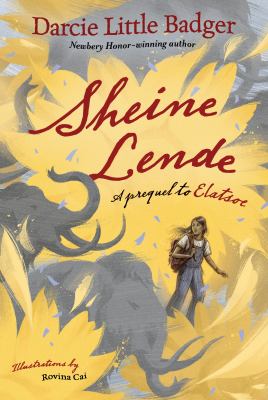
Sheine Lende by Darcie Little Badger. Read by Kinsale Drake.Levine Querido/Recorded Books, 2024 – I’m glad I circled back to this from last year! Somehow, I’d been expecting a story set in the distant past – but I am old enough that the 70s seems not so far away. Regardless, a lovely and satisfying story.
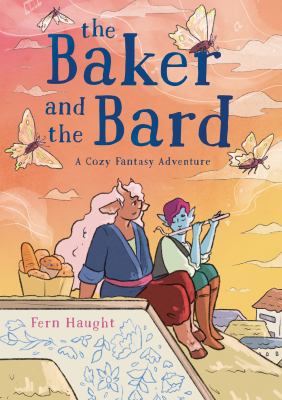
The Baker and the Bard by Fern Haught. Feiwel & Friends, 2024 – A sweet and cozy fantasy graphic novel in which a baker and her nonbinary bard friend travel to find special mushrooms and need to help the village near the forest where they grow. I wanted a more involved story, but it is good for the short story-amount of content it has. Our teen librarian reports that it was the most popular teen graphic novel of 2024 at our library. I’d add that while there is a little bit of romance, there’s nothing inappropriate for middle schoolers.
Adult
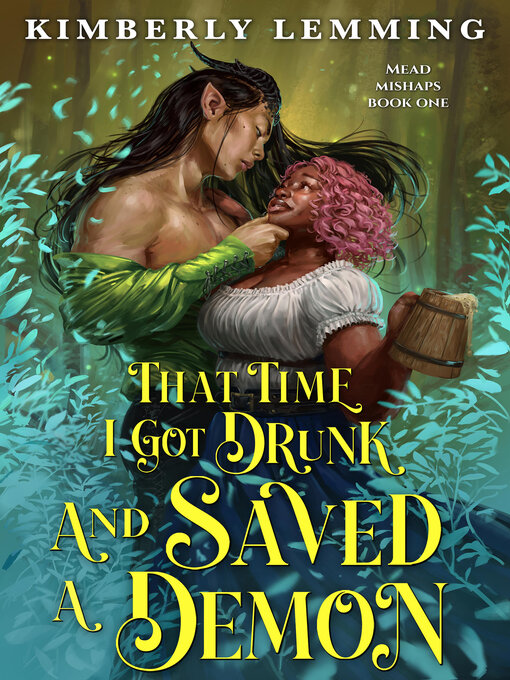
That Time I Got Drunk and Saved a Demon by Kimberly Lemmon. Orbit, 2024 – I saw this on display when I went to a long-awaited branch reopening in my home town and had to check it out. It is very silly fun, with lots of drinking and some very spicy scenes. I really appreciated that the world has lots of people of different skin colors and body shapes, while fighting against prejudice is prejudice against non-humans.
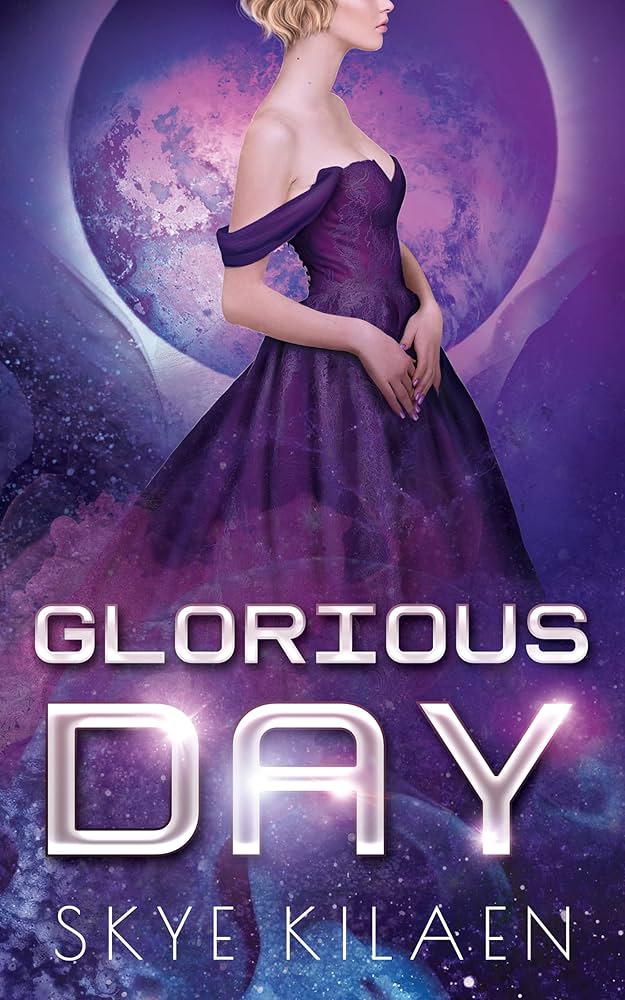
Glorious Day by Skye Kilaen. 2022 – A sweet F/F sci-fi romance novella that I bought on Stephanie Burgis’s recommendation. This one is high on longing and low on spice and worked perfectly.
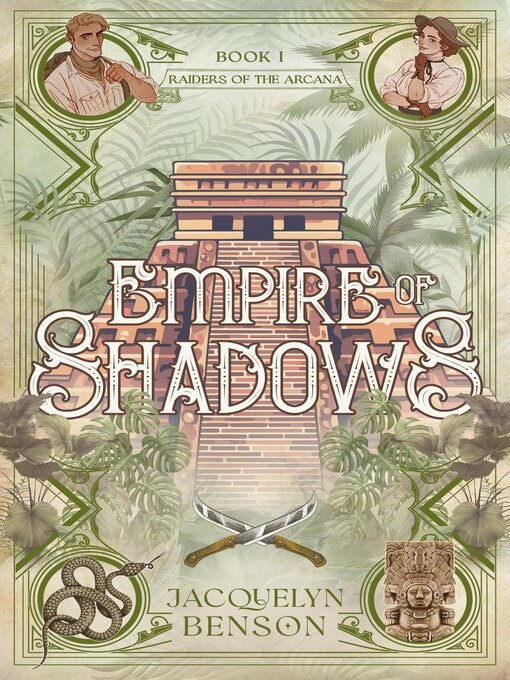
Empire of Shadows by Jacquelyn Benson. Crimson Fox Publishing, 2024 – I got this one on sale, as the author is a member of the Lamplighter’s Guild, but this and the sequel are available on Libby in my library system, at least. Ellie studied to be an anthropologist, but being a woman in Victorian England, she’s instead working in archives. But when she’s fired from even that job, she finds herself with a pre-Columbian map and sets out to find the hidden city it portrays – with the help of a very annoying, very handsome American, and chased by villains who want the magical power this hidden city is supposed to contain. Lots of adventure, sparkling dialogue, and sizzling (but only slightly improper) romance. The sequel is in my line-up to read soon!
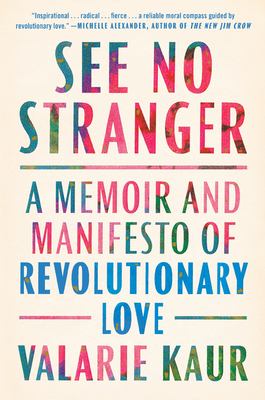
See No Stranger by Valarie Kaur. One World, 2020 – this memoir of a Sikh social justice lawyer and activist came strongly recommended by the Muslim chaplain who was preaching at my UU church. It starts out with 9/11, as Sikh men around America were suddenly under attack for wearing turbans like Osama bin Laden, and follows her search for understanding and healing, looking for how we can love those who show hate to us. Deeply moving and powerfull.
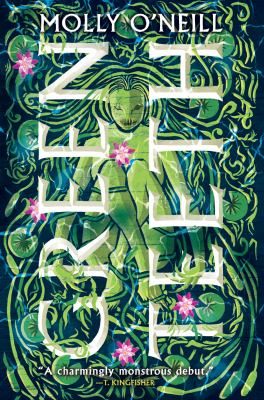
Greenteeth by Molly O’Neill. Read by Catrin Walker-Booth. Orbit, 2025 – In a sleepy pond in a forgotten village lives Jenny Greenteeth – one of the last of the Jenny Greenteeth that used to live in ponds around England. She’s lived there for centuries, collecting odd treasures and mostly not eating villagers anymore. But when a strange preacher tries to drown the village’s previously-loved witch, Jenny saves her. This leads both of them down a path of adventure, as Jenny decides it’s worth leaving her pond to help the witch drive out the preacher and regain her family. This is cozy with an edge and some unexpected twists.
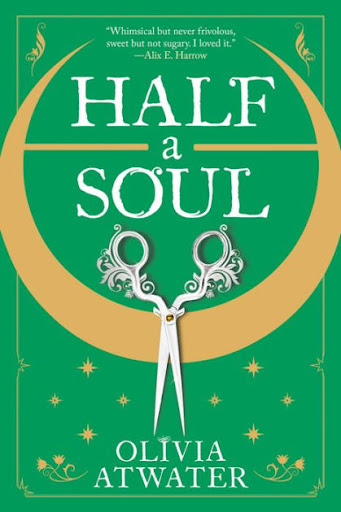
Half a Soul by Olivia Atwater. Orbit, 2022 – Dora Ettings has been unable to feel or express emotions properly ever since a fairy lord stole half her soul when she was a child. Naturally, this means that her marriage prospects are very low indeed. She travels to London for the Season with her cousin mostly to keep her lovely cousin company – but instead of staying in the background as she prefers, finds herself pulled into the circle of the Lord Sorcier, who is too upset by the injustices he sees in the world to worry about following the proper rules of society. There is a lot of focus on the horror of the workhouses of the period, a compelling, low heat romance, and the very interesting potential of reading the half of Dora in the real world as on the spectrum, learning to love herself as she is without longing for the half of her soul stuck in fairy.
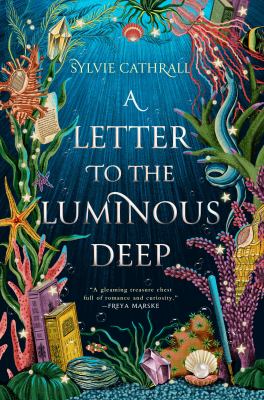
A Letter to the Luminous Deep by Sylvie Cathrall. Read by Claire Morgan, Joshua Riley, Justin Avoth, and Kit Griffiths.Orbit, 2024 – This epistalatory novel is set in a probably-future world where there are no longer continents and everyone lives in something either floating or submerged. A year ago, the reclusive E. and her friend, Scholar Henery Clel, disappeared at the same time that the legendary underwater house that E.’s architect mother designed exploded. Now E.’s sister Sophy is exchanging letters with Henery’s brother Vyerin, both getting to know each other and exploring the development of the deep relationship that developed between E. and Henery, also mostly by letters. This is a world where academia is extremely important. I’ll note that while it’s blurbed by Freya Marske and there is romance, both straight and gay, it is all low heat. I found the story beautifully absorbing, and got on hold for the sequel, A Letter from the Lonesome Shore, immediately, though it’s popular enough that I expect I’ll still have to wait a while. I also recommend the audiobook, with each of the main characters read by a different narrator.
Here are two moving stories of middle school girls blindsided by betrayals from friends and sometimes family, each with a slight speculative twist – just enough to add interest, but not so much that it would turn off readers who don’t think they like fantasy.
A Field Guide to Broken Promises by Leah Stecher
Bloomsbury, 2025
ISBN 9781547613069
Review copy kindly provided by the publisher.
Evie Steinberg has been moving her whole life as her mother chases a career in broadcast journalism. Evie is the mature older child, never putting up a fuss, helping with the packing and with soothing her more volatile younger sister, Talia. All this moving means that her only long-term friend has been Dara, whom she sees every summer at camp, and who aids her in her hunt for any cryptids that might be hiding in the woods near the camp. Then the family moves to California for her mom’s dream job – with Dad staying behind in Boise for another chance at spotting the famous lake cryptid there, a cryptid he and Evie saw together but weren’t able to photograph. Evie promises her dad that she’ll make sure everything is perfect, and she means it. If this is a place they’re going to stay for good, Evie is determined that seventh grade will be the year where she makes real friends.
When she spots Dara in her first class, Evie is elated – until Dara denies knowing her and makes fun of her Bigfoot t-shirt. The dream turns into a nightmare as the popular and polished Dara convinces what seems to be the whole school into shunning Evie. Evie had also been excited to be in an area with a large Jewish population for the first time ever, but this also turns painful as kids show up every Monday with swag from B’nai Mitzvot parties that Evie is never invited to. The only kids who will hang out with Evie, Hannah and Charlie, also used to be friends with Dara until she changed. But Evie’s background in cryptozoology leads her to a new theory – one that might explain what happened to the Dara who was her best friend. With Hannah and Charlie’s help, a real discovery seems possible – one that would bring back both Dara and her dad.
Evie’s struggles living up to her family’s and her own very high expectations are very real and heartfelt, and spoke to my own responsible oldest child heart. I cried more than once while reading this. As a mostly fantasy reader, I was really hoping for real cryptids, but while Evie definitely believes in them, we as readers never see any of them. So, this is a great choice for kids who want stories of changing middle school friendships and family relationships, with just a hint of the fantastical. For those who want more about cryptids, try It Came from the Trees by Ally Russell or, for slightly younger readers, The Unicorn Rescue Society series by Adam Gidwitz and Hatem Aly, the first book of which opens, as this one does, with a search for the Jersey Devil.
A Split Second by Janae Marks
Quill Tree Books, 2024
ISBN 9780063212367
Read from a library copy.
Newly 12-year-old Elise is having the birthday of her life – fall carnival and then a sleepover with her two best friends, Melinda and Ivy. Friendship has been tough since Covid – her friendship with her first best friend, Cora, faded during Covid. Her post-Covid best friend was Amelia, who moved away at the end of last school year. Melinda and Ivy are newer friends, but they are having a great time together, and Elise is happy. At the party, her mother brings her a tiny gift bag that was left on the porch with a locket inside but no clue as to who it was from. And when Elise wakes up in the morning, it’s a Monday in April. She has no memory of the past six months, and neither Melinda nor Ivy will talk to her anymore. She doesn’t know what has happened – but Cora seems happy to rekindle their friendship and offers to help Elise figure out what’s going on. Together, they research in the library and also work on the photo essays for photography club that the Elise she can’t remember worked on during the six months she skipped.
This is an odd kind of time travel book, in that the time travel definitely happens, but Elise apparently lived through the skipped time, just with no memories of it. Even this jump – short by most time travel standards – is quite disorienting, as Elise not only has to puzzle out why her friendship triad fell apart, but also do homework she doesn’t have the background for and finds herself in a club she wasn’t part of before the skip. Still, the heart of the story is Elise figuring out how to deal with her suddenly rearranged friendship scene – who she is without Melinda and Ivy and what it’s worth giving up to get back in their good graces. Cora is keeping her own secrets, which are explored in the second half of the book. Along the way, there are multiple trips to the local book and magic stores and learning about Elise’s interest in books and Cora’s many crafty interests, from crochet to making book nooks. There’s also a sneaky shout-out to Zoe’s signature cupcake from From the Desk of Zoe Washington. This is good twist on the perenially popular middle school friendship story.
Interestingly, the other short-term time travel middle grade novel that comes to mind is Leah Stecher’s debut novel, The Things We Miss. I also reviewed a trio of middle grade time travel books back in 2023.
I finished 14 books in April and reviewed two of them. Will events or my brain quiet down enough that I can do more reviewing this month? I’d say that time will tell, but also, it took me over a week to finish the round-up. At any rate, I read a lot of good books and hope you find something to add to your TBR from my list.
Middle Grade
Version 1.0.0
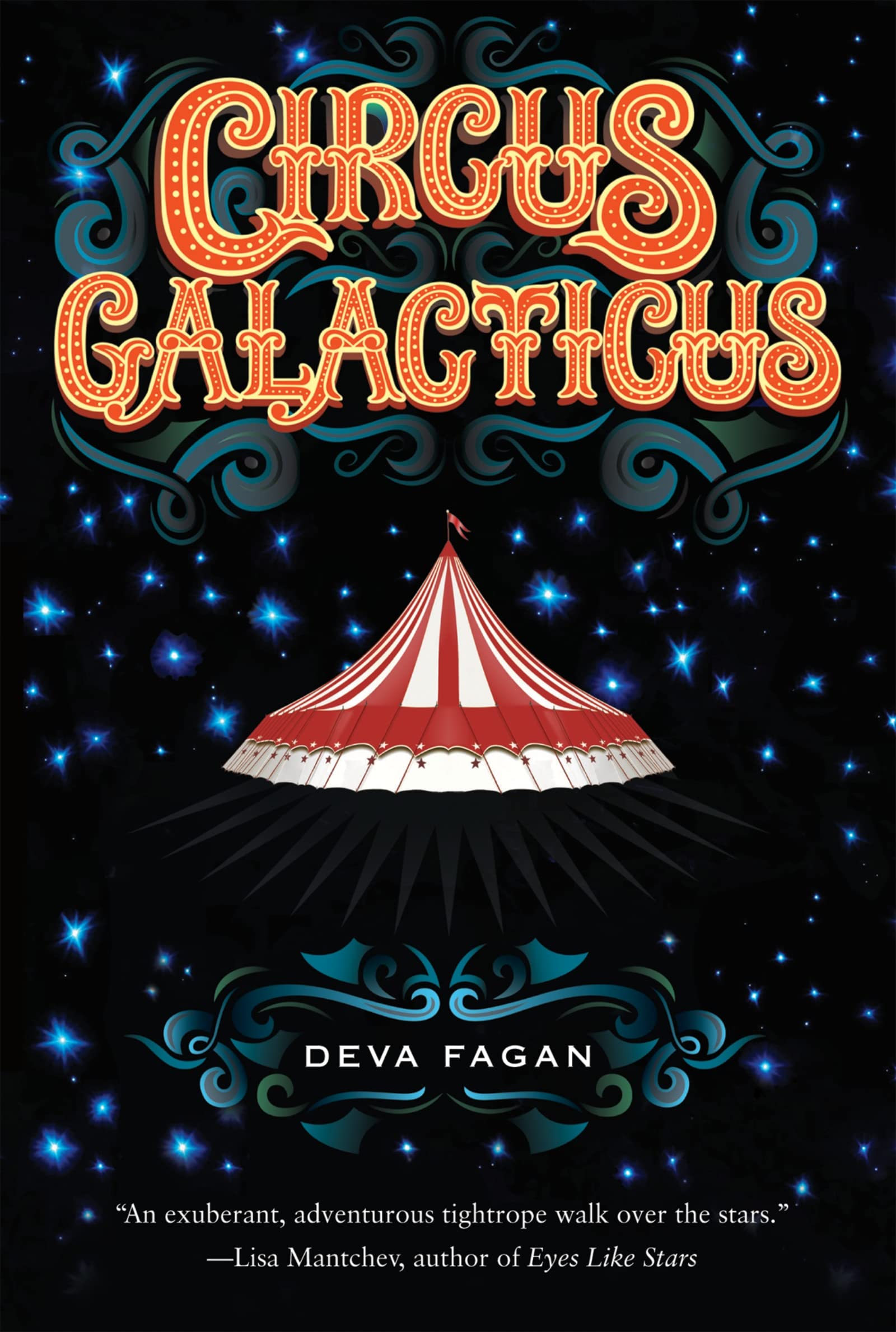
Circus Galacticus by Deva Fagan. HMH Books for Young Readers, 2011 – I circled back to an older Deva Fagan book, since I’ve loved herrecentbooks. Taiwanese-American orphan Trix is bullied at her private boarding school, so she jumps at a chance to join an inter-galactic circus, where she learns a lot about herself, her parents, and how to be a friend while trying to escape another alien chasing her. I enjoyed this and hope to pass it on to a gymnastics-loving kid I know, though the white author writing an Asian character does date it to that time period when we all realized we needed more diverse books but hadn’t yet thought as much about having the diverse authors tell those stories themselves.
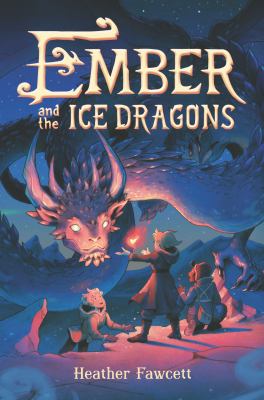
Ember and the Ice Dragons by Heather Fawcett. Read by Fiona Hardingham. Storytide, 2019 – My daughter and I listened to this, as I hadn’t yet read this Heather Fawcett book and thought she might enjoy the dragons. I enjoyed this story of an orphaned fire dragon turned into a girl, who then tries to work on behalf of the not-yet-endangered ice dragons in Antarctica. My daughter, unfortunately, did not enjoy it as much.
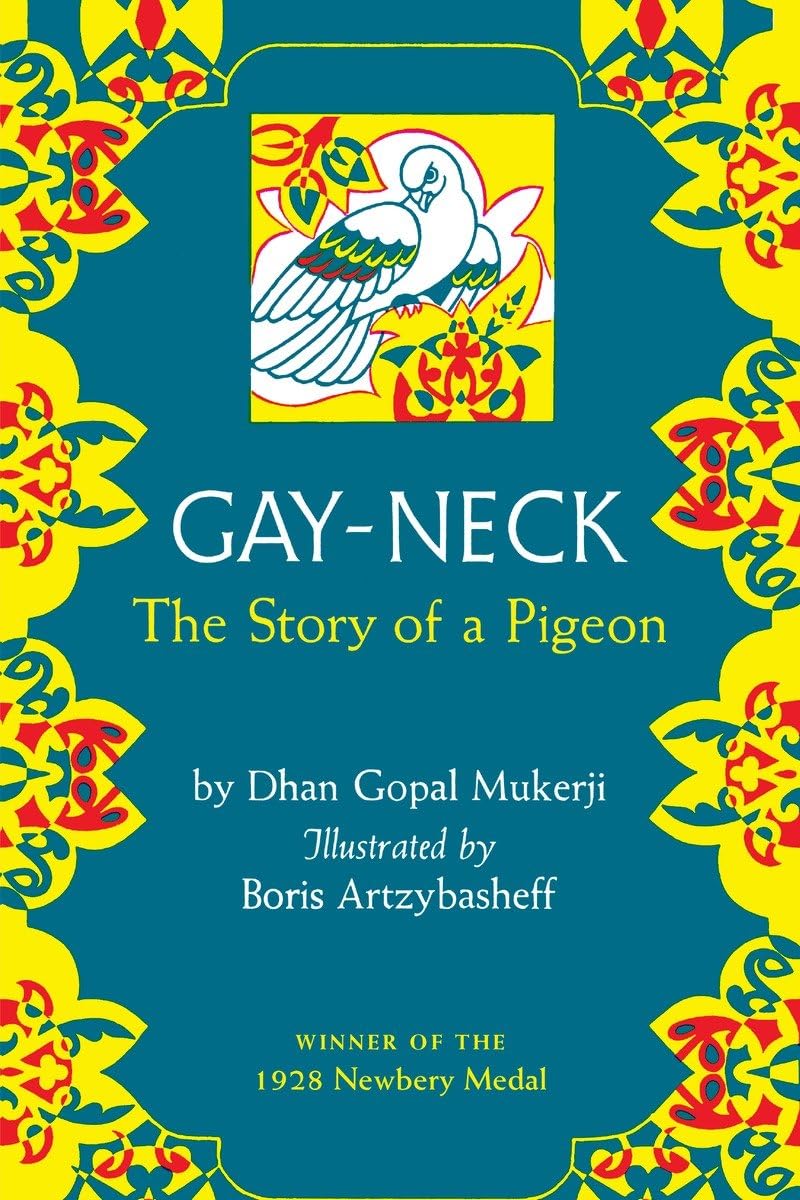
Gay-Neck: the Story of a Pigeon by Dhan Gopal Mukerji. Dutton, 1927 – More catching up with older books, this one the first Newbery Award-winning book by a South Asian author. I’d always just assumed that no one really read it any more, but apparently people still do. It uses quite formal language and takes frequent breaks from the action to talk about the beauty of different things and the importance of prayer and belief in God. I’m not usually one who needs an action-oriented book, but this still took quite a while to win me over. Also, note for any tender-hearted readers that several pigeons die bloody deaths.
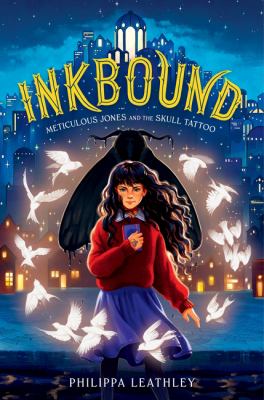
Meticulous Jones and the skull tattoo. Inkbound 1 by Philippa Leathley ; illustrations by Brie Schmida. HarperCollins, 2025 – in a world where children are given magical tattoos at age 10 to show their future careers, Meticulous “Metty” Jones was given one of a skull, so that she believes she’ll be a murderer and has been hidden away by her father. Only when he disappears and she goes to find does she learn that it might mean something very different indeed. This is a fun series opener.
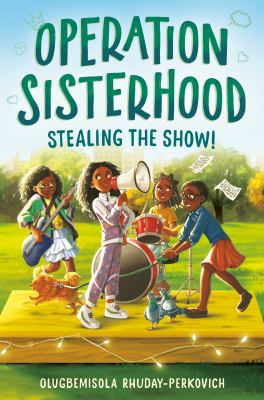
Operation Sisterhood: Stealing the Show! by Olugbemisola Rhuday-Perkovich. Crown Books for Young Readers, 2025. I really enjoyed the first Operation Sisterhood,so I was excited to sequel. It stars Sunday, stepsister and roommate of Bo, the first book’s POV character. Sunday is constantly full of ideas but has trouble following through – will she be able to put on the big musical she’s promised, or will things fall apart on her? I was quite nervous for Sunday, even as I love the NYC setting with its strong community and Black history focus.
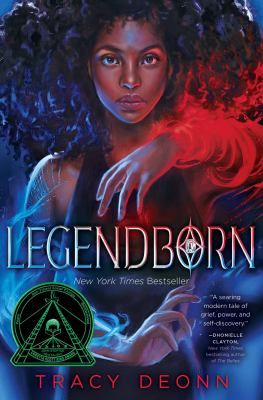
Legendborn by Tracy Deonn. Read by Joniece Abbott-Pratt. Simon & Schuster, 2020 – I’m relistening to the series as the third book just came out. I decided to purchase the whole series on audio, as it’s just that good.
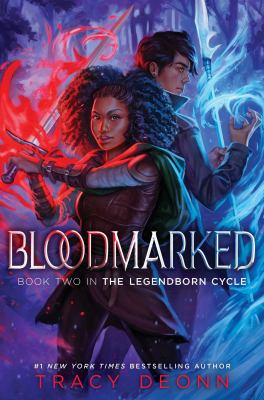
Bloodmarked by Tracy Deonn. Read by Joniece Abbott-Pratt. Simon & Schuster, 2022 – I don’t relisten/reread often these days, but I’m so glad I did – there were just so many details that’s I’d forgotten, in addition to the things that look different when you know what’s coming. Also, this is one of the rare series where I’m okay with the love triangle, I think because Bree spends a minimal amount of time agonizing over that aspect, and more just figuring out her relationship with the boy she’s with, when she can get a chance with everything else going on. And I genuinely like both the love interests and am interested their relationship with each other as well as Bree.
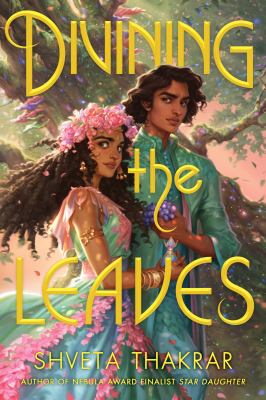
Divining the Leaves by Shveta Thakrar. HarperCollins, 2025 – I checked this book out based solely on the cover. Two Indian-American teens, Ridhi and Nilesh, haven’t been friendly in years. Ridhi’s been a social reject based on her fairy-like fashion sense and open belief in magic, spending her free time going to the forest to beg the yakshas to take her to their magical kingdom. Nilesh was the perfect popular rich boy – until his parents’ marriage fell apart and he ends up staying at Ridhi’s place. But when both of them find their way into the magical forest, neither of them will get quite what they expect. I was expecting a romance between the two based on the cover, but no. The ending was still pretty satisfying, though overall I didn’t love this as much as I wanted to.
Adult
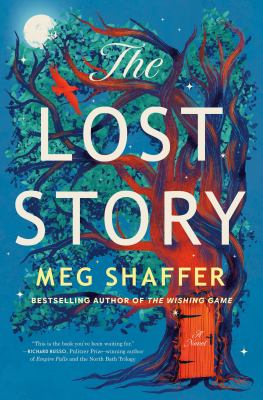
The Lost Story by Meg Shaffer. Ballantine Books, 2024. – I really want to just do a full review of this, a story of adults who travelled to a portal realm as teens and are now trying to find their way back 15 years later- but one of them doesn’t remember he was there. One of them has made a career of searching for missing girls and women, so the story begins in earnest as a young woman desperate to find the sister who vanished when she was a small child tracks him down and asks for help. Full of longing, the power of family and friends to heal trauma, and the impossibility of choice.
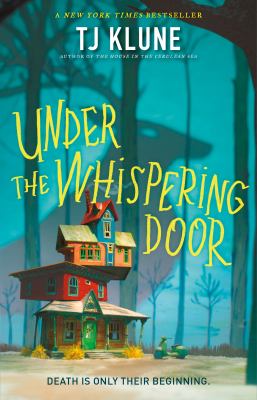
Under the Whispering Door by TJ Klune. Macmillan, 2021 – Reread for the ESL book club I help run at the library. They mostly don’t like fantasy, but I thought they’d still enjoy this one, and so far they are. It really is luminous.
The Crescent Moon Tearoom by Stacy Sivinski. Read by Nikki Massoud. Simon & Schuster Audio, 2024 – I put holds on a couple of cozy fantasy books, only to have them come in partway through my relistening to the Legendborn Cycle. Reader, this was just bad timing. There is nothing to ruin a beautiful cozy read like wanting nothing more than to get back to your intense series. This book is about three orphaned adult triplets who run a fortune-telling cafe while trying to overcome the shadowy curse on them. The only real issue I had with it is that the author believed that the word “threshold” is synonymous with “doorway” and used only “threshold” every time she meant “doorway” or “doorframe.” Since I know that the threshold is just the bottom part of the doorway, this led to some awkward mental images as characters were described as walking through thresholds or leaning their heads against thresholds.
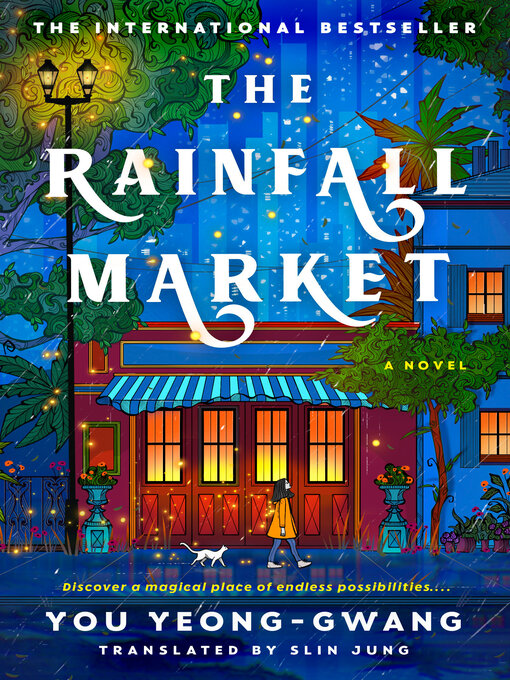
The Rainfall Market by You Yeong-Gwang. Translated by Slin Jung. Read by Rosa Escoda. Ace/Penguin Audio, 2025 – This is a new translation of a Korean bestseller, about a girl who believes that if she gets a coveted ticket to the magical Rainfall Market, she will be able to trade in her sad life for a new and better one. It was, I thought, a good premise, but she never quite came alive to me as a character and every stop on her journey was planned out in advance for her, even when she thought she was making her own decisions, so that while I finished it, I did not love it.
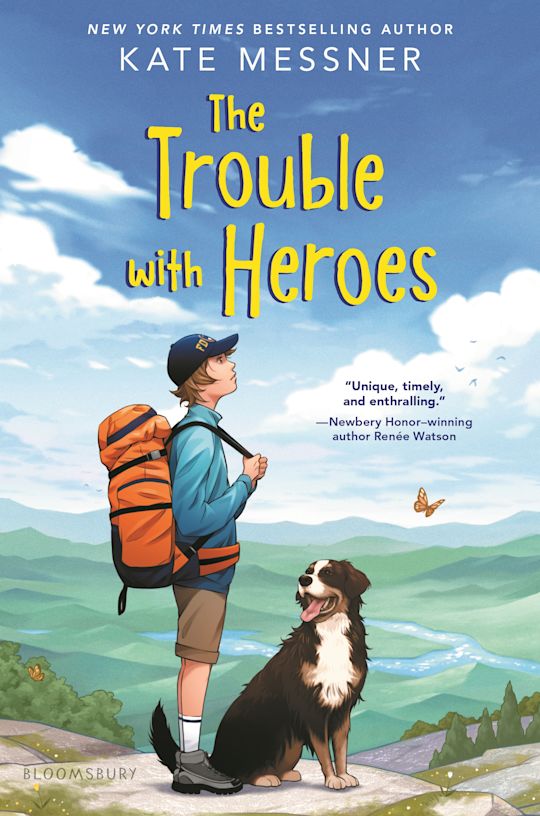
Here’s a moving story in verse that includes mountains, blisters, many varieties of chocolate-chip cookies, and finding the space for the main character to reevaluate and come to terms with his deceased first responder father as the pure hero that other people see him as and the more complicated person he was in real life. I picked up this review copy because I’d really enjoyed the author’s The Seventh Wish, and I was glad I did.
The Trouble with Heroes by Kate Messner
Bloomsbury, 2025
ISBN 9781547616398
Review copy kindly provided by the publisher.
You wouldn’t know it from the cover, but Finn does not like hiking or dogs. He is, though, in a bit of a pickle. The year is 2022, and he’s been having trouble with his temper since his first responder father died away from him and his mother in New York City. Everyone wants to tell him that his father was a hero, but Finn would really rather his father had stayed home. Meanwhile, he’s failing a couple of classes due to incomplete work, and the story opens with a newspaper article about a local kid (him) kicking over the gravestone of a beloved local hiker and Adirondack 46ers corresponing secretary. The daughter of the deceased requests that he hike all 46 of the Adirondack peaks over the summer as repayment, because she thinks that Finn needs help more than punishment and her mother believed in the power of the mountains to heal. Furthermore, he needs to bring her mother’s dog with him, as she’d been trying to rehike them all with the dog when she died.
Finn is not happy about this, but his mother assures him that he doesn’t have a choice. The story is written as the poetry journal project he failed to turn in before the end of the school year, and the early poems are about as good as you’d expect from a cranky and uncooperative middle schooler. The hikes are hard, the backpack is too heavy for him, the dog is too slobbery, and he’s determined not to respond to the overly friendly guides (mostly retirees) who’ve volunteered to help him. Slowly, slowly, he reflects on his complicated relationship with his father, a father he loved but who was rarely home and was unhappy with Finn’s too-feminine love of baking when he was home. Slowly, his strength grows, he develops cookie recipes to match each day’s hike, his poetry improves, and he is able to let go of his pain enough to learn more about his father. This also allows his relationship with his mother and grandmother to grow. And while I love all these aspects, there are enough falls in the mud, rainstorms, close calls, and goofy dog antics to make this a very entertaining book to read, along with the occasional tears.
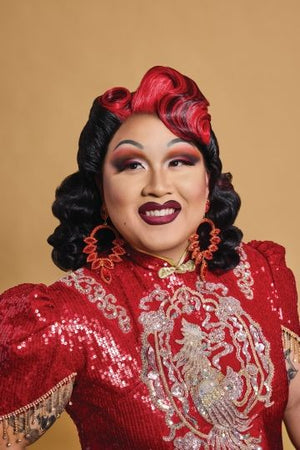
When I got an email asking if I’d like to take a look at a middle grade book from a founding Drag Queen Story Hour Queen and Asian-American, the answer was an enthusiastic yes! This is a sparkling and heartwarming story set in the heat and humidity of a Georgia summer, and one you won’t want to miss.
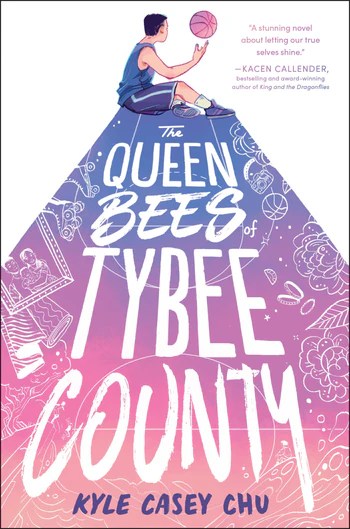
The Queen Bees of Tybee County by Kyle Casey Chu
Quill Tree Books, 2025
ISBN 9780063326958
Read from a digital galley kindly provided by the publisher.
Rising 8th grader Derrick Chan has had to work hard to be noticed on his basketball team, and is looking forward to going to basketball camp this summer, even though this will be his first summer without his best friend JJ for as long as they’ve been friends. His plans are upended when his father announces that he’s got an intense construction job away from home. Since Derrick’s mother is dead, Derrick will have to spend the summer with his grandmother Claudia in rural Georgia, whom he doesn’t remember ever spending time with. He’s expecting to be very bored, apart from some pickup basketball games with local boys.
It turns out that Derrick’s assumptions are far from the mark. Grandma Claudia first wows him with her loud music and delicious cooking, which ranges from traditional Chinese to guacamole and pancakes. Even though she’s officially retired, she’s still making a few dresses for the local pageant, including one in bold purple with bright fabric poppies that catches Derrick’s eyes. Even though the girl Claudia is making it for, Ro, is more interested in roller derby than the pageant, Derrick soon strikes up a friendship with her and her best friend Giles, a bowtie-wearing photographer. And it doesn’t take much convincing for Derrick to step in as a sub for the dance routines in the town pageant – surely it will help his basketball footwork, too!
But even as he’s deciding that pageant-loving country Derrick and basketball-playing city Derrick need to stay separate, he feels a pull not to give up either side – and his attempts to keep his selves separate start alienating those around him. His journey is bumpy and ultimately triumphant – I was so rooting for him to find his way, and am really looking forward to the next book in the duology.
KYLE CASEY CHU (AKA Panda Dulce) is a San Franciscan Author, Filmmaker and one of the founding queens of Drag Story Hour. In 2022, far-right extremists stormed her Drag Story Hour to silence her. She is now leveraging her global platform to tell even gayer stories. Chu’s writing has received awards and recognition from Sundance, SFFILM, the San Francisco Arts Commission, the California Arts Council, Lambda Literary and more. In 2023, she served alongside Drag Story Hour as Grand Marshall of San Francisco’s Pride festivities. Her debut two-novel middle grade series, “The Queen Bees of Tybee County” (HarperCollins, 2025) was optioned by Lambur Productions into a UK episodic.
Interview with Kyle Casey Chu
Courtesy of Books Forward
You have made quite the impact in the book industry with your work as a founding queen of Drag Story Hour. Have you always wanted to be a writer yourself?
Short answer: Yes! One day, as a 7-year-old in summer school, we were tasked with writing a children’s book. That afternoon, I ended up writing and illustrating five books. Come seventh grade, I wrote a hundred-something-page book: “Brother’s Ethnicity,” a vaguely plotless fantasy adventure novel about four best friends who embark on a cross-country road trip together. Looking back, I realize writing this helped me process the crushy-crush feelings I was developing toward one of my closest friends. Oop! came out to my friend group shortly after completing the book.
Writing continues to be cathartic for me in this way, allowing me to safely unpack and process my internal world, no matter how intimidating, through the safety of scenes and hypotheticals on an open page. It reminds me of what I am capable of. I want kids to access a similar sense of satisfaction and empowerment through reading and writing.
Your protagonist’s journey is inspired in part by your own personal journey. When did you know you wanted to be a drag queen?
Often as a kid, when adults asked me, “What do I want to be when I grow up?” I had at least 17 answers. At certain points, I wanted to be a detective, a figure skater, a writer, a teacher, an actor, a musician or a “face painter,” which I now, of course, interpret as a pull toward drag.
Much like writing, drag encourages you to be and experience all of these things — to imagine outwardly and expansively. As a drag queen, you are at once expected to be a makeup artist, a dancer, a comedian, an actress, a hostess. You can be a figure skater for the night, or a noir detective, until you whirl off a coat at the exact right moment to reveal a show-stopping gown.
People used to tell me I was “a handful” and that I wanted to be too many things. It wasn’t until discovering drag in middle school that I realized the art form could contain all of these wants and more. That in fact, what I wanted, was just enough.
Why did you decide to pick Georgia as the setting?
There’s a couple of reasons (2).
Small town queers deserve ALL of the love!
There’s this pervasive trope in LGBTQ+ media that queer and trans kids living in small towns have to be positively aching to escape. That they are all yearning to turn 18 so they can move away and find true community and acceptance in big, queer metropolises. A real Dorothy mindset. And while I’m sure this is absolutely true for many, it’s not everyone’s experience. And it actually contradicts some of the research I conducted for this book.
Many of the Southern Queer and Trans middle graders I interviewed spoke fondly of their hometowns – of the dripping humidity, the church gatherings and cookouts, and all of the friendships and reference points they’ve cultivated across a lifespan. Some even expressed wanting to stay in their hometowns, and brimmed with love for the lives they’ve built. This was an important learning and counterpoint for me, as a new author whose main point of reference for the South is media. I wanted to touch on this, so I did my best to include the details of these interviewees’ upbringings into Derrick’s story to do these perspectives justice.
As a side note, I’ve found that queer and trans people living outside of major cities are some of the fiercest among us. They organize that much harder, they picket that much louder, and need to be that much more determined to drill their stakes into the earth to proclaim their spaces and their right to thrive. I have such deep respect for that, and hope it comes through in the book.
I’m a nerd who wanted to learn more about Southern pageant culture!
Doing drag during my teens and 20s, many of the queens I met in San Francisco, Los Angeles and New York City regarded Southern drag as an entirely different drag tradition.
I wanted to know why.
I chose Georgia specifically because Atlanta is commonly regarded as one of the South’s largest queer metropolises. Doing research for this book helped me better appreciate pageant culture, a tradition that focuses more on jaw-dropping regalia — high-stacked wigs, dripping drop-earrings and resplendent gowns — as opposed to the more edgy experimentation and genre-bending performances I was used to, coming from San Francisco.
I also learned how the pageant model is a bedrock for so much of the drag we consume today. For instance, as much as RuPaul’s Drag Race fans tease contestants for being “Pageant Queens,” the show is structured like a pageant!
And let me tell you, I’ve helped my drag sisters train for pageants, and it is NO JOKE. Designing, sewing, tailoring and stoning a host of looks, readying time-constrained talent performances, prepping for Q&As — both silly and deep, intimate questions. The process really forces you to reflect and be honest about who you are and present your best self. It challenges you. At their worst, they can reinforce harmful thinking, but at their best, they can help you better understand who you are, what you believe in and how you want to impact the world. I thought this was a great structure for Derrick to question and explore who he is and what he wanted.
What inspired you to share this story, particularly now?
Queer and trans joy subverts the media’s standard formula and approach to our stories and who we are. Today, LGBTQ+ youth are phoning crisis hotlines in record numbers. Trans kids are being banned from competitive sports despite comprising negligible percentages of youth athlete populations. LGBTQ+ books have been purged from shelves and mischaracterized as overtly sexual content, and LGBTQ+ resources have been expelled from government websites.
The media’s blueprint to approach LGBTQ+ stories is through the lens of trauma, a real impossible-struggle-to-triumph arc. There’s good reason for this, for there’s a lot that we’re up against. It is not enough to live like this, starting on our back foot, always responding to the latest terror. We must also imagine the futures we want and dance toward them.
This is what I hope to put forth in “The Queen Bees of Tybee County.” It is a joyous story about a fish-out-of-water who boldly proclaims who he is, and is met with support that overwhelms any discouragement. Not only is this story, and the world it introduces true, and quite possible, but I think it’s the type of tale we all need right now.
How has your background as an educator and in social work informed your storytelling?
My book draws on a lot of concepts I learned in social work school that wish I’d learned earlier on. Ironically, many queer stories out there still operate on binary terms — having to be one or the other, to choose this identity or that. But queer imaginations are more creative and expansive than that. We have to be. This tale shows us that we don’t always have to choose between our differing parts. That we can integrate our masculine, feminine and androgynous qualities, or our interests in sports and drag, as equal and essential parts that make us whole and unique.
What do you hope your readers can learn from your book that readers and industry critics alike have acclaimed for its authenticity?
Like me, my book’s protagonist Derrick Chan is a Queer fourth-generation Chinese American drag artist, raised by a third-generation, acculturated American parent. He takes a journey that I myself once took — investigating my Asian American heritage and reclaiming it with pride, after growing up with a dearth of positive, dignified and accurate representation. Through this story, Derrick is able to explore his identities alongside trusted loved ones, relatively insulated from the misinformed playground taunts that so often (and inaccurately) equate Asian Americanness with shame, invisibility and a stinging alienation. Connecting with drag, punk music and Asian American history as a teen offered me a resilience and pride in who I am that is distinctly my own. I wish this same sense of power for every reader who picks up this book.
And you use your art as a means of fighting back against those who try to erase or silence LGBTQ+ voices?
I wrote this novel driven by a fire to make up for what happened to me at the San Lorenzo Public Library. For all of it to land somewhere, with a conclusive exclamation point. This was my healthiest point of closure.
It’s important to acknowledge that nothing became of my library incident. The sheriff and authorities didn’t lift a finger until the media caught on, and once the circus died down, they neglected to file a crime report. Today, the authorities still have no record of it ever happening. I don’t want kids to grow up and internalize that being targeted as queer and trans people is a part of life they must simply accept, without consequence.
This story is, in a way, a survival guide. It contains a lot of lessons I learned as both a social worker and a kid who came out extremely early. Support systems are essential. Your friends are everything. And as drag queen Sasha Velour would say, take your broken heart and turn it into art. Simple axioms with a lot of heft to them. Writing this story was a practice in hope and optimism in the face of unrelenting political chaos. It’s been wildly cathartic and healing to the way I relate to both writing drag as art forms.
For your multi-award-winning and entirely grant-funded short film, you decided to shoot on set of the former incident. Why did you feel it was important to revisit that scene?
People often ask me, “Why revisit the incident?” both literally/physically and figuratively. The thing is, I never really left the site of the incident. There’s still a part of me in that reading room. I return to the library often in my head, like when I hear a loud noise while walking home from a drag show, or in the dark, before asleep, when all you can do is think. I can’t help it. Because I never got resolution or closure.
It is difficult to experience something painful. And it can feel altogether more difficult when that first pain goes unacknowledged and unseen.
Writing, producing and starring in “After What Happened at the Library” felt somewhat like an exorcism. Sure, I was back at the scene of the crime, but I also had a script mapping out our day. There were frequent check-ins, and I was encouraged to ask for breaks. I was surrounded by people I love and trust, who believe in this story. There was a sense of care, control and authorship that was wrested from me on the day of the actual incident. This time, the pain was seen and acknowledged.
Are you working on any new projects – either books or film?
I am blessed to have many irons in the fire!
“After What Happened at the Library”: A Debut Feature Film (for adults)
The short film, “After What Happened at the Library,” is a character introduction and proof-of-concept for the eponymous surrealist drama feature film (Comps: “Everything Everywhere All At Once,” “I May Destroy You,” “May December,” “Eternal Sunshine of the Spotless Mind”). The feature expands on the world of the short in the days and weeks post- virality, when everyone — friends, authorities, politicians, bad actors — want a piece of Akita. You’ll meet Akita’s absurdist drag sister Tonya; outspoken, neuroatypical leftist work wifey Eve; and charming, anime-obsessed, autistic twin brother Mikey, as Akita’s mind bends around reality in her struggle to reclaim authorship of her viral story.
“Betty”: A Short Film (for adults)
Thanks to a short film production grant from NewFest and Concord Music Originals, we are producing a grimy, heartwarming, absurdist drag queen comedy with the same director of “After What Happened at the Library,” Syra McCarthy (“Grey’s Anatomy”, “The Dropout,” “Josephine”). “Betty” follows Betty St. Clair, mother of an all-Asian American drag family (based on my all-Asian American drag family, the Rice Rockettes), as they perform for an all-Cantonese- speaking senior center (also based on a real-life performance at San Francisco’s On-Lok Senior Center). Betty soon discovers her Yeh Yeh (paternal grandfather), who isn’t aware of Betty’s drag persona, is in the audience! Gulp! Will Betty overcome her debilitating self-doubt and her sisters’ poorly-timed backstage hijinks to come out to Yeh Yeh through an epic drag performance??
“What Kind of Queen?”: A Picture Book on José Sarria” (for kids)
My friend, an LGBTQ+ Historian and I, are releasing a historical children’s picture book on San Francisco drag legend and activist José Sarria, an opera-singing WWII veteran and the founder of the Imperial Court System, a network of regional royal drag courts raising money for charitable LGBTQ+ causes.
Book 2 of “The Queen Bees of Tybee County”: A Companion Book (for kids)
Derrick and JJ’s adventure continues in a forthcoming soft sequel/companion book that I am currently drafting! No sneak peeks to speak of yet, but on the foundation of self-reflection and discovery built in the first book, you can expect more light-hearted adventure, as well as developments on JJ and Derrick’s relationship in this second novel
Dear readers, today I’m excited to bring you a guest post from Nancy McCabe, the author of a new middle grade book, Fires Burning Underground. Read on for more, and let me know in the comments if you’ve read this book or any of her previous books.
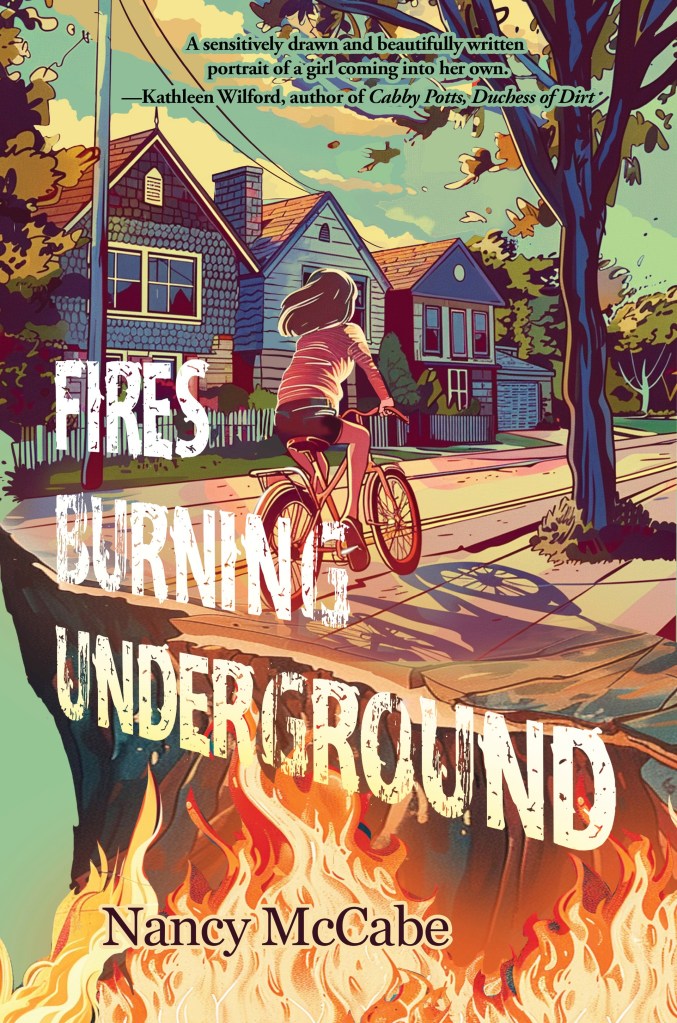
Fires Burning Underground by Nancy McCabe
Fitzroy Books, 2025
ISBN 978-1646035601
The last year of childhood: the magical friendship that inspired Fires Burning Underground
Anny, the narrator of my middle grade novel Fires Burning Underground, experiences a transition similar to my own when I was her age. Anny has always been homeschooled, but at the beginning of the story, sets off to attend public school for the first time. I graduated from a small rural elementary school to go to a much larger junior high in a suburban part of the city. Like Anny, I came from a conservative religious family, and like her, I went from being a talkative, imaginative kid to a shy and awkward one. It felt like my personality had suddenly changed.
But then I met M. We sat together at lunch on the first day of school, and around her, I felt braver, able to be my talkative and sometimes silly self. We became best friends. As an adult, I always thought of my friendship with M. as the last months of my childhood.
M. was everything I wanted to be: smart and imaginative and dreamy. Like me, she loved books and was drawn to creative activities. Already an accomplished pianist way beyond my skill level, she was fascinated by ESP and Ouija Boards. She wanted to write a book someday and be an actress and an artist. Together we were always scheming to follow in the footsteps of some of our literary heroines and put on a play, throw a carnival in one of our backyards, go camping in the dry creekbed near my house, and create a treasure hunt for a friend.
I had creative aspirations, but my ambition typically outstripped my ability. I stitched pillows and doll clothes, made rya and latch hook rugs and potholders, tried embroidery, decided to learn to knit, and worked on learning harder piano music. I often abandoned these endeavors without getting very far, and the projects I did complete were less-than-satisfactory, as were my art projects at school. I gave my own haphazard crafting aspirations and failures to Anny as she tries to figure out what she IS good at.
Anny and Larissa also embark on a lot of the same plans and projects that M. and I did. Some get abandoned, some come to fruition though not quite the way they’d imagined, and along the way, some unexpected things happen. Like me at twelve, Anny has trouble talking about what is most weighing on her: questions about her identity and grief over the death of a friend in a fire. Sometimes she’s sure he’s haunting her.
Like Anny, at that age, I also had no interest in boys and was much more focused on female friendship. That was one of the most significant contributors to the deterioration of my friendship with M., who developed a crush on a boy and knew I wouldn’t begin to understand. We drifted apart more gradually than Anny and Larissa do. I had trouble letting my childhood go. I clung to it. I mourned its loss.
I hadn’t seen or talked to M. for more than thirty years when I found her on Facebook and told her that I was writing a children’s book based on our enchanted year. She responded with the exact same words I’d always used to describe that time: “I always think of that year as the last one of my childhood.” In the end, despite all of the difficult parts of childhood, I feel lucky to have also experienced the gift of that magical friendship.
Next Gen Indie Award winner Nancy McCabe draws deep inspiration from her own life. From the tragic loss of a friend in a church fire to the magical relationship with her childhood best friend, Fires Burning Underground is an homage to the youth Nancy left behind, the lessons she learned on her path to adulthood, and the guidance she passionately shares with her audience. When she’s not working on her stories, she shares her passion for teaching young people how to write through her work as a professor. She is the author of a young adult novel, Vaulting through Time, a new adult ghost story, Following Disasters, and several nonfiction books for adults. She lives in northwestern Pennsylvania, where she teaches writing workshops to participants of all ages.


















 alibrarymama